My house help’s experience, and a question: How can reservations go when caste hasn’t?
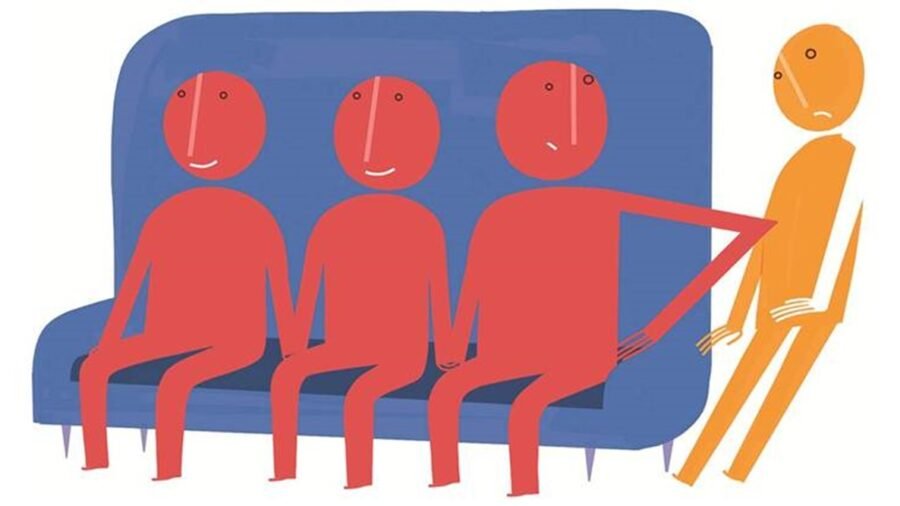
A few days ago, my mother was talking to our new house help. It was an ordinary conversation of the kind that takes place every day in Indian homes. They spoke about her family, her work and the difficulties she had faced in finding employment. At some point, she said something that stayed with us — that she had regularly been denied work because she was dark-skinned. In some of the more affluent parts of Gurugram, she said, she had found it particularly difficult to get domestic work. Many of the refusals, according to her, had little to do with her ability to work and everything to do with how she looked.
There was something unsettling about hearing this in Gurugram, a city that likes to think of itself as modern, prosperous and cosmopolitan. The people making such decisions are not necessarily uneducated or living in some remote corner of the country. They are people living in apartments, working in corporations, sending their children to expensive schools and speaking comfortably about equality and merit.
Advertisement
My house help’s experience, by itself, cannot establish a case of discrimination. But her story raises a larger question that our public often avoids: How much has the social hierarchy that the Constitution sought to dismantle actually disappeared from our everyday lives? We have become accustomed to thinking of discrimination in its most visible forms. Untouchability, segregated settlements and denial of access to public spaces are rightly remembered as some of the ugliest manifestations of discrimination.
The Constitution contains many provisions to safeguard the interests of underprivileged communities. These are sometimes described in public debate as exceptions to the constitutional promise of equality. That understanding is increasingly difficult to sustain. The Supreme Court has expressly recognised that affirmative action is connected to substantive equality. In its reservation jurisprudence, the Court has observed that Articles 15(4) and 15(5) are not exceptions to equality but particular expressions of it. The Constitution does not assume that treating unequals as equals will necessarily produce equality. This is the constitutional idea of affirmative action, and it is worth remembering because our public debate about reservation has reduced it to a much narrower question of who gets a seat or a job.
Affirmative action is not charity. It is not a reward for being born into a particular community. Nor is it an admission that members of reserved communities are inherently less capable. Its underlying premise is that a society which has systematically denied opportunity cannot correct that history merely by announcing that the competition is now open to everyone. If a person has been excluded from education, property, employment and social institutions for generations, the formal removal of the barrier does not automatically place that person at the same starting point as someone who inherited access to those institutions.
Advertisement
Much of the argument against reservation begins with a proposition that sounds compelling: Why should a person today receive a benefit because of something that happened generations ago? If a person from a Scheduled Caste family is educated, financially secure and living in a city, why should caste continue to matter? The difficulty with that argument is that it assumes caste is merely an economic disadvantage inherited from the past. It is not. Caste has historically been a system of social ordering, occupation, status and exclusion. Its consequences were not limited to who had money and who did not. It was about who could study, who could own property, what work one could perform, where one could live and, most fundamentally, whose presence was considered socially acceptable.
Reservation is an instrument of a larger constitutional project: To transform representation and access in institutions from which entire communities had historically been excluded. It is not enough for society to say that the doors are technically open. The question is also who is actually able to walk through them. We should ask whether its benefits are reaching those who remain most disadvantaged. We should examine inequalities within reserved communities. We should ask whether educational reform, better schooling and other forms of affirmative action can reduce the dependence on reservation over time. We should also be able to discuss whether particular policies are working without treating the very idea of affirmative action as constitutionally suspect.
My house help’s story was not about a government examination. It was about being allowed to enter someone’s home and work there. Yet even in this apparently ordinary transaction, her appearance became a basis for judging her worth. One may reasonably ask what this has to do with reservation. The answer is that it has everything to do with the premise behind affirmative action, though not necessarily with the legal test for receiving it. Reservation is a response to a society in which social identity has historically determined opportunity. It does not require us to believe that every individual belonging to a reserved category is poor, incapable or personally disadvantaged in every aspect of life. It requires us to acknowledge that social exclusion can survive economic advancement.
This is also why the argument that reservation should be replaced entirely by economic criteria is incomplete. Economic disadvantage can be severe and deserves a response. But poverty and caste are not identical forms of disadvantage. A poor person may suffer because they lack resources. A person facing caste discrimination may suffer because of who society believes they are, regardless of what they earn. The two can overlap, but one cannot simply be substituted for the other.
As India approaches the 80th year of its Independence, perhaps we should ask a more uncomfortable question: How much freedom have we really achieved from the social hierarchies into which millions of Indians are born? Political independence liberated us from colonial rule, but constitutional democracy also promised something more difficult: Freedom from inherited social status, exclusion and humiliation. Eight decades later, that promise remains unfinished.
My house help did not speak to my mother about the Constitution, affirmative action or substantive equality. She simply spoke about the jobs she was denied because of the way she looked. But perhaps that is precisely why her story stayed with me. So, before asking whether affirmative action should end, we should ask ourselves whether the discrimination that made it necessary has truly ended.
The writer is an advocate in the Supreme Court of India and an LLM candidate at Edinburgh Law School

Water wealth: On groundwater exploitation in Punjab
By Sohail Khan · 23 Sep
Breakdown of civic infra in India
By Sohail Khan · 23 Sep
Reiterating the basics of criminalisation
By Sohail Khan · 23 Sep