Meta’s $18 billion settlement to close US lawsuit: What changes for the company, teens, rivals and the world
Meta's $18 billion settlement to close US lawsuit: What changes for the company, teens, rivals and the world
Meta pays under 1% of a year's revenue and admits no wrongdoing. US teens get new controls. Rivals TikTok and YouTube to face similar pressure.
Published on: Aug 28, 2026, 19:31:20 IST
Prefer HTon Google
Share via
Copy link
Meta Platforms has agreed to pay up to $18 billion to settle claims from nearly every US state that Facebook and Instagram had contributed to a youth mental-health crisis by hooking teenagers on their design, the company and California attorney general Rob Bonta announced in Oakland on Wednesday.
The deal ends a landmark federal trial that had opened only eight days earlier, and closes out the largest coordinated action by state prosecutors against a social-media company to date.
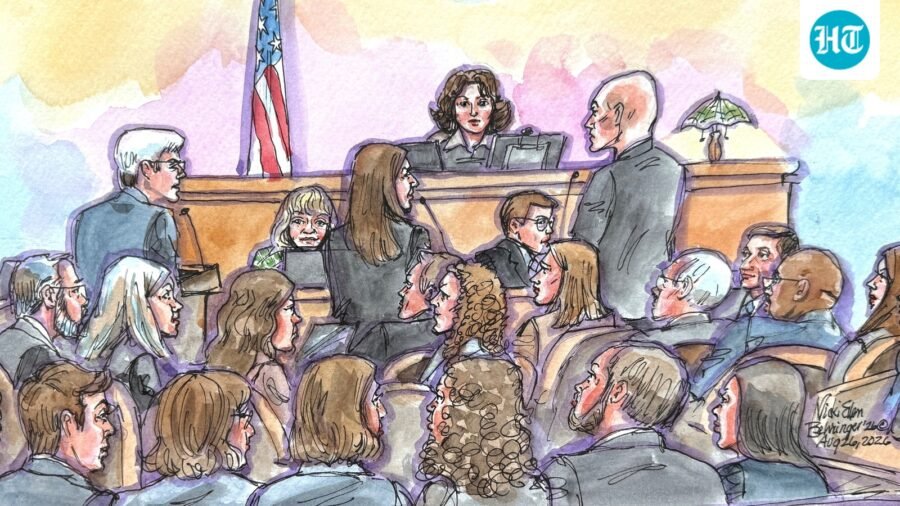
The four states leading the coalition, California, Colorado, Kentucky and New Jersey, had begun opening statements before US district judge Yvonne Gonzalez Rogers on August 18. The settlement was announced the day after Instagram head Adam Mosseri finished his testimony denying, under cross-examination, that Meta had hidden safety information from the public. Meta chief executive Mark Zuckerberg, who had been on the witness list, will not take the stand now.
The deal
Under the deal, which requires court approval, Meta will make a base payment of $12.7 billion over 10 years, with the total capped at $18 billion depending on contingent triggers. About $17 billion goes to the 29-state group that filed the lawsuit in 2023. The balance settles related claims from other US states and territories, bringing the coverage to nearly every US state and territory. California will receive at least $1.5 billion, the largest single share. And the money is to be used for state youth online-safety programmes, digital-literacy counsellors, and after-school and summer activities.
Meta will also make design changes to its platforms, but only for teen users in the US. It has agreed to set daily time limits on teen accounts, offer teens an optional non-personalised feed that does not use algorithmic recommendation, remove beautification filters from the teen experience, hide 'Like' counts on teen accounts, and strengthen its age-gating processes, according to court filings by AP and CNN. Meta made no admission of wrongdoing.
"Ensuring teens have a safe and productive experience on our platforms is an absolute imperative for Meta," the company said in a blog post on Wednesday. "We want to get this right for parents and teens, and that's why we partnered with state attorneys general to set a new industry standard."
Bonta said the agreement "institutes real change, real transparency, real protections for children and teens across the country".
Roping in TikTok and YouTube
A consequential clause in the settlement is that the payment mechanism ties Meta's total outlay to the behaviour of its competitors. Meta pays only 70% of the $18 billion cap unless TikTok, owned by ByteDance, and YouTube, owned by Alphabet, sign on to similar teen-safety changes, according to CNN Business.
The mechanism gives Meta a reason to lobby TikTok and YouTube to accept the same restrictions. Both the companies face separate lawsuits over similar allegations.
Not every attorney general who had signed on to the trial agreed with the settlement. Florida's James Uthmeier, who kept his state out of the deal, wrote on X on Wednesday that "the payouts are peanuts compared to the profound harms Meta's profit-driven addictive features inflicted on kids, and a slap on the wrist for a trillion-dollar corp that'll pay more to lawyers than to the states". Florida will go to trial separately.
Virginia's Jay Jones, who did sign on, called the deal a step that "will put an end to these dangerous practices and deliver meaningful relief that will protect children from online harm", the Associated Press reported.
What $18 billion means for Meta
Meta's 2025 revenues were $201 billion, and its market capitalisation stood at close to $1.5 trillion on the day the deal was announced. On that base, $1.8 billion a year over a decade comes to well under 1%, and a small fraction of quarterly free cash flow.
The states had signalled at a pre-trial hearing that they would seek damages closer to $200 billion. Meta closed it for roughly 9% of that figure, in cash, spread across ten years, with no admission of liability, and with the underlying design of its adult product left untouched.
But the trial may exact a reputational toll on Meta. The discovery record — internal Meta documents, expert reports and sworn testimony that the court compelled the company to produce during pre-trial motions and at trial — is now a permanent public asset in the US.
The New Mexico attorney general secured a separate state-court judgment against Meta earlier this month, in which a judge ordered the company to pay $567 million and make similar design changes after finding it had contributed to a youth mental-health crisis. Meta has said it will appeal.
Between the two proceedings, there's now documentary and expert evidence about how Meta's recommendation systems interact with teenage users, and it is available to plaintiffs elsewhere.
The Oakland deal also closes out only the state-attorney-general front. The company still faces hundreds of pending suits from individuals, school districts and municipalities, according to Reuters.
Beyond the US
The design changes Meta has accepted apply to teen users in the US. So far, Meta has not indicated that it will extend the measures to other markets.
But the settlement could offer a template to others. Canadian provinces, Australian state governments and British regulators can point to the US's multi-state design-defect legal claims and act on it in a similarly coordinated manner. The tobacco Master Settlement Agreement of 1998 had taken a similar path, seeding parallel actions in Canada and elsewhere over the years that followed.
There are also other ways in which countries have already acted. The European Union's Digital Services Act and Digital Markets Act imposes algorithmic-transparency, age-appropriate-design and dark-pattern obligations, with DSA fines of up to 6% of global turnover in cases of violations. The UK has its Online Safety Act, and Australia's ban on social media use by children under the age of 16 came into force in December last year, the first law of its kind in the world.
In these markets, regulators acted before the litigators, so the settlement may only behave as an additional pressure on social media firms.
In India
The Digital Personal Data Protection Act, 2023, prohibits behavioural tracking, monitoring and targeted advertising directed at children, and requires verifiable parental consent for anyone under 18. But these requirements are not yet enforced because the clauses are to be implemented in a phased manner.
The US settlement could nonetheless add political weight to the ongoing conversations between Union IT minister Ashwini Vaishnaw and social media firms. The government is holding discussions with major tech companies as it examines possible age-based social media restrictions and protections for minors.
What next
Judge Gonzalez Rogers is expected to consider approval of the settlement over the coming weeks. Florida's separate trial and Meta's New Mexico appeal are the immediate American proceedings to look out for. And TikTok and YouTube are expected to face growing pressure to introduce similar changes for teen users too.
See Less

US Treasury yields today: Why are 10-year yields near 5.24% as oil prices rise?
By Sohail Khan · 29 Sep
Eiffel Tower chief to step down after row over female staff’s removal during BAPS visit
By Sohail Khan · 29 Sep