Mehbooba Mufti writes: In Jammu & Kashmir, a facade of normalcy cannot substitute for peace
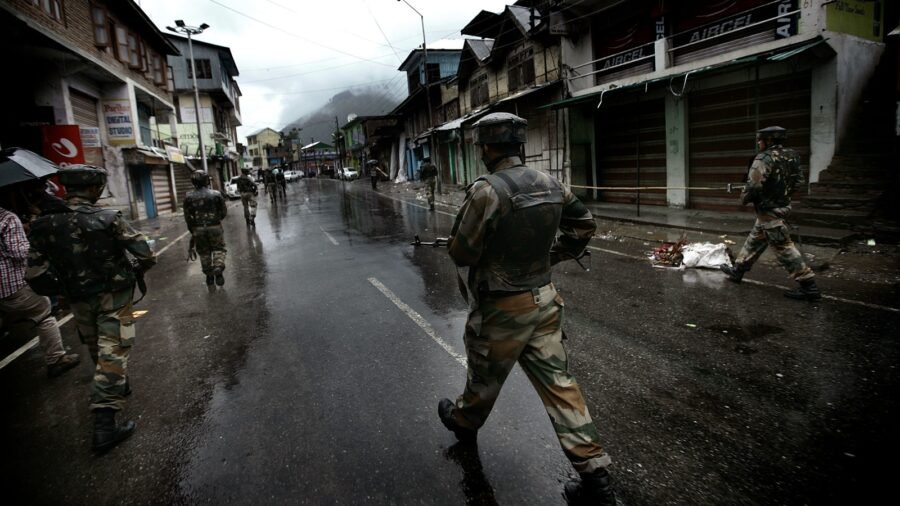
The administrative order circulating in Anantnag directing government employees to participate in a “Tiranga Rally” is not an isolated instance. It is symptomatic of a style of governance that has increasingly come to define Jammu and Kashmir since the Government of India took direct control of the region following the illegal abrogation of Article 370 in August 2019.
What is most striking about the order is not the national flag itself, but its coercive tone. When participation in a government-sponsored event becomes an administrative obligation, are we witnessing genuine public enthusiasm or merely another carefully choreographed display of “normalcy”?
Advertisement
Since 2019, Kashmiris have lived under an extraordinary degree of security and administrative suppression. Raids and investigations by multiple agencies have become a recurring feature of life in the Valley. Government employees have been dismissed over alleged links with militancy or militant sympathisers, leaving families devastated. Thousands have been detained in the aftermath of militant incidents, at times under broad allegations of being “overground workers”. Educational and charitable institutions have faced closure or restrictions over alleged links with banned organisations, while properties worth hundreds of crores have been attached under various laws.
On the one hand, the government repeatedly tells the rest of India that Kashmir has entered a new era of peace and normalcy. On the other, extraordinary security measures, raids, detentions, dismissals and restrictions continue to shape the everyday lives of ordinary people.
And then comes another painful reminder that the problem is far from over. On August 12, reports emerged of a purported threat letter attributed to the United Liberation Council, described by authorities and sections of the media as an affiliate of Lashkar-e-Taiba. The letter reportedly named several Kashmiri Pandit government employees and carried their phone numbers. For Kashmiri Pandits, such threats inevitably revive painful memories. Since 2019, 25 members of the community have once again been targeted and killed, including Ajay Pandita Bharti, Rakesh Pandita, Makhan Lal Bindroo, Rahul Bhat, Rajni Bala, Puran Krishan Bhat and Sanjay Sharma.
Advertisement
A tourist arriving in Srinagar may see busy markets, hotels filled with visitors, traffic on the roads and an impressive display of security. Everything may appear normal. But normalcy cannot be measured by what a visitor sees during a few days in the Valley. It must be measured by whether ordinary people feel secure enough to speak freely, whether families believe that the law will protect rather than intimidate them, whether young people see a future for themselves, and whether communities that have suffered displacement and violence genuinely feel safe enough to return and rebuild their lives.
The crackdowns that have followed militant attacks, including large-scale detentions and other punitive measures, have only deepened anxieties about collective punishment. Recently, after the killing of a police constable in south Kashmir, thousands were reportedly detained. When another militant attack resulted in the killing of migrant workers, the familiar cycle of raids, detentions and suspicion followed once again.
Gen Z and Gen Alpha in Kashmir were not responsible for the violence of the 1990s. They were born decades after the worst years of the conflict. They should have been able to grow up without inheriting the baggage of an earlier conflict. Instead, many are growing up watching fathers, brothers, relatives and neighbours being summoned, detained or questioned. They see homes demolished when a member of a family is accused of militancy. They see fear and humiliation become part of everyday life. They see a system in which one section of society is repeatedly assured that everything is normal, while another is continually asked to prove that it is not a threat. What does that do to a young mind? It does not create reconciliation. It creates bruised memories. And bruised memories do not disappear because officials are instructed to display flags.
A government that genuinely wants Kashmiri Pandits to return must create an environment in which they return because they feel safe, not because they are asked to participate in official ceremonies designed to demonstrate that everything is normal. The same principle applies to Kashmiri Muslims. The state must distinguish between a militant and an ordinary citizen; between an accused person and a convicted person; and between a family member and the person accused of committing a crime.
Kashmir needs healing, not another performance of normalcy. That healing will come only through dignity, justice, security, dialogue and a genuinely human approach. Brute force may silence a street for a while. It cannot silence a generation’s memory. A facade of normalcy may impress visitors. It cannot substitute for real peace.
The writer is former Chief Minister of Jammu and Kashmir

Amid calls for ‘pacing,’ a new Nvidia safety tool to stop AI agents from going rogue
By Sohail Khan · 29 Sep

Why rare-disease drugs could become India’s next pharma frontier
By Sohail Khan · 29 Sep