Making India’s food system climate-proof cannot wait
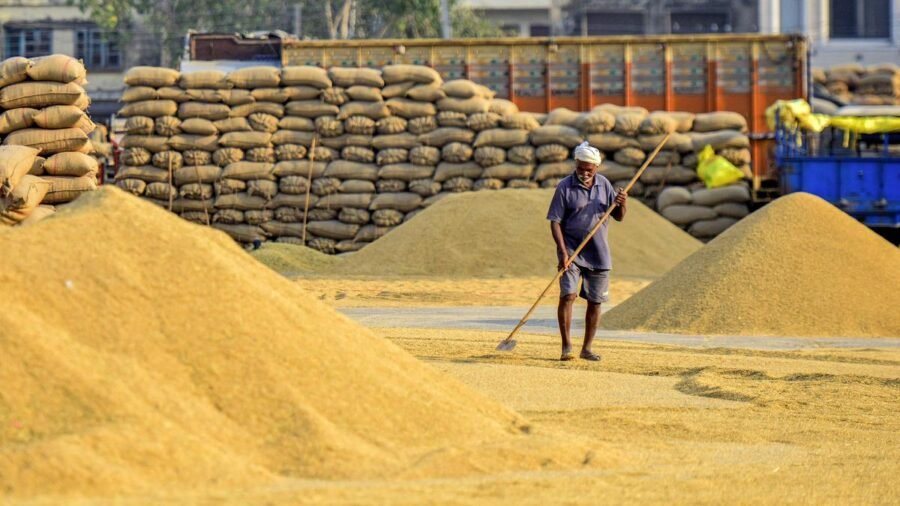
India’s food security journey is undoubtedly one of the most significant agricultural transformations in the world. From dependence on food aid in the 1960s, the country has emerged as a major food producer, built substantial buffer stocks, and created a legal entitlement to subsidise foodgrains for around 800 million people through the National Food Security Act (NFSA), 2013. This achievement rests on decades of public investment in improved seeds, irrigation, procurement, storage, price support and public distribution. The task now is to protect and strengthen that achievement amid a changing climate and increasingly frequent extreme weather events.
Climate change threatens food security globally. For India, the policy challenge has evolved beyond producing enough food to ensuring affordable, nutritious supply for 1.4 billion people despite rising temperatures, erratic rainfall, extreme weather, and water scarcity affecting production, storage, transport, and consumption.
The advantages
India has the initial advantage to address this challenge. Foodgrain production reached more than 350 million tonnes in 2024-25, including record output of rice and wheat. The Public Distribution System (PDS), supported by digitisation and the One Nation One Ration Card (ONORC), has expanded the reach and portability of food entitlements. These foundations provide the production capacity and administrative depth and expertise needed to support the transition towards a climate-resilient food-security framework.
India’s evolving food-systems approach recognises that climate risks span the entire value chain. Heat reduces wheat yields, erratic monsoons cause floods and droughts within seasons, groundwater depletion weakens irrigation buffers, and extreme weather damages storage and transport infrastructure. These cascading effects create market volatility and limit household access to nutritious foods.
The rice-wheat system has served India well, but national procurement remains concentrated in a few crops and geographies. Several of these areas also face serious groundwater stress. This model emerged as a rational response to the production constraints of an earlier era. The opportunity now is to build on its achievements by progressively diversifying procurement across crops and regions, while making the system more responsive to climate and natural-resource considerations. The procurement may gradually expand across geographies and commodities, with price support aligned to encourage crops suited to local water and climate conditions. Millets, pulses, oilseeds and other nutri-cereals can reduce risk concentration while strengthening dietary diversity. Cereals such as rice and wheat will remain essential, but a broader procurement base can create a more resilient national portfolio.
Along with the procurement, the PDS can progressively reinforce a diversified food basket. A carefully designed inclusion of locally appropriate millets and pulses would strengthen the connect between food security with nutrition, water conservation and climate adaptation.
On climate information
Forecasts from the India Meteorological Department may be linked more directly with procurement, buffer-stock and contingency decisions. The NFSA’s monitoring framework can also include indicators for heat, water stress, storage exposure and supply-chain resilience, alongside coverage and offtake. Farmers require practical tools for managing risk. Climate-resilient seed varieties, micro-irrigation, watershed development, precision farming, digital advisories and weather-indexed insurance may reduce variability and support better decisions. Public-private collaboration would also help accelerate research, certification and last-mile delivery, while public safety nets can ensure that smallholders and climate-exposed regions are not left behind.
Along the entire food supply chain, flood-resilient warehouses, storage systems suited to higher temperatures, expanded cold chains and more robust transport links are necessary for protecting grain and perishables. This is particularly important if the food basket becomes more diverse. Adaptation incentives and standards can therefore cover procurement, storage, logistics and market stabilisation, not production alone.
Down the line
Financing climate-resilient food systems requires green bonds, adaptation finance, insurance, and investment in resilient agricultural value chains. Integrating food systems into India’s net-zero pathway — with measurable emission reductions, carbon sequestration, and resilience targets — enables coordinated action across agriculture, water, energy, transport, and nutrition, while unlocking climate finance for sustainable transformation.
India’s traditional buffer stock offers a useful principle for this transition. The country can explore building a broader ‘climate buffer’, combining diversified crops and procurement regions, resilient infrastructure, climate information, insurance and improved water management. Just as grain reserves reduced the risk of poor harvests, this portfolio may reduce the systemic risks created by a less predictable climate.
Climate-resilient food and nutrition security is not a departure from India’s established approach. In fact, it is its logical next phase, and India already possesses many of the institutions, capabilities and policy setup needed to advance it. This may include shifting the national framing from “food security” to “sustainable food security”, embedding climate risk management as a first-order design parameter in NFSA planning and monitoring, rather than an externality managed after the fact. The existing long-term vision and institutional commitment can now ensure that India’s food systems remain nutritious and sustainable in the decades ahead.
Elisabeth Faure is Country Director, UN World Food Programme in India. Purvi Mehta is an international expert on nutrition-sensitive agriculture, food systems and climate-resilient development

I have a ferritin face: What experts want you to know about low iron
By Sohail Khan · 26 Sep
Rajnath flags ‘perimeter fallacy’, ‘deterrence by punishment’: What do these terms mean?
By Sohail Khan · 26 Sep