Magnus Carlsen: Esports and chess can be a happy marriage
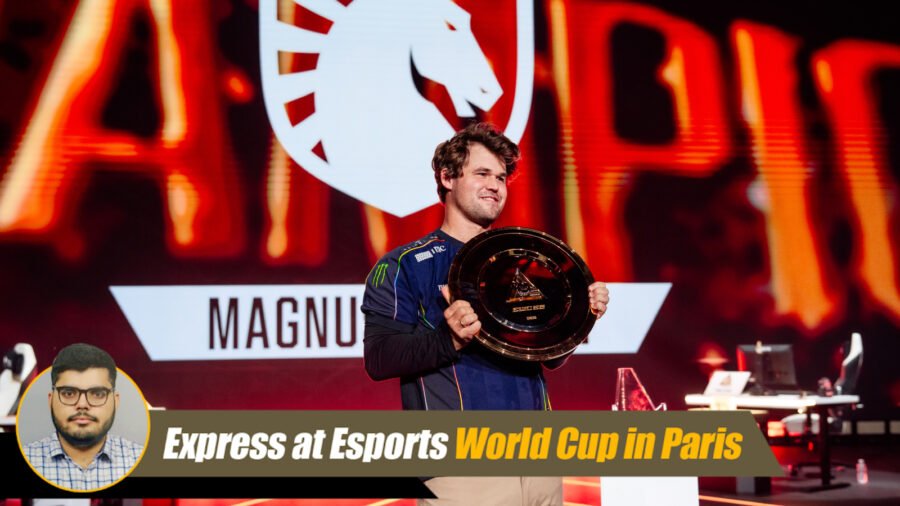
Magnus Carlsen successfully defended his Esports World Cup title in Paris, going unbeaten throughout the tournament and cruising past Denis Lazavik in a one-sided final. Despite being under the weather for much of the event, battling fever and physical exhaustion, the world number one proved once again why he remains the biggest name in chess.
In a media interaction after his EWC 2026 victory, Carlsen opened up on his physical struggles, his conservative approach to the tournament, comparisons with traditional chess, the evolving Esports format and where he sees the game heading in the next five years.
Excerpts
How did you manage to mentally override physical exhaustion and win while running a fever? Does this title feel more rewarding than last year’s?
Yes, certainly last year’s experience was overall a bit more enjoyable, but it does feel very, very satisfying to come out with a victory this time as well. I did feel as though I was in survival mode early on, and then Wednesday was pretty tough, but I managed to pull through. I really needed the day off on Thursday, and that’s kind of the day where I felt the worst as well. And then throughout Friday I started feeling a bit better, and then I started thinking, you know what, I could maybe actually do this. I started to see light at the end of the tunnel. Then today again I felt a little bit better, and I was able to kind of make it fun and execute it very well.
Do you feel this high-production, high-energy Esports format is the definitive future for top-level chess, or is there still something to learn from the traditional approach?
No, I think this is just a little bit different, and I think we should embrace that… this is not kind of traditional chess, but this is chess as an Esport with all that brings. We’ve done a really good job here in the last two years of doing that with chess. So definitely hope to see more of that in the future, and I think it’s here to stay.
You defended your title without losing a game. Were you just too good, or were others not good enough?
There were certainly moments where things could have happened differently, but I managed to be a little bit better in the critical moments for sure. I think I also strategised in a really good way. I tried not to do anything that I wasn’t very comfortable with… something that I couldn’t do. I think I did everything well in that sense. Obviously, not losing a single game in such a format, you need not only skill, but also a little bit of luck, a little bit of randomness as well. So I definitely feel like that luck played a part in that being a fact, but I’ve got to say it’s very satisfying.
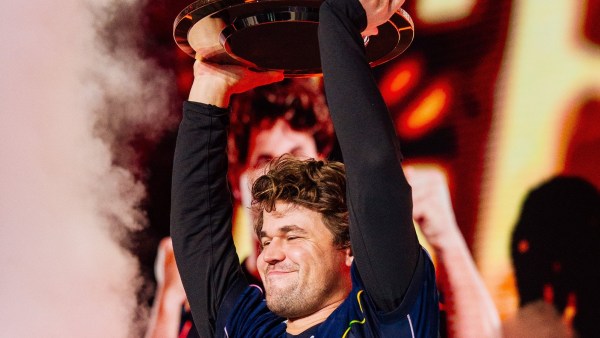 Carlsen lifted the title without losing a single game in Paris, in either the group stage or in the playoffs. (EWC Photo)
After losing Norway Chess, some questioned your form. What do you feel about your career now?
Norway Chess was an unusual tournament in the sense that I lost the first round in a fair, fighting game against Alireza. It was a bit of trying to catch up after that. I probably did some things there, played in ways that didn’t necessarily optimise my chances. But I kind of wanted to create chances, and I ended up in a lot of positions which I’m not used to. I got beaten a lot of times. I made sure not to do the same things here. But it’s hard to compare because they’re very different formats. But I wasn’t going to play poorly here because I played poorly in other tournaments. My motivation comes and goes a little bit at times. But for this one specifically, it’s something that I’ve wanted to do for a long time. I enjoyed last year a lot, and I was always going to do everything in my power to win this one.
Story continues below this ad
Hikaru Nakamura said he hates the format and wants changes. Are you satisfied with it, or would you suggest any changes?
I’m not the one who decides on the format, but I think it is… I don’t know what Hikaru’s opinions are, but I think it works pretty well. So I’m not going to advocate for major changes.
When you enter endgames, what is your thought process, what do you look for, and how confident are you?
It’s hard to give a general answer. For example, in the first game against Denis Lazavik today, I had zero advantage… it wasn’t ideal. I focused on improving my position little by little while staying patient. The key is to narrow down your opponent’s options: from 10 moves that keep equality, down to 3, then to 1 or 2. That’s how you create pressure, especially when they’re low on time. Lazavik defended well, but with 20 seconds left, he had only two drawing moves, and he picked the most obvious one, which lost. That decided the match. I can get tired of grinding endgames, but in this format and feeling unwell. I stuck strictly to what I know best.
Do you feel chess is now part of the Esports world, or do you think Esports discovered chess?
I think regardless of the way you put it, I hope it can be a very happy marriage. This format really has been waiting for chess for a while. You can see, even as soon as people started having internet in their homes, they started playing chess online. A lot of the best chess players migrated to, not chiefly, but partly online players as early as 1995. So it’s certainly been coming.
How does the EWC setup… the vibe, the crowd, the packaging… feel different from other tournaments?
It is just in many ways better that you can have a little bit more of a fun experience the way it’s going here. It’s fast-paced and really demanding, but also fair for the players.
Story continues below this ad
Where do you see this game moving in the next five years?
Progress, evolution, whatever you want to call it, is never going to be linear. There are always going to be other things that are going on and so on. But I’m really happy that things are moving in this direction generally, where chess is becoming faster and more accessible.
(The writer is in Paris at the invitation of the Esports Foundation)