Looks like a dog, flies like a bat: Meet nature’s unusual mammal
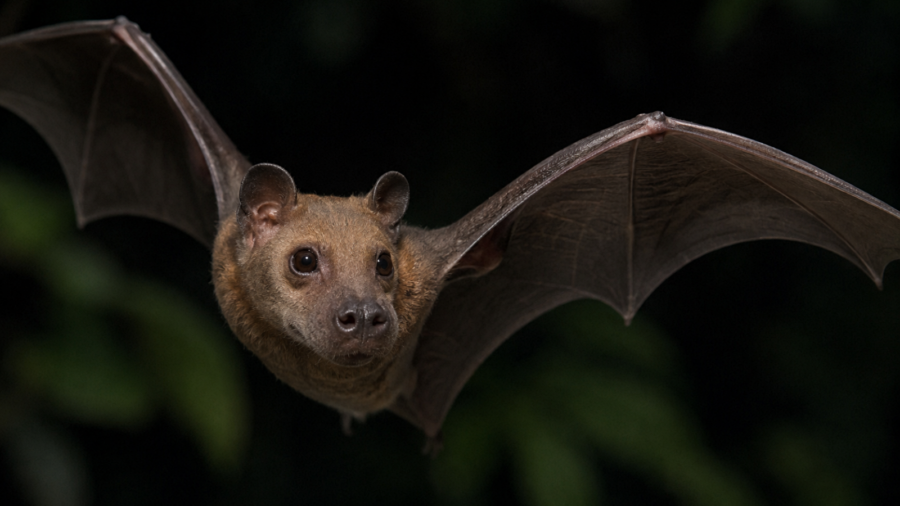
What do you get when nature gives a bat a dog’s face? A creature that looks like it should be barking, not flying through the night.
With its broad muzzle, widely spaced eyes and small, rounded ears, the dog-faced bat can make you do a double take. It looks remarkably canine — except this “dog” has wings and spends its nights hunting insects.
And the name isn’t just an internet joke. Dog-faced bats are real; their scientific name refers to their dog-like appearance, and there is more than one species behind that surprisingly adorable face.
Story continues below this ad
There is more than one “dog-faced bat”
These bats belong to the genus Cynomops, a group of free-tailed bats found in parts of Central and South America. The genus name comes from Greek words associated with dogs and appearance or face.
Of course, they aren’t related to dogs. Bats belong to the order Chiroptera, while dogs belong to Carnivora. Their resemblance comes from facial features that happen to look remarkably canine.
For a long time, scientists recognised six species in the Cynomops group. Then, in 2018, researchers described two more: Freeman’s dog-faced bat (Cynomops freemani) from Panama and the Waorani dog-faced bat (Cynomops tonkigui) from Ecuador.
That brought the recognised total to eight at the time. But identifying these species wasn’t as simple as comparing their faces.
Story continues below this ad
How scientists had to play bat detective
Researchers examined 242 specimens, comparing their physical features with DNA, geographic information and echolocation recordings. Some bats previously classified as another species turned out to be different.
This is one of the fascinating parts of wildlife research: a “new” species doesn’t always mean an animal nobody has ever seen. Sometimes, it is already sitting in a museum collection — scientists just haven’t realised exactly what they are looking at.
That cute face belongs to a fast hunter
View this post on Instagram
A post shared by Rhi Batty (@rhi.the.bat.rescuer)
The dog-like face may grab your attention, but these bats are built for speed.
They are nocturnal insect-eaters, hunting through the night. Their narrow wings are suited to fast, open-air flight, and they can fly high above the forest canopy.
That makes them good hunters — but difficult research subjects. Fast-flying bats can be hard to catch using the mist nets commonly used by scientists.
Story continues below this ad
So researchers have another trick: they listen. Bats use sound to navigate in the dark
Like many insect-eating bats, Cynomops species use echolocation. They produce high-frequency sounds and listen to the returning echoes. This helps them navigate in darkness and locate prey.
Scientists can record these calls using specialised bat detectors. The sounds can provide clues about which species is flying overhead, even when the bat itself is difficult to catch.
Echolocation recordings were also among the evidence used to distinguish the newly described species.
Story continues below this ad
Interestingly, one of them was hiding in plain sight. Freeman’s dog-faced bat offers a good example. In Gamboa, Panama, researchers captured 56 individuals — 19 males and 37 females — over five nights in 2012. The bats were associated with abandoned wooden buildings, and researchers recorded their calls.
When they combined those observations with physical and genetic evidence, they found that the bats represented a distinct species.
So why does it look like a dog?
There isn’t a simple answer. The bat didn’t evolve specifically to look like a pet dog. Its facial features developed through its own evolutionary history. But its broad face, eyes and ears happen to come together in a way that our brains recognise as canine.
Which explains why one look at this bat can produce the immediate thought: “That looks like a dog.”
Story continues below this ad
Followed by the obvious question: “Why does that dog have wings?”
The answer, thankfully, is simpler: it isn’t a dog. It is a fascinating group of bats that happen to have one of the most memorable faces in the animal kingdom — and behind that funny face is a fast-flying, insect-hunting mammal that has helped scientists uncover just how much biodiversity can remain hidden in plain sight.
Explore more captivating stories about pets and animals here, and make us your daily stop for the latest from the animal kingdom.


What could be a just, dignified and lasting peace in Ukraine?
By Sohail Khan · 29 Sep
Power from renewables should not be curtailed
By Sohail Khan · 29 Sep