Keralam’s Sukumara Kurup case: Can a fugitive be presumed dead? What does the law say?
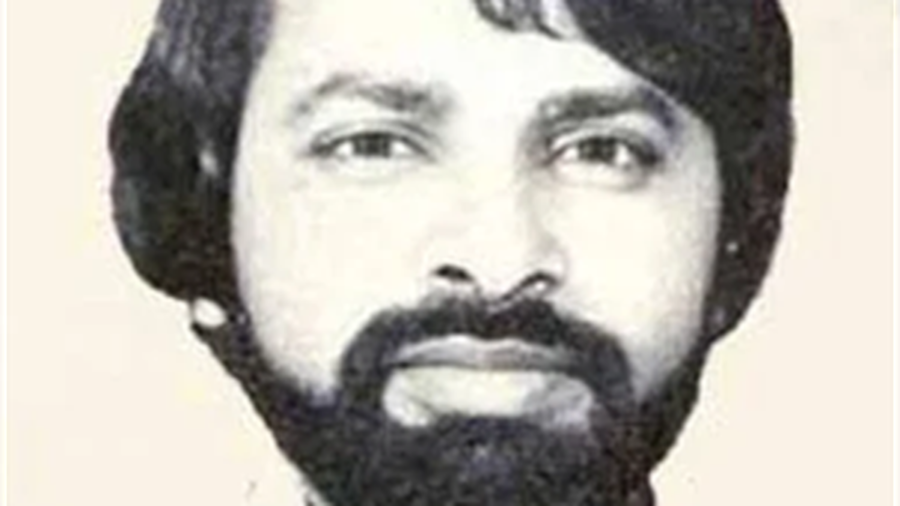
Story so far: Sukumara Kurup, one of Keralam’s most infamous fugitives, is back in the limelight after a Malayalam news channel aired an image of a man in Brunei, claiming it was a recent photograph of Kurup in hiding. Kurup is wanted in connection with the 1984 murder of N.J. Chacko in Mavelikara, allegedly as part of a plan to fake his own death and claim a life insurance payout. Despite several attempts by investigation teams to trace him since then, Kurup has remained absconding.
Keralam Home Minister Ramesh Chennithala, however, said on Friday (August 28, 2026) that reports that Kurup is still alive were “only rumours” and directed the Crime Branch to verify them. Crime Branch ADGP H. Venkatesh told that the information shared by the news channel would be sent to Interpol for verification.
An Interpol Red Corner Notice, which is a request to law enforcement agencies worldwide to locate and provisionally arrest a person pending extradition, surrender or similar legal action, is already in existence in Kurup’s name. Mr. Venkatesh said the case will not be closed unless there is conclusive evidence that Kurup is dead.
What was the case?
The case dates back to January 1984, when Kurup allegedly faked his own death by substituting another man, N.J. Chacko, whose body was found in a burnt car. The alleged motive was to fraudulently claim a large insurance payout from a policy taken out by Kurup while he was in Abu Dhabi.
Though the police nabbed all others believed to have been involved in the conspiracy, Kurup eluded. So the case was charge sheeted without him as the accused. One of the culprits was transposed as an approver and was examined as an eye witness. Kurup’s brother-in-law and his driver were arrayed as the first and second accused respectively. Kurup’s wife and her sister were arraigned as third and fourth accused respectively. Learned Sessions Judge convicted the first and second accused of murder, criminal conspiracy and destruction of evidence, but the remaining accused were acquitted.
Thrissur man claims viral photo attributed to fugitive Sukumara Kurup is of his brother
The Kerala High Court dealt with the appeals in Ponnappan and Another v. State of Kerala (1984), upholding the convictions and sentences and dismissing the appeals.
Kurup has remained absconding since then, and the case has, over the years, attracted considerable public attention, including film adaptations. There have also been several reports of Kurup being spotted in different places and disguises, but none has yielded any substantial lead.
Who is presumed to be dead in law?
Sections 110 and 111 of the Bharatiya Sakshya Adhiniyam, 2023, corresponding to Sections 107 and 108 of the Indian Evidence Act, 1872, deal with the burden of proving whether a person is alive or dead.
Section 110 says that when a person is shown to have been alive within the previous 30 years, the burden of proving his death lies on the person who asserts it. Under Section 111, if a person has not been heard of for seven years by those who would naturally have heard from him if he were alive, the burden shifts to the person who asserts that he is alive.
Together, the provisions create a general rule and an exception. The law presumes continuance of life when there is evidence that a person was alive within the previous 30 years. But after seven years without being heard of by those who would naturally have heard from him, the presumption of continuance of life ceases to operate and the burden shifts to the person asserting that he is alive.
The Supreme Court, in LIC of India v. Anuradha (2004), clarified that the presumption is limited to the fact of death. It does not establish when, where or in what circumstances the person died. The presumption arises when the question of whether the person is alive or dead comes before a court, tribunal or other competent authority.
Can a fugitive be presumed dead?
The seven-year rule becomes more complicated in the case of a fugitive. A person absconding from justice may deliberately avoid contact with family, friends or others “who would naturally have heard from him”.
Courts may have to consider the circumstances of the disappearance and the efforts made to trace the person. The mere fact that a person has been absconding for seven years does not, by itself, amount to an automatic presumption of death.
The question becomes particularly relevant in cases involving fugitives because the very nature of their disappearance may mean that they do not maintain contact with the people who would normally have heard from them. The evidence required to establish the statutory conditions, therefore, may depend on the circumstances of each case.
Can a fugitive be tried in his absence?
Yes. A trial in absentia is a criminal trial conducted in the absence of the accused. Section 356 of the Bharatiya Nagarik Suraksha Sanhita (BNSS) provides for inquiry, trial and judgment in the absence of a proclaimed offender who has absconded to evade trial and where there is no immediate prospect of arrest, subject to specified conditions and safeguards.
Under the Code of Criminal Procedure, 1973 (CrPC), the predecessor of BNSS, Section 82(4) of CrPC allows proclamation and attachment of the property of an absconding accused, and Section 317 of CrPC allows the Judge or Magistrate to conduct trial of an accused in his absence in certain specific cases. Section 299 CrPC allows the Judge or Magistrate to record the evidence in absence of absconded accused if there is no prospect of arresting him soon.
The provision includes safeguards such as the issuance of two consecutive warrants of arrest at least 30 days apart.
The law does not permit courts to try every accused person in their absence. Section 356 applies to a “proclaimed offender”. Under Section 84(4) of the BNSS, where a proclamation has been issued against a person accused of an offence punishable with imprisonment of 10 years or more, life imprisonment or death under the Bharatiya Nyaya Sanhita, 2023, or any other law, and the person fails to appear at the specified place and time, the court may, after making such inquiry as it considers necessary, declare the person a proclaimed offender.
For Kurup, therefore, his prolonged disappearance raises two separate legal questions, whether there is sufficient basis to presume that he is dead, and whether criminal proceedings can continue if he is alive but remains beyond the reach of the law.

BRS to highlight Govt. failures with protests across State from Sept.2 to 8: KTR
By Sohail Khan · 28 Aug
CPI-M urges youth to draw inspiration from Basheerbagh martyrs
By Sohail Khan · 28 Aug

Leave a Reply