Keep UPI free, and fund it from the savings it generates
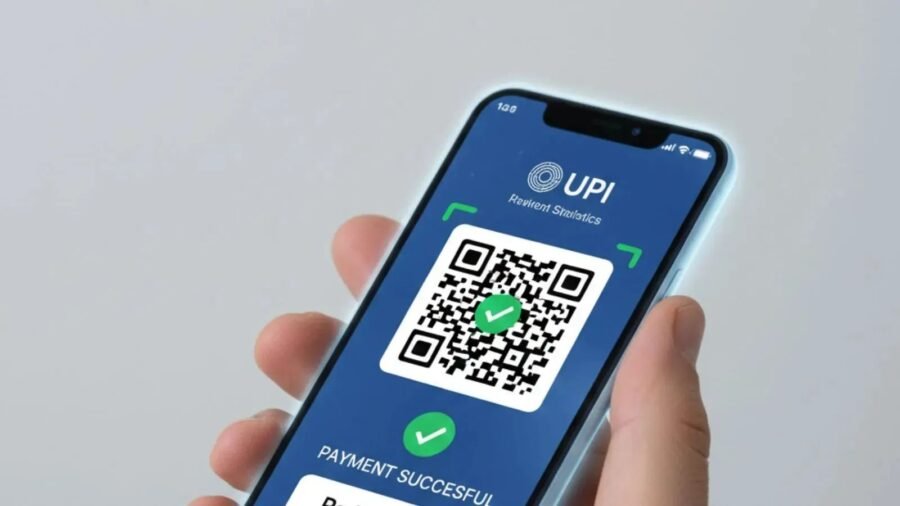
In March 2017, in these pages, I argued that there was no justification for a Merchant Discount Rate (MDR) on mobile payments, and that a less-cash India depended on keeping them free (Conditions for a less-cash India, IE, March 4, 2017). That argument concerned an infant technology; it now has fresh urgency. Earlier this month, Parliament passed the Taxation and Other Laws (Amendment) Bill, 2026, rewriting Section 10A of the Payment and Settlement Systems Act. That section barred any charge on BHIM-UPI and RuPay. The amendment replaces the bar with an enabling provision, allowing the government to notify in the future which modes can carry a charge. No charge is imposed today. But the door has been unlocked, and we should not walk through it.
Consider what UPI has become. In 2025-26, it carried over 24,000 crore transactions — roughly 66 crore — worth about Rs 314 lakh crore, accounting for some 85 per cent of India’s digital retail payments and nearly half the world’s real-time payments. It is overwhelmingly a system of small sums: The average transaction is about Rs 1,300, and 86 per cent of merchant payments are below Rs 500. Such transactions involve the vegetable seller, the auto driver, and the kirana shop. A charge here is not a charge on commerce in the abstract; it is a levy on the smallest transactions of the poorest.
Advertisement
After Aadhaar gave every Indian a digital identity, UPI is our most visible piece of digital public infrastructure — unlike the identity proof, the citizen reaches for it many times a day. It is not any company’s product but an open, protocol-based public good — a new common language for money. Before UPI, each bank ran its own closed app; UPI asked banks only to open their APIs to a shared protocol, so that any app can move money between any two accounts at any two banks, instantly and free. It is a model the world is now studying and adopting.
Why, then, is MDR the wrong instrument? It is an inheritance from the card world, where the issuer, acquirer and network each take a slice, and where a physical card, terminal and credit-default risk give the fee something to recover. None of that exists on UPI: The point-of-sale machine is the customer’s own phone, on data he has paid for; there is no card, no terminal, no credit risk, and settlement is instant.
Let’s apply the “work-done” principle telecom regulation uses for interconnection — a network is paid only for the work it performs. When A pays B, A’s bank makes a debit entry, the NPCI a settlement instruction, B’s bank a credit entry; no cash moves. The NPCI runs the whole switch for about Rs 500 crore a year — some two paise a transaction. The cost a fee would recover has all but vanished.
Advertisement
None of this means the system runs on air. Banks and payment providers bear real costs, and under zero-MDR, they earn nothing directly from a UPI transaction. The government has bridged the gap with an incentive. But that bridge is being dismantled even as the traffic multiplies — the outlay is projected to fall to about Rs 437 crore from about Rs 3,631 crore two years ago. The gap is real. But MDR is the wrong way to close it, because the savings UPI creates accrue not to the merchant we would tax, but to the state and the banks.
Look at the state first, and conservatively: The Reserve Bank spends some Rs 5,000-6,400 crore a year merely printing currency notes — more than the government spends keeping UPI free — before the cost of storing and moving cash is even counted. Then look at the banks, the largest beneficiaries. A bank must serve its customer somehow, and the channels differ hugely in cost: A counter transaction costs it Rs 40-50, an ATM withdrawal Rs 19 in interchange alone, while a UPI transaction is a small fraction of either. And by making an account as usable as cash, UPI keeps money in accounts rather than idle in pockets — the low-cost float on which banks earn their spread and lend.
If digitisation saves the state and the banks such sums, the answer is not to claw money from merchants and consumers through MDR. It is for the state — the steward of a sovereign public good, and no longer obliged to print and move the cash, which UPI displaces — to return a small, defined share of its savings to those who run the rails. This is not a grudging subsidy but payment for value delivered, as the state pays a transmission company to carry electricity: A transparent, formula-based support funded from the savings in currency management, never a price tag before the citizen.
An MDR would also be self-defeating. India is intensely price-sensitive — if paying digitally costs even a rupee more than cash, many will return to cash. A merchant charged MDR passes it on as “2 per cent extra for digital”, or refuses digital altogether. Even 0.3 per cent on merchant payments would take some Rs 27,000 crore a year out of a thin-margin retail economy. To tell a hundred crore users that what was always free now costs money is the surest way to slow, even reverse, a transition still forming: We would collect a little and lose a great deal. And confining the charge to large merchants offers no lasting protection — thresholds slip, and definitions widen.
India has done what no other country has managed — made real-time digital payment free, instant and universal, pulling hundreds of millions into the formal economy. That rests on a simple bargain — paying digitally will never cost more than cash. Keep UPI free, fund it from the savings it so visibly creates, and it will repay the country many times over. That, not MDR, is the road to a truly cashless India.
The writer is a former secretary, Government of India. Views are personal

Delhi’s infra-governance problem
By Sohail Khan · 24 Sep
On the draw: September 24, 2026
By Sohail Khan · 23 Sep
7 cities to explore on India’s Golden Quadrilateral road trip
By Sohail Khan · 23 Sep