Iran will be able to shrug off America’s financial threats
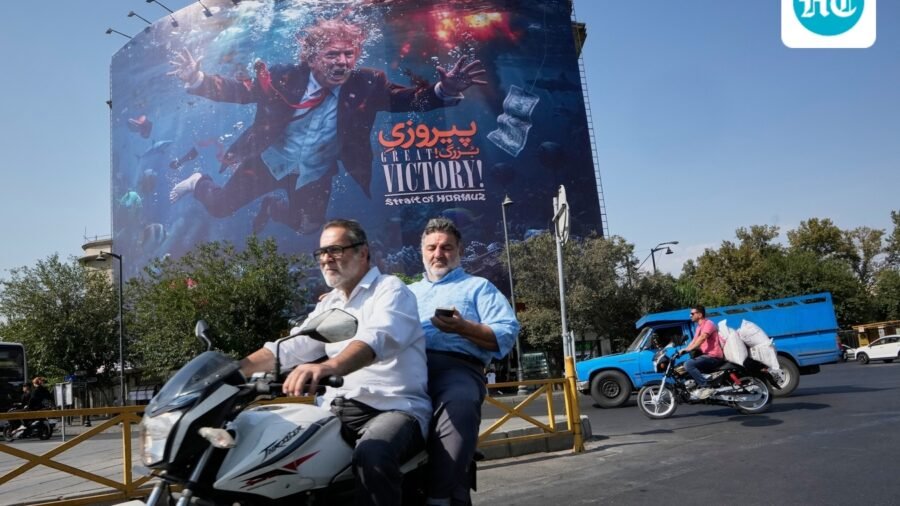
In the face of fresh sanctions, the regime is defiant
Published on: Aug 25, 2026, 22:27:33 IST
Prefer HTon Google
Share via
Copy link
WHEN DONALD TRUMP began Operation Epic Fury nearly six months ago, he hoped that America’s military might would crush Iran’s regime. When its bombs failed, he bet on sweeteners. In June America offered Iran sanctions relief and billions of dollars in investment in the hope the country’s leaders would open the Strait of Hormuz and renounce any nuclear ambitions. That approach failed, too. Now America is trying to break the regime by smashing Iran economically. Last week Mr Trump called the effort “economic D-Day”. On August 24th Scott Bessent, America’s treasury secretary, revealed the details.

Iran has been under American sanctions since the Islamic revolution in 1979. In his first term Mr Trump exerted what he called “maximum pressure” on the regime in an effort to force concessions on its nuclear programme. Mr Bessent has now announced Operation Economic Outcast, described as “an economic onslaught against Iran’s financial connections around the globe”. This is, presumably, maximum plus. As well as enforcing its blockade of Iranian oil exports, America will increase pressure on Iran’s trading partners and on institutions that help the regime move money. For now, however, the threats are more bark than bite. Countries do not have to comply with America’s demands immediately. Even so, the policy could still provoke a wider conflict.
Iran is in dire economic straits. The rial has lost nearly half of its value against the dollar since the start of the year. It hit an all-time low ahead of Mr Bessent’s announcement. The war has destroyed great chunks of Iranian industry. Damage to refineries has left fuel in short supply, leading to long queues at petrol stations. According to official statistics, unemployment is 9.1%, its highest level since 2023 (unofficial estimates are much higher). Inflation is running at 88% year on year. The regime is printing money to pay for food vouchers.
Deep Dive
Powered ByAsk
Meanwhile, America’s blockade of the Strait of Hormuz has caused Iran’s oil exports—the regime’s main source of income—to collapse. On August 20th the head of Iran’s central bank said they had “fallen to zero”. According to Kpler, a trade-intelligence firm, Iran still has some 80m barrels of oil on board ships outside the strait. But that would only provide a fraction of its usual income from such exports. The Trump administration hopes that Iran’s economic woes will create an opportunity. Mr Bessent said he wished that soldiers would lay down their arms once they stopped getting paid, leading to the collapse of the regime.
Mr Bessent did not name the countries that he wants to reduce trade with Iran. But several stand out. During the war China has been buying Iranian oil at $7-12 below the market price for a barrel, in violation of the existing American embargo. It scoops up about 90% of Iranian crude exports which, America reckons, provided the regime with nearly half its budget last year. The United Arab Emirates (UAE) sells more to Iran than any other country. It provided some 30% of Iran’s total imports in 2024. It also hosts a network of exchange houses and shadow banks that the regime uses to evade sanctions. In April the American treasury reportedly wrote to the UAE’s leaders to ask them to clamp down on such outfits.
America is not the only country trying to inflict economic pain on Iran. Over the past few months the UAE, which suffered the brunt of Iranian attacks early in the war, had softened its stance towards Iran, resuming trade and allowing Iranian residents to return. But on August 18th it said it would stop all trade and financial transactions with Iran after the regime launched strikes against its ships (Mr Bessent praised the Emirates for being “a very good partner”).
Others, however, will be reluctant to work with America. China has warned that the new sanctions risk damaging global growth and financial stability, and vowed to protect its “legitimate rights and interests”. America has previously targeted Chinese firms involved in Iran’s oil trade: in April it imposed sanctions on Hengli, a refiner that American officials accused of buying billions of dollars’ worth of Iranian crude. But the administration may be reluctant to go much further for fear of retaliation or undermining Mr Trump’s diplomatic outreach to China. “If you start to target Chinese companies, it’s no longer an Iran issue,” argues Esfandyar Batmanghelidj of Bourse and Bazaar, a think-tank in London. “It’s a matter for your China policy.”
Even if Mr Trump turns the dial up to 11, he may not get the response that he wants. Iran’s leaders know well that their economy is struggling. On August 20th Mohammad Bagher Ghalibaf, the speaker of parliament, conceded that Iran would “not survive” without economic growth. Masoud Pezeshkian, the president, has urged America to return to the Memorandum of Understanding (MoU) that it offered in June which, as well as setting out a framework for ending the fighting, promised to reintegrate Iran with the global economy. The Iranians do not want to end up in a situation like that of North Korea, says Mr Batmanghelidj, “where they continue to face significant costs because the sanctions remain”.
But even knowing all this, the regime remains unbowed. Mr Ghalibaf’s worries about the economy have not stopped him mocking America’s plans on social media. Mohsen Rezaei, Iran’s hardline national security adviser, dismissed Mr Trump’s threat of economic warfare as “propaganda”. He asked, not without some cause: “What does he want to do that he has not done before?” Iran has built labyrinthine networks for trade and finance that will be hard for America to police. Most dangerous for the regime would be if further economic hardship prompted demonstrations of the kind that erupted in January. For now, that seems unlikely. The regime has been executing protesters in public to suppress dissent.
America’s pivot to economic coercion may embolden Iran’s leaders still further if they take it as proof that the military campaign against them has failed. They might respond by launching new attacks on military bases and energy facilities across the Gulf. Mr Rezaei has said that any country that works with America will be treated as an “enemy” and could be targeted. Iran has significant leverage over its neighbours such as Iraq, which buys its gas and hosts several of its armed proxies. And there is always Hormuz. Hours before Mr Bessent’s announcement, Iran threatened to fine or seize nearly 50 ships in the strait, which it accused of breaking its rules for crossing.
The Trump administration may hope that time is on its side. But it has been wrong before about the regime’s willingness to endure pain. In April Mr Bessent predicted that America’s blockade of Hormuz would rapidly destroy Iran’s oil industry. That has not happened. And while Iran still has the power to punish its adversaries, it is unlikely to refrain from doing so. America’s plan to choke Iran’s economy looks like an attempt to avoid another round of fighting. It may yet backfire.
See Less
Arming Taiwan an important US interest, Taipei official says after Trump-Xi summit
By Sohail Khan · 26 Sep

Will the AI frenzy add up to anything?
By Sohail Khan · 26 Sep