Iran war impact on upcoming US midterm elections worries Republicans
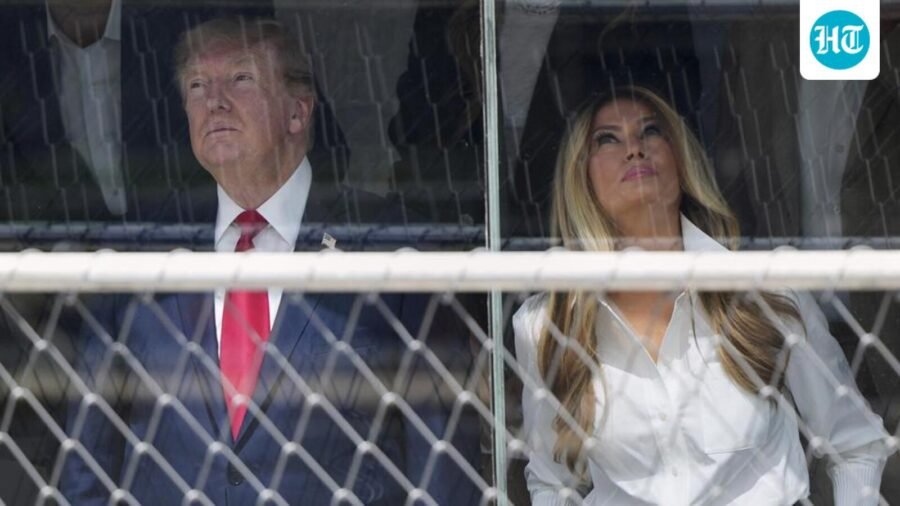
Voter discontent over the Iran war threatens Republican Congressman Mike Lawler's re-election as Trump’s approval plummets amid rising energy prices.
Published on: Aug 24, 2026, 24:29:26 IST
Prefer HTon Google
Share via
Copy link
“The Republican party and you are enabling him (Trump). You’re all cowards and spineless,” roared one voter in New York to loud cheers at a town hall in April. The subject of his frustration: America’s ongoing war with Iran. The target: Republican Congressman Mike Lawler. The 39-year-old lawmaker represents New York’s 17th congressional district, a swing seat in one of the most solidly Democratic states in America. To win his seat, Lawler styled himself a moderate pragmatist who could support Trump even as he represented a constituency that voted against the US President in the 2024 election. But as Trump’s unpopularity grows – due in large part to America’s war with Iran – his position is in jeopardy. Democrats have made defeating Lawler, whom they term one of the most vulnerable incumbent lawmakers in the country, a key priority as America approached crucial midterm elections in November.
With less than 100 days left before voters head to the polls in America’s crucial midterm elections, President Donald Trump’s war with Iran and its after effects have dominated the campaign as few other issues have. For the incumbent Republican party – which is fighting to hold on to its majorities in the US House of Representatives and Senate – the war represents the greatest threat to their tenuous grip on power. For the opposition Democrats, it’s an opportunity to restore their embattled party’s fortunes and effectively check Trump’s authority.
Lawler is far from the only Republican worried about the war.
“We’ve gone through months that everybody sat back and said, ‘Oh, it’ll be OK. It’ll be OK.’ And I’ve been the voice that’s been saying, ‘You people are living in a cave if you don’t see that the folks out there, the Toby and Ediths out there, are hurting,’” Republican Congressman Jim Justice from West Virginia was quoted as saying to reporters. Even Speaker Mike Johnson – the party’s senior most lawmaker – acknowledged that the Iran war that the war has “drug on” and is the cause of the higher energy prices.
spoke to strategists, elected lawmakers and commentators on both sides to unpack the impact of the war on the polls.
By most estimates, the war in Iran is among the most unpopular conflicts waged by an American President. Veteran pollster Nate Silver estimated last week that roughly 60% of US voters oppose the conflict with Tehran as exhaustion with foreign wars – which President Trump pledged to avoid in his 2024 re-election bid – and dismay at rising energy prices sets in. The latter is particularly significant. Few issues in US politics unite voters and parties more than a desire to see energy prices stay low. Failing on this count often carries sharp political consequences for the party in charge. A 2016 study found that a mere $0.10 in the price of gasoline leads to a 0.6% drop in the President’s approval rating. Sure enough, that dynamic is playing out rather worryingly for Donald Trump. Energy prices in the United States have risen by roughly 30% since the Iran war began in February even as Trump’s approval rating has plunged to just 33% – among the lowest seen by a US President in recent decades. Worse, polls by media outlet Politico find that solid majorities of voters – even those who identify themselves as adherents of Trump’s hardline Make America Great Again (MAGA) movement – blame the Iran war for rising energy prices.
Members of Trump’s Republican party tell that dissatisfaction with the Iran war is evident when they speak with voters on the ground.
“There’s definitely discomfort among Republicans generally about involvement in the war. The energy prices are definitely top of mind for everyone and it’s easy to point to and link to the war. Is that going to be enough for voters to not come out to vote? We’re not totally sure yet,” says one person aware of the party’s thinking. For now, their strategy has been to appeal to the need to support the President on national security issues like Iran even as they promise other ways to address America’s affordability crisis.
For Trump, the war risks fracturing the coalition that narrowly elected him to the White House in 2024. Prominent conservative influencers like Tucker Carlson, who played a key role in mobilising Trump’s faithful supporters to back the President, have now fallen out with the administration over the Iran war. Many see the war as a betrayal of Trump’s promise on the campaign trail to avoid foreign entanglements even as they criticise the President going to war alongside Israel. Many on the hard right of Trump’s coalition have grown deeply critical of Israel in recent years for adopting what they believe is an overly aggressive military strategy that destabilizes the Middle East and forces Washington to commit more blood, sweat and treasure to the region.
“Trump won in 2024 because he was able to appeal to MAGA Republicans, traditional Republicans, and independents. Since the war began, his approval ratings have taken a nosedive, especially among independents, and even MAGA Republicans are growing skeptical of the Iran War. Most Americans believe Trump is overly focused on foreign policy rather than on domestic issues, and the Iran War has certainly worsened that impression,” says Andrew Day, senior editor at the American Conservative, a magazine within the conservative fold which has been sharply critical of Israel and America’s war with Iran.
Republicans are holding out hope that the Trump administration will attempt to manage any escalation in the conflict prior to the midterms. They point to the White House’s increasing focus on using economic sanctions instead of outright military force to bring about a resolution to the war. Yet their margin of error is small.
“I believe Trump will try very hard to find an accommodation with Iran before the midterms, because the inflation and high interest rates caused by the higher oil prices are hurting him badly – and Republican prospects for the midterms are poor. It is far from clear, however, whether Iran will accept that accommodation. Iran knows Trump is desperate for a deal and that the escalation he threatens would only make Trump’s political situation worse. So Iran is driving a very hard bargain (to include effective control over the Strait of Hormuz) so there is no guarantee the two sides can reach a deal. In that case Trump would just accept the reality of likely midterm defeat and blame Republican candidates rather than himself,” says Phil Gordon, vice president at the Brookings Institution and former national security adviser to Vice President Kamala Harris.
At present, the Republicans hold 218 seats in the House of Representatives of a total of 432 serving members – which gives the party a majority of just a handful of seats. Members of the House have 2-year terms with the entire membership headed to the polls in November. In the Senate – America’s upper house which represents all of the country’s 50 states – the Republicans have a more decisive 53-47 majority. Members of the Senate serve six-year terms with a third of the body’s membership coming up for election in November.
Pollster Nate Silver estimates that with a 7.2% swing in the popular vote towards the Democrats expected in the coming elections, the party are favourites to take control of the House, which would give them power over the US budget and the opportunity to launch investigations into the Trump administration. Such a swing, driven by exhaustion with Trump and anger at higher prices, could even allow the Democrats to flip the four seats they need to win the Senate in Texas, Maine, North Carolina and Ohio.
Prominent Democrats on the campaign trail sense that the Iran war could spark a wave election that could propel the party to power.
“It is starting to feel like a wave is starting to build. We’ll have better data sets in September, but it does feel like on the ground when I’m talking to voters, the voters are very angry. They’re disappointed and angry at the president. That’s reflected in the national polls of his disapproval. And if that continues to build, and the war certainly is not helping, you could see a wave election coming up,” says Democratic Congressman Ami Bera, who has served in the House since 2013 and is running for re-election from California’s 3rd congressional district. Bera remains confident that the Democrats will win the House with a roughly 40% chance that the party will flip the Senate. While the veteran lawmaker doesn’t expect strong Trump supporters to switch to voting for his party, he anticipates many may simply not show up to vote.
Yet, the Democrats are not without their baggage. The party’s brand has suffered among voters with 57% holding an unfavourable view of the Democrats as of June this year, according to polling firm YouGov. The party has reportedly struggled to fundraise ahead of the November elections even as Trump’s Republicans have built a substantial financial warchest. Democratic and Republican strategists spoke to are also closely watching another dynamic: the rise of the party’s left wing.
See Less