Inside India’s post-Sindoor defence overhaul
Benchmarks
Nifty24,347.05-18.96
FEATURED FUNDS★★★★★
Motilal Oswal Midcap Fund Direct-Growth
5Y Return
23.43 %
Invest Now
Enter search text:
Business News›News›Defence›Inside India's post-Sindoor defence overhaul: Bigger budgets, new formations and record exports
Read Today's Paper
Inside India's post-Sindoor defence overhaul: Bigger budgets, new formations and record exports
Synopsis
Operation Sindoor tested India's military capabilities against Pakistan in May 2025. The nation has since focused on enhancing its defense systems and strategic partnerships. New indigenous technologies and expanded defense production are key developments. India is also strengthening its cyber defenses and intelligence gathering capabilities. These efforts aim to bolster national security and project regional influence.

Listen to this article in summarized format
Loading…
×
×
Unlock AI Briefing and Premium Content
New Year Offer 24 Hours Left
Already a member? Sign In
What's Included
- Exclusive Stories
- Daily ePaper Access
- Smart Market Tools
- Curated Investment Ideas
- Ad-lite Experience
Subscription

 TIL Creatives
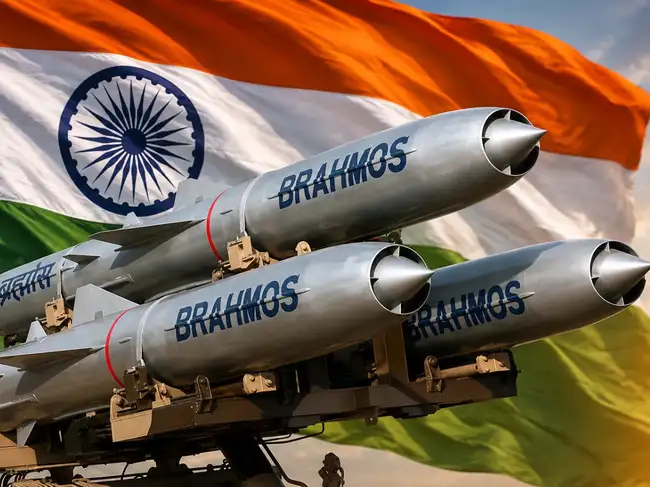
What India built after Operation Sindoor
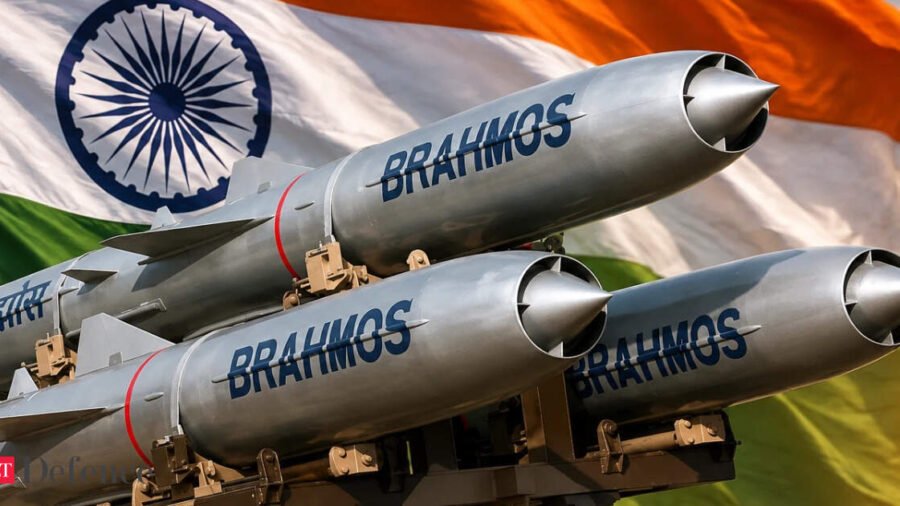
(AI-generated image)
Every major military power has, at some point, had to find out in real time whether decades of doctrine and equipment actually hold up in combat. The United States tested precision strike and networked battlefield systems in Iraq and Afghanistan.
China has used exercises around Taiwan and in the South China Sea to stress-test its navy, air force and missile systems. For India, the last such test before 2025 was Kargil in 1999. Operation Sindoor, the four-day military confrontation with Pakistan in May 2025, became the next one.
Also read: Made in India, deployed abroad: The expanding map of India's arms exports
More than a year on, government data and official statements sketch out what has changed since. Defence experts who spoke to offered their own reading of what worked, what didn't, and what still needs fixing.
The government's account
India's account of the operation has stayed consistent since day one. On May 7, 2025, the government said the Armed Forces had struck terrorist infrastructure at nine sites in Pakistan and Pakistan-occupied Kashmir. The action was focused, measured and non-escalatory, it said, with no Pakistani military facility targeted.
That framing mattered as Islamabad pushed a different version of events. Pakistan claimed India's S-400 and BrahMos installations had been destroyed. Wing Commander Vyomika Singh appeared at a special briefing on May 10 to confirm both remained intact, laying out instead the damage India's strikes had done to Pakistani airbases at Skardu, Sargodha, Jacobabad and Bholari.
Lt Gen Rajiv Ghai, India's Director General of Military Operations, followed up two days later with the operational picture. He briefed reporters on how the country's mix of legacy and modern air defence, counter-drone systems and electronic warfare assets had performed.
An ORF Special Report from June 2025, edited by Harsh V Pant, Vice President at the Observer Research Foundation, and Sameer Patil, Director of its Centre for Security, Strategy and Technology, calls Sindoor India's deepest military campaign since 1971, noting that the strikes hit targets untouched for decades, the Lashkar-e-Taiba headquarters in Muridke, Jaish-e-Mohammad's base in Bahawalpur, Hizbul Mujahideen's in Muzaffarabad.
India has kept up pressure since through non-military means too, chiefly the Indus Waters Treaty suspension and a push to get Pakistan back on the Financial Action Task Force (FATF) grey list.
Also read: NSA Ajit Doval says India can ‘hit hard’ irrespective of consequences in first post-Sindoor interview
A separate Electronic Journal of Social and Strategic Studies (EJSSS) paper notes India sent all-party delegations of 59 MPs to 32 countries and the EU headquarters in the weeks after, to make its case directly.
Pakistan's retaliation had been expected from across the border, since India's own strikes had stayed clear of the Line of Control.
The tech push
If the briefings explained what had happened, the months after were about building for what comes next. The clearest signal came in August 2025, when Prime Minister Narendra Modi used his Independence Day address to announce Mission Sudarshan Chakra, a home-built system he said would not just stop incoming attacks but "hit back at the enemy many times more," expanding to cover strategic and civilian sites nationwide by 2035.
 TIL Creatives
Sudarshan Chakra (AI-generated image)
Defence Minister Rajnath Singh gave the mission its first concrete milestone weeks later, announcing that the Defence Research and Development Organisation (DRDO) had test-fired an indigenous air defence weapon system capable of hitting three targets at once.
Lt Gen Deependra Singh Hooda (Retd.) told that Sudarshan Chakra is, in his view, the single most significant move India has made since the operation.
TIL CreativesDRDO test-fires indigenous air defence weapon system (AI-generated image)
He pointed to newer Army formations built around drones and rapid-strike capability: Rudra Brigades, Bhairav commando units, Shaurya drone squadrons. He also flagged imports already in motion, including more Rafale jets, P-8I aircraft, and five additional S-400 regiments.
Dinakar Peri, fellow at the Security Studies Programme, Carnegie India, pointed to a longer list still. He named Integrated Battle Groups, Bhairav battalions and Divyastra drone batteries, a longer-range BrahMos with a hypersonic variant in development, and major upgrades to the Pinaka rocket system.
A new long-range air defence missile under Project Kusha recently had its first successful test, he said, and a Joint Operations Centre is being set up to bring the pieces together.
A less-noticed part of this build-out is cyber. A peer-reviewed paper in the EJSSS, by Sunaina S, Dr T.K. Singh and Dr Kishor Jose of the Central University of Gujarat, argues that stitching the indigenous Akashteer system together with the S-400, Barak-8, Pechora and Akash platforms pushed India's air defence doctrine from reactive toward proactive.
TIL Creatives1.5 million cyberattacks faced during Op Sindoor (AI-generated image)
The paper also cites a Maharashtra Cyber Department assessment that India faced roughly 1.5 million cyberattacks during the operation, alongside a coordinated Pakistani misinformation push built on AI-generated content and repurposed old footage.
New units, old questions
The Union Budget reflects the same shift. This year's allocation of Rs 7.85 lakh crore marks a 15.19 per cent jump, which the government explicitly linked to costs from the emergency procurement it ordered right after the operation. Capital expenditure alone rose to Rs 2.19 lakh crore, up from Rs 1.80 lakh crore the year before.
Hooda and Lt Gen Kamal Jit Singh (Retd.), former GOC-in-C of Western Command, both cautioned that emergency procurement cannot substitute for long-term capability planning, and that India's military still lacks the assured multi-year budgets that would let it plan that way.
C Uday Bhaskar, a retired Commodore and Director of the Society for Policy Studies, offered a different reading of the same Budget. He pointed to a longer trend running the other way: defence spending as a share of GDP has declined from 2.5 per cent in 2014 to 1.9 per cent in 2025, numbers he said reveal the structural reasons emergency procurement keeps recurring.
Rajnath Singh has repeatedly pointed to the Ordnance Factory Board's 2021 conversion into seven defence public sector undertakings as proof the model works, saying the factories have "transformed from loss-making entities into profit-making units."
Major General Sanjeev Khanna (Retd.) told that six of the seven turned profitable within their first six months, with three earning Miniratna Category-I status. He also pointed to the Advanced Medium Combat Aircraft (AMCA) fighter prototype Request for Proposal (RFP) issued in May 2026 to three private-sector-led consortia, calling it a significant widening of competition in an area the public sector has long dominated.
The export story
The defence export story predates Sindoor, but the operation appears to have sharpened it. reported in June that India's defence exports had already hit an all-time high of Rs 38,424 crore in FY26, a 56-fold rise from a decade earlier, driven by deals like the BrahMos sale to Vietnam and talks underway with Indonesia and the UAE. Khanna's own numbers put the pace at roughly 32 per cent a year since FY 2021-22, which, if it moderates but holds, could see India become a net defence exporter sometime between 2033 and 2040.
This year's official accounting adds a detail: the gain wasn't concentrated in one sector. Private industry brought in Rs 17,353 crore and public sector undertakings Rs 21,071 crore, both up sharply from the year before. Overall defence production touched Rs 1.78 lakh crore, with the private sector's share climbing to 24 per cent from 22 per cent.
The China question
Officially, this is the thinnest part of the record. None of the government's releases on the operation make specific claims about Chinese intelligence or data-link support to Pakistan. Published research goes further: the ORF report's editors write that the operation "demonstrated the enduring Chinese role in enabling Pakistani maleficence," without spelling out how.
Experts read the implications differently. Khanna said India must prepare for a Pakistan front "enabled by Chinese intelligence, surveillance, communications, electronic warfare, cyber capabilities and military hardware." Lt Gen Kamal Jit Singh called it a "fused front," with China likely to treat Pakistan as a testbed for its own frontier technologies. Hooda's take was more measured: what's needed is a clear-eyed assessment that neither over- nor under-estimates what Chinese-origin systems can do.
Also read: One year after Operation Sindoor: How India’s armed forces are transforming
Rahul Rawat, Research Assistant at ORF's Strategic Studies Programme, described the China-Pakistan relationship in similar terms: China's growing military cooperation with Pakistan, he said, is aimed at giving Islamabad "eyes to observe and teeth to bite" against India. At the same time, he noted that Pakistan's continued reliance on non-state actors, despite that backing, suggests India's conventional deterrence "has done fairly well." His advice going forward was to keep strengthening India's Intelligence, Surveillance, and Reconnaissance (ISR) architecture, firepower and mobility.
More confident, not comfortable
Experts broadly agreed that the year since Sindoor has seen real institutional change. Khanna said the operation "should leave India more confident, but not comfortable." A four-day conflict, he said, cannot test the harder things: sustainment, attrition replacement, industrial surge capacity. The real test, he added, was never what happened right after Sindoor, but whether the urgency lasts.
Hooda agreed there is real confidence now, but said it comes with an acknowledgment that doctrinal and organisational reform still has to happen, and how fast that happens will decide whether India ends up with incremental fixes or genuine structural change.
Add 

(You can now subscribe to our WhatsApp channel)
(You can now subscribe to our WhatsApp channel)
Read More News on
India defense overhaulOperation Sindoormilitary confrontation with Pakistandefense exportsPrime Minister Narendra Modicybersecurity in militaryair defense modernizationdefense budget increaseIndigenous defense systems


Enter search text:
Continue reading with one of these options:
Limited Access
Free
Login to get access to some exclusive stories
& personalised newsletters
Login Now
Unlimited Access
Starting @ Rs120/month
Get access to exclusive stories, expert opinions &
in-depth stock reports
Subscribe Now
ET
Unlock Access to All Exclusives with ETPrime FREE TRIAL
15 Days Free: Unlock All ETPrime Exclusives, Market Tools & ePapers
Trial offer expiring in00 : 05 : 00
I'd rather pay ₹2599 now


Uh-oh! This is an exclusive story available for selected readers only.
Worry not. You’re just a step away.

Prime Account Detected!
It seems like you're already an ETPrime member with
Login using your ET Prime credentials to enjoy all member benefits
Log out of your current logged-in account and log in again using your ET Prime credentials to enjoy all member benefits.
Unlock ETPrime's Exclusive Stories Today!
Subscribe to gain powerful insights on business, stock market and industry trends.
Big Price Drop! Flat 40% Off
Student Only Offer
Already a Member? Sign In now
Already a Member? Sign In now
Already a Member? Sign In now
Offer Exclusively For You
Save up to Rs. 700/-
ON ET PRIME MEMBERSHIP
Avail Offer
Offer Exclusively For You
Get 1 Year Free
With 1 and 2-Year ET prime membership
Avail Offer
Offer Exclusively For You
Get 1 Year Free
With 1 and 2-Year ET prime membership
Avail Offer
Offer Exclusively For You
Get Flat 40% Off
Then ₹ 1749 for 1 year
Avail Offer
Offer Exclusively For You
ET Prime at ₹ 49 for 1 month
Then ₹ 1749 for 1 year
Avail Offer
Special Offer
Get flat 40% off on ETPrime
Avail Offer
Avail Offer
Claim NowAlready a Member? Sign In now
Need Assistance?
Connect with an ETPrime expert for personalized support and guidance
+91 9484700004
' + h3 + '
' + h4 + '
- ' + listing + '
What’s Included with

1Exclusive Insights That Matter
Uncover the truth with our investigative stories
Make strategic moves using the real-world case studies
Read industry-specific stories to identify emerging trends
Spot opportunities with in-depth insights that matter

Trump temper on H-1B visas is forcing Indians to do these things to stay put in US

What Adani’s US indictment means for India Inc’s overseas fundraising

Why veterans like Reliance, L&T are on acquisition spree? Aswath Damodaran has an answer.

Will China’s dollar bond sale in Saudi Arabia trump the US in financial world?

Huawei launches its own OS to compete with Google and Apple. But can it win beyond China?

The problem with lab grown diamonds

Why a falling rupee is a better option for the economy

A list of top 20 momentum stocks that have delivered massive returns in one year
2Invest Wisely With Smart Market Tools & Investment Ideas
Alpha Trade

Get daily trade ideas from SEBI-registered research analysts.
Investment Ideas

Grow your wealth with stock ideas & sectoral trends.
Stock Reports Plus

All-in-one stock research with Stock Score, peer comparison & key signals.
BigBull Portfolio

Get to know where the market bulls are investing to identify the right stocks.
Stock Analyzer
Check the score based on the company's fundamentals, solvency, growth, risk & ownership to decide the right stocks.
Market Mood

Analyze the market sentiments & identify the trend reversal for strategic decisions.
Stock Talk Live at 9 AM Daily

Ask your stock queries & get assured replies by ET appointed, SEBI registered experts.
3Stay informed anytime, anywhere with ET ePaper
ePaper – Print View

Read the PDF version of ET newspaper. Download & access it offline anytime.
ePaper – Digital View

Read your daily newspaper in Digital View & get it delivered to your inbox everyday.
Wealth Edition

Manage your money efficiently with this weekly money management guide.
4Times Of India Subscription (1 Year)
ePaper

Read the PDF version of newspaper. Download & access it offline anytime.
Deep Explainers

Explore the In-depth explanation of complex topics for everyday life decisions.
Health+ Stories

Get fitter with daily health insights committed to your well-being.
Personal Finance+ Stories

Manage your wealth better with in-depth insights & updates on finance.
New York Times Exclusives

Stay globally informed with exclusive story from New York Times.
5Enjoy Complimentary Subscriptions From Top Brands
Docubay Subscription

Stream new documentaries from all across the world every day.
Stories you might be interested in

Xi seeks ‘due role’ by BRICS in West Asia mediation
By Sohail Khan · 12 Sep
How to backup Google photos on desktop?
By Sohail Khan · 12 Sep
PM Modi holds bilateral talks with China’s Xi
By Sohail Khan · 12 Sep