India’s democracy needs different electoral rhythms
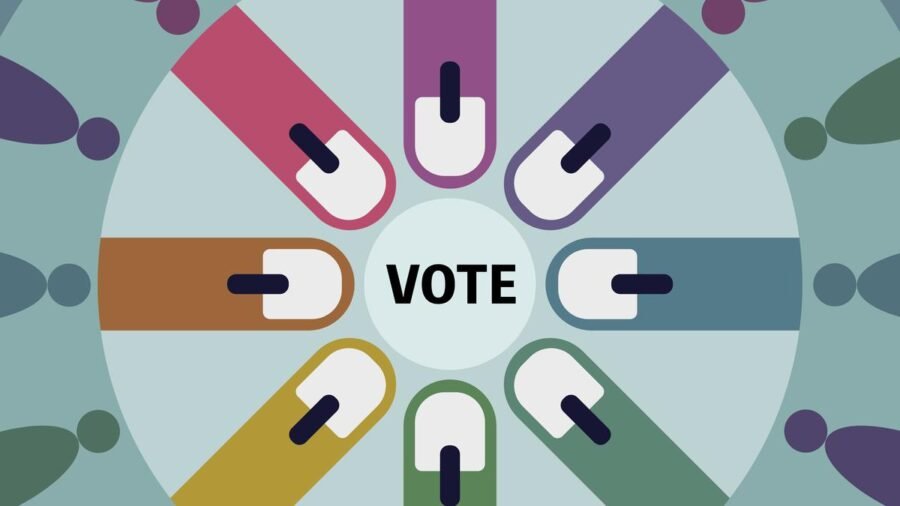
The “One Nation, One Election (ONOE)” proposal (to enforce a uniform, synchronised timeline for national and State elections across India) represents a profound misapprehension of the structural mechanics of the parliamentary system, and poses an existential threat to the federal architecture designed by the framers of the Constitution.
To align the distinct political rhythms of dozens of individual States with the central government, in the name of national uniformity, is to prioritise administrative convenience over democratic substance. The argument for synchronisation relies heavily on a superficial calculation of financial expenditure and an overblown narrative of governance paralysis. Yet, it ignores the fundamental constitutional friction that occurs when presidential mechanics are clumsily grafted onto a parliamentary democracy.
Flexibility at democracy’s core
At the very heart of the parliamentary form of government is the principle that the executive branch derives its legitimacy directly from, and remains continuously accountable to, the legislature. Unlike a presidential system, where the executive is elected independently for a strict, unalterable calendar term, a parliamentary executive exists entirely at the pleasure of the legislative majority. A Prime Minister or a Chief Minister rules only as long as they command the confidence of the house. Consequently, the parliamentary system is inherently built around flexibility; terms are not rigidly fixed because the collapse of a governing coalition, a successful motion of no confidence, or a shifting legislative realignment must naturally trigger a democratic reset. That is why India’s elections, which ran on the same timetable from 1952 to 1967, no longer do: governments at the State and the Centre fell at different times when they lost their legislative majorities, and were elected accordingly thereafter, leading to the current situation where some State or the other is going to the elections every year.
Imposing a fixed-term electoral calendar artificially binds the legislature, completely short-circuiting this parliamentary accountability mechanism. If a government falls, forcing a fixed timeline means that the electorate is stripped of its sovereign right to choose a new government for a full five-year mandate. Instead, the system must resort to truncated midterm Assemblies elected merely to serve out the unexpired remainder of the original calendar. This introduction of variable, short-term governance undermines the stability it claims to protect, creating weak, insecure “lame-duck” administrations whose bureaucrats, police forces and political opponents will simply run down the clock rather than engage in decisive long-term policymaking.
The alternative, of resorting to President’s Rule when a State government falls, rather than holding a fresh election, is even more undemocratic. This would inevitably force a domino effect of constitutional crises that severely erodes the value of a citizen’s vote. Under a synchronised system, the democratic leverage of the electorate is fundamentally distorted. A citizen voting in a midterm election to fill a two-year unexpired term is structurally handed less political bargaining power than a voter casting a ballot at the dawn of the five-year cycle. If full-term and midterm governments wield identical constitutional powers, it is a violation of democratic equity that their corresponding popular mandates carry unequal temporal weight. Furthermore, the logic of synchronisation dictates that if the national Parliament dissolves prematurely due to a fractured coalition in New Delhi, stable State legislative assemblies possessing absolute, robust majorities would be abruptly terminated by operation of law, simply to keep the national “one election” clock on course. To dissolve a functional, democratically elected State government because of a political realignment in New Delhi is a direct assault on the political sovereignty of that state’s electorate, subordinating regional democratic choices to national political dynamics.
National politics will overshadow States
This subordination exposes the deeply anti-federal undercurrents of the synchronisation agenda. India is fundamentally a union of States, a vast pluralistic landscape where regional identities, local economic contexts, and historical trajectories demand distinct political expressions. Federalism is not a mere administrative arrangement; it is a vital mechanism for cultural and political accommodation.
By combining State and national elections into a single mega-event, the distinct boundaries between localised issues and national narratives are blurred. In a synchronised ballot, national parties with vast financial apparatuses and dominant media presence naturally tend to overshadow regional players. Local grievances regarding regional infrastructure, provincial welfare, and cultural preservation risk being entirely subsumed by overarching national rhetoric or geopolitical theatre. Electorates are subtly coerced into prioritising national alignment over regional suitability, a phenomenon captured by the majoritarian push for uniform alignment under the guise of developmental efficiency. This dynamic pressures voters to instal identical parties at both the State and centre, penalising States that choose independent political paths and starving them of federal resources if they dissent from the national ruling party.
The financial justifications used to defend this centralisation of power are equally flawed. The claim that simultaneous elections will drastically cut public spending deliberately conflates the minimal, necessary administrative costs incurred by the State with the unregulated, private campaign expenditures of political parties. The official funds spent by the Election Commission of India to manage independent cycles are a drop in the ocean for an economy of India’s scale, a small and necessary price to pay for maintaining a responsive democracy. Conversely, the vast sums of money circulated by political parties during campaigns actually function as a form of informal economic redistribution, temporarily generating widespread employment and shifting capital back down to printers, local transport networks, artisans, and working-class citizens. To restrict this economic circulation to once every five years under the banner of austerity is an argument that privileges elite fiscal preferences over the periodic economic stimuli that campaigns provide to the informal sector.
Moreover, the complaint that the continuous cycle of elections creates a perpetual state of policy paralysis due to the Model Code of Conduct is an administrative myth. The electoral code is designed strictly to prevent the ruling executive from announcing opportunistic, brand-new financial handouts or executing politically-motivated bureaucratic transfers during the immediate run-up to a vote. It does not freeze the wheels of the State, nor does it halt the execution of ongoing public works, routine governance, or essential administrative duties. The narrative of paralysis is often deployed by executives to excuse structural inefficiencies that have nothing to do with the electoral calendar. In reality, the frequency of independent State elections serves as a critical check on executive hubris, forcing political representatives to regularly return to the doorsteps of their constituents with folded hands. This continuous accountability cycle keeps political parties responsive to shifting public sentiment, whereas a single, synchronised event leaves a five-year void where representatives are essentially insulated from the popular will.
Diminishing the voter’s voice
Ultimately, the drive toward uniform elections is an attempt to transform the organic, messy vitality of a decentralised parliamentary democracy into the rigid, totalising efficiency of an authoritarian state model. It reduces the sovereign voter to a cog in an administrative machine, strips States of their distinct political timelines, and creates dangerous vacuums where insecure, short-term governments cannot effectively rule. By treating elections as an expensive administrative burden to be minimised rather than the primary lifeblood of public accountability, the ONOE model devalues the constitutional spirit of the republic. True democratic strength does not lie in forced conformity or synchronised clocks, but in the enduring resilience of a federal compact that allows its many distinct regions to live, breathe, and vote according to their own unique conditions.
Shashi Tharoor is the fourth-term Member of Parliament (Lok Sabha) for Thiruvananthapuram (Congress party), the Chairman of the Parliamentary Standing Committee on External Affairs and the Sahitya Akademi Award-winning author of 29 books, including ‘Our Living Constitution’
Rishi Sunak, Ro Khanna, Dinesh D’Souza: united by colour; divided among white nationalists
By Sohail Khan · 28 Sep
From Nepal to India, how AI is improving disaster management
By Sohail Khan · 28 Sep
40 years ago September 28, 1986: Relief for Haryana farmers
By Sohail Khan · 28 Sep