India must uphold Indus Waters Treaty, international court rules: What was this case moved by Pakistan
The Permanent Court of Arbitration at The Hague has ruled that the Indus Waters Treaty (IWT) between India and Pakistan remains fully in force, and asked India to continue to “observe its obligations under the Treaty”.
It interpreted India’s decision to hold the Treaty in “abeyance” as a move to “suspend or terminate” the Treaty and ruled that the Treaty did not provide for any one party to “terminate or suspend” the operation of the Treaty, or for “abeyance”.
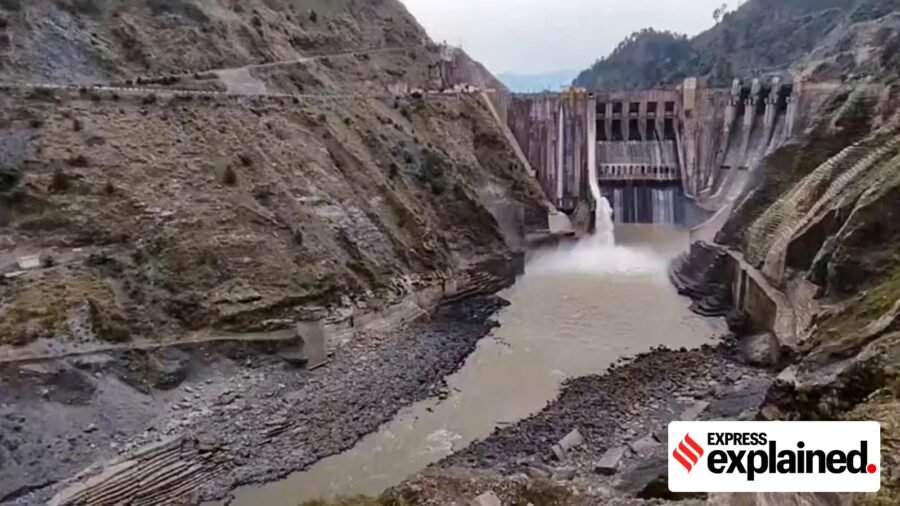
The Court also directed India to temporarily restrict some construction work on the Ratle hydro-electric plant in Jammu and Kashmir.
Story continues below this ad
India, however, does not recognise this Court of Arbitration, formalised in 2023 on Pakistan’s request. It has never participated in its proceedings, and has repeatedly rejected its pronouncements as null and void.
So what does all this mean, and what happens now?
What has the arbitration court ruled on Indus Waters Treaty?
On August 31, the Court issued two decisions in proceedings initiated by Pakistan.
The first dealt with the status of the Indus Waters Treaty. India announced on April 23, 2025, following the Pahalgam terror attack, that the treaty would be held in abeyance until Pakistan “credibly and irrevocably” ended its support for cross-border terrorism.
Story continues below this ad
The Court examined whether this could amount to a suspension or termination of the treaty. It concluded that it could not.
Among other things, it said the treaty itself does not provide for one country to unilaterally suspend or terminate it. As per provisions of the treaty, it remains in force unless India and Pakistan together modify or terminate it through a further treaty.
The Court also considered several grounds that India had referred to publicly — including sovereignty, Pakistan’s alleged material breach of the treaty, terrorism, demographic and technological changes, climate change and armed conflict. It found that none justified suspending or terminating the treaty.
It therefore concluded that the treaty has neither been terminated nor suspended and remains fully in force, meaning India remains bound by its obligations concerning the design and operation of hydro-electric projects on the Western Rivers, as well as the treaty’s dispute-settlement mechanisms.
Why is the Ratle dam part of this?
Story continues below this ad
The second decision concerns the Ratle Hydro-Electric Plant, a run-of-the-river (following the natural flow of river water) project on the Chenab.
Pakistan has challenged certain design features of Ratle and the Kishenganga Hydro-Electric Plant, arguing that they do not comply with the treaty. These technical questions were also put before a Neutral Expert appointed by the World Bank on India’s request. That process was separate from the Court of Arbitration proceedings. After India’s decision to put the Treaty in “abeyance” last year, the process under the Neutral Expert was also discontinued.
Pakistan had asked the Court to impose interim measures.
The Court has now ordered India not to concrete the Ratle dam wall and power intake structure above specified levels. It has also ordered India to report any changes to the Ratle construction schedule.
Why does India reject the ruling?
India has consistently argued that the Court of Arbitration is illegally constituted and that its proceedings run parallel to the treaty-consistent Neutral Expert process.
Story continues below this ad
In July 2023, the government said the treaty did not provide for parallel proceedings on the same issues and maintained that the Neutral Expert process was the appropriate mechanism.
India reiterated this position in May 2026, after the Court issued an award concerning maximum pondage (the maximum volume of water a reservoir can hold). The government said it had never recognised the Court and that its proceedings, awards and decisions were “null and void”. It also said its decision to keep the treaty in abeyance remained in force.
So what happens now?
India’s decision to scrap the treaty has rattled Pakistan, which depends on India for adherence to the treaty and regular information sharing for its water security. Pakistan has repeatedly raised the issues on international fora, from the UN to other bodies, in an attempt to paint India as the aggressor that is taking unfair advantage of its upper riparian position.
Parallelly, Pakistani authorities have been sabre-rattling about the “national security” dimensions of the Indus Waters Treaty being “violated”.
Story continues below this ad
India, however, has held firm in face of the pressure, insisting that blood and water cannot flow together. New Delhi has also pointed out that India had repeatedly asked for renegotiation of the treaty even before Pahalgam, as ground realities have changed substantially since it was negotiated in the 1950s, but Pakistan had not responded to those demands.

Stocks down again — but what are the outliers in India’s share market slide?
By Sohail Khan · 29 Sep
Cash transfers alone cannot tackle the problem of educated unemployment
By Sohail Khan · 29 Sep
Rabbit vs hare: Why one runs and the other hides
By Sohail Khan · 29 Sep