India beat crowdfunded Wales in World Cup battle of disparity
Before Wales had even pushed back at the World Cup, they were already chasing a scoreboard. Not the one inside the iconic Wagener Stadium, but the one on a crowdfunding page. Their target was £40,000. When the tournament began, they were still £1,929 short. In other words, the £38,071 they raised – approximately Rs 49.26 lakh – was roughly what India coach Craig Fulton earns in two months.
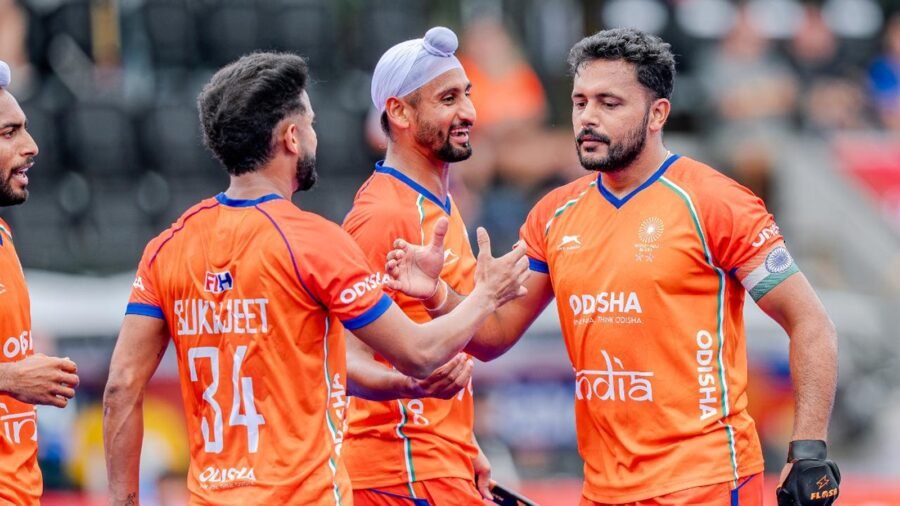
On the field, India beat Wales 3-1 in their opening Pool D match in Amstelveen, producing the sort of controlled performance that Fulton would have expected for most of the match. The defence held firm until the final few minutes, the penalty corners clicked, captain Harmanpreet Singh scored twice and Sanjay, the reserve drag-flicker, also found the net. The display was a clean sheet and a field goal away from reaching perfection. That, however, would be nitpicking — especially since this was the first match of a long tournament.
Yet, the scoreline told only a part of the story. This was also a meeting of two vastly different hockey ecosystems. One team arrived after spending months in a fully funded national camp. The other arrived after asking supporters to help finance its World Cup journey.
Wales pay to play
Months before their second appearance on this stage, Hockey Wales launched an online crowdfunding campaign. The plea starts by explaining ‘who we are’, and goes on to say: “Competing at a Hockey World Cup requires an enormous commitment from players, staff and the wider programme. As a squad, we are training more than ever before as we prepare for the demands of elite international competition. From additional training camps and preparation matches to performance support and travel, the costs involved in competing at this level are significant.”
The donations ranged from as low as £10 to £100, and players — from teenager Nicholas Morgan to veteran goalie Dan Kyriakides, midfielder Rhys Bradshaw and forward Jolyon Morgan — ran individual campaigns to fund their trips.
For a Welsh player, paying to play is not a nascent concept. According to Hockey Wales, players contribute around £1,200 a year towards travel and accommodation costs to wear the national colours. The governing body itself has acknowledged operating on a £100,000 annual budget deficit. The crowdfunding drive is only the latest reminder of the financial realities facing Welsh hockey.
If Wales needed a crowdfunding campaign to get to the World Cup, India spent nearly a year preparing for it in a centralised national camp where every possible facet — from accommodation and meals to sports science support and overseas exposure — was taken care of. Add the crores in government funding and sponsor support, and the two teams could hardly be further apart.
Story continues below this ad
World Cups tend to produce fairytales, where underdogs slay Goliaths. On Saturday, however, David was not the victor. India were expected to win. And, expectedly, they did.
India show no rustiness
Wales are no pushovers. Four of their players routinely turn up for Great Britain in major tournaments, and a couple of them — captain Jacob Draper and Gareth Furlong — were a part of the squad that had an epic run to the quarterfinals at the Paris Olympics.
Yet, for India, this was the match where pressure would have been at its comparative lowest. They face England (August 17) and Pakistan (August 19) in their remaining group-stage fixtures, both challenging for different reasons. The only tricky bit heading into Saturday’s opener was whether rustiness — or distraction, given the controversy over the saffron jersey — would give Wales, ranked 15th in the world, an opportunity.
Those concerns were dispelled from the first minute. Fulton demanded his players display their strength in set-pieces and play with control. He should be pleased with both after this performance.
Story continues below this ad
Hardik Singh and Shilanand Lakra combined to earn a penalty corner in the eighth minute. With Harmanpreet not being on the pitch at the time, Sanjay had to step up. And step up, he did. Fulton has been working overtime to prepare a battery of back-up flickers who can share Harmanpreet’s workload. Sanjay, highly rated for his strong flicks, signalled his readiness with a low finish that went through the legs of the goalkeeper, Toby Reynolds-Cotterill.
The goal gave India an early lift. They began zipping the ball around, moving Wales from side to side and repeatedly finding their way into the circle. But hastiness in the final third meant none of those entries translated into goals.
India kept winning penalty corners, though. And Harmanpreet, who has been far from his best this year, allayed concerns over his form by scoring twice. He will be tested against tougher defences, but the brace should be a morale booster. A defensive lapse in the 56th minute denied India a clean sheet, but in a format where every point counts, pocketing three from the first outing was precisely what Fulton would have hoped for.
Harmanpreet was chuffed with the ‘good game’ his team had played. But he wanted more — more control, more goals and, specifically, a field goal. Against Wales, India did not need to be perfect to secure three points. Now, the real test begins.


Asian Games 2026, Day 10 Live Updates: India chase 5th gold in shooting and athletics
By Sohail Khan · 28 Sep