In Karnataka, employment generation under VB-G RAM G yet to pick up
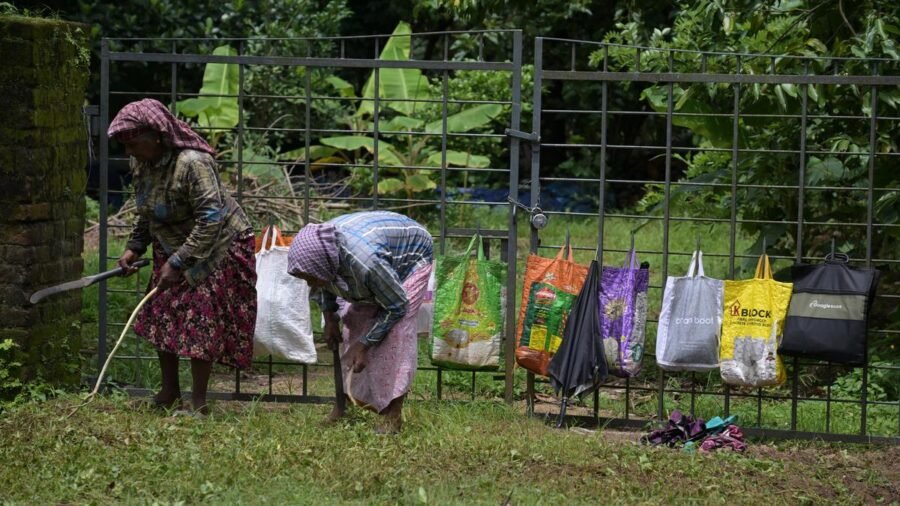
For three years in a row, Belagavi Zilla Panchayat received national recognition after creating up to 1.25 crore person-days under what is now the erstwhile Mahatma Gandhi National Rural Employment Guarantee Act (MGNREGA), recording the highest number of person-days generated and wages transferred to rural poor households in the country in 2024. It also stood second in 2023 and 2025. However, after the Viksit Bharat-Guarantee for Rozgar and Ajeevika Mission-Gramin (VB-G RAM G) replaced MGNREGA from July 1, Belagavi has managed to create only around 3 lakh person-days so far. The story is much the same in other districts as well.
In a year affected by El Niño-induced drought-like conditions across Karnataka, with only two of the State’s 31 districts having received normal southwest monsoon rainfall so far, the number of person-days generated during July and August has declined sharply compared with the corresponding period last year. Officials attribute the drop to a host of factors.
While 61.48 lakh person-days and 36.15 lakh person-days were generated in July and August, respectively, under MGNREGA across Karnataka in 2025, only about 17.98 lakh person-days and 26.27 lakh person-days were generated in July and August, respectively, this year under the newly launched VB-G RAM G scheme. Similarly, 4.95 lakh households and 2.78 lakh households received employment in July and August 2025, respectively, compared with 1.69 lakh households in July this year. However, August this year recorded a higher number of households covered under the rural employment scheme, with 2.83 lakh households participating in the works. Of the State’s 5,958 gram panchayats, 805 have recorded nil expenditure so far. Unlike MGNREGA, the implementation of VB-G RAM G has been slow, mainly due to a lack of clarity over its implementation, officials in North Karnataka districts said. “Initially, there was confusion over the implementation of existing sanctioned works under MGNREGA, and it took some time for us to get clarity. Now, implementation is gradually gaining pace,” said an official in Gadag Zilla Panchayat.
“The old scheme was purely demand-driven, and we could initiate works immediately through any department under the zilla panchayat. Under the new scheme, we cannot start works right away. Each district receives an allotment from the Centre, and prior clearances are needed,” said an officer in the zilla panchayat engineering division in Belagavi. Delay in the payment of wages during the final phase of MGNREGA has also deterred workers from joining the scheme, another official said.
According to Vishveshwarayya Hiremath, convenor of Grameena Koolikarara Sangha, which has been organising MGNREGA workers, employment is not being generated when it is needed. “Workers are not getting employment on time. The type of work, the timing of work and even the number of workers are being determined by the Centre,” he said.
On the technical side, an official in Vijayanagar Zilla Panchayat said: “The system of creating Nominal Muster Rolls is not as easy as it was under MGNREGA. We are facing technical glitches. Also, the coordination between job-giving departments such as engineering, water supply and forests is not smooth.” Also, after the proportion of funds shared between the Centre and the State was altered drastically, the additional burden is deterring the State government from taking up more works.
“MGNREGA was in force for 20 years, and VB-G RAM G has been implemented only since July 1. We are still working out the finer details and fixing technical glitches. It will take at least a year before there is a proper assessment of its utility, in comparison with the old scheme,” said a senior officer in Belagavi Zilla Panchayat.
(With additional inputs from Girish Pattanshetti)

INL calls for united fight against move to shift Mangaluru from Palakkad railway division
By Sohail Khan · 23 Aug
Police vehicle overturns, constable dies
By Sohail Khan · 23 Aug
Leave a Reply