IIT-B allows students rethink their academic journey
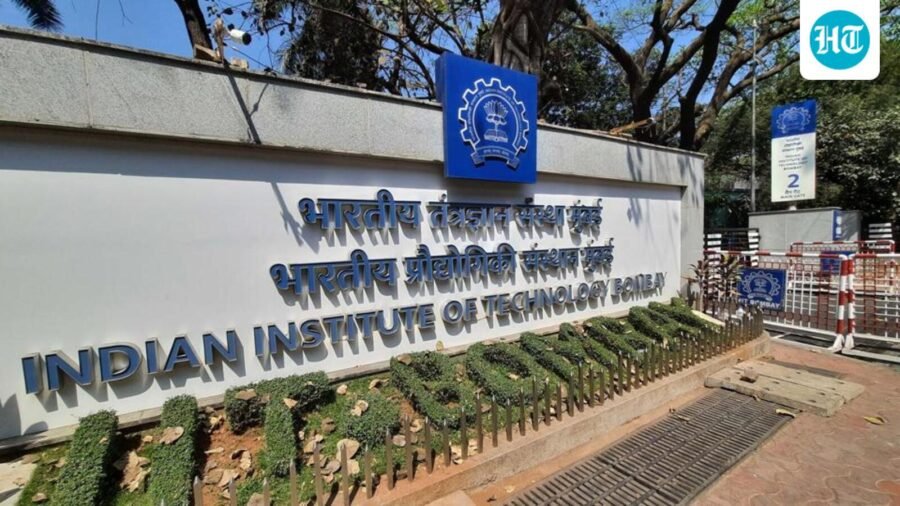
The CME offers a three-year Bachelor of Science degree, for which students can enrol after completing a year in any of the institute’s mainstream engineering programmes
Published on: Aug 16, 2026, 08:03:30 IST
Prefer HTon Google
Share via
Copy link
MUMBAI: Like so many who enrol at the Indian Institute of Technology (Bombay), Rushikesh Shinde dreamt of becoming an engineer. He had made the cut for the bachelor’s degree in mathematics programme at the elite engineering institute – but Shinde wanted more.
He felt the fixed curriculum didn’t give him space to explore his interests, particularly music and music technology. “Everything changed when I learnt about the institute’s Centre for Multidisciplinary Education (CME). Here, I could choose courses from different departments across IIT-B and create and customise my education based on my interests,” says Shinde.
After a year in IIT-B’s mainstream mathematics programme, he switched to the CME in 2023, where he studied artificial intelligence and machine learning, design, electrical engineering, humanities and rural studies. He also worked on projects relating to music technology, including raga recognition and music generation. Shinde later secured an engineering internship at the Expedia Group and received a pre-placement offer from the company.
In August next year, the first batch of students will graduate from the CME, which opened in 2024. The big draw at the centre is that it allows students an opportunity to rethink their academic journey after completing the first year of their undergraduate programme. Instead of remaining on a fixed academic path, students can build their own combination of subjects by taking courses across departments and disciplines at the institute.
“Students make decisions based on their JEE rank and accordingly choose a discipline. But after starting their journey at IIT, many realise this is not really what they want to do for the rest of their lives” says Prof Rajesh Zele, who heads the CME.
The CME offers a three-year Bachelor of Science degree, for which students can enrol after completing a year in any of the institute’s mainstream engineering programmes. Depending on the student’s dominant area of study, the CME degree can be in natural sciences, engineering sciences, social sciences, or arts and design. Students can also pursue a minor.
At the CME, students can choose courses from across the institute. To make sure they maintain a multidisciplinary education, they are required to explore six broad foundation areas in the second year. These include humanities and social sciences, design, management, economics, environmental and rural studies, along with engineering. The idea is to expose students to different fields before they decide what combination they want to follow, says Zele, an IIT-B alumnus with two decades of experience in the semiconductor industry.
Every CME student is assigned a faculty advisor, who advises them on courses and academic projects while allowing them the freedom to choose. They take courses from different departments and also work with teachers from across the institute.
Zele says there are checks to ensure students don’t opt for a degree at the CME simply to follow the latest popular subject. “We don’t want this to be an exit strategy to take all the artificial intelligence courses or whatever the hot topic of the year is. We want them to do a truly multidisciplinary combination of courses,” he says.
For example, a student interested in starting a business in sustainability could study management, economics and design along with environmental studies. Another student could combine engineering with humanities or music-related courses.
Zele says the CME is gaining momentum, with the number of students enrolling rising from 12 in the first batch, to 15 in the second batch and 22 students in the third. He says CME graduates are well received by industry. The first batch of graduates secured internships with companies that included Visa, Expedia, Coinbase, Battery Smart, among other firms. One student has also worked on his own start-up.
According to Chandrakant Salunkhe, president, SME Chamber of India and SME Business Management Institute, “Today, possessing knowledge through a multidisciplinary education is very important for industry.” He adds, “This approach also prepares students for the changing needs of industry. It also gives them the knowledge and skills needed to explore new ideas and become entrepreneurs.”
For Shinde, CME allowed him to connect technology with music. He plans to work in the corporate sector before he starts his own venture in music technology or rural development. Alongside, he hopes to expand his creative talents.
According to Zele, this is the very purpose of CME. “Students leave the programme not with identical academic backgrounds but with different combinations of knowledge based on their interests. Each one will come out differently; each one will have a different palette of education,” he says.
Shireesh Kedare, director, IIT-Bombay, says, “CME is a new way at IIT-Bombay. It’s about helping students to listen to their own voice. It’s about helping students to get excited about life with an integrated approach. This is critically important today.”
Catch every big hit, every wicket with Crickit, a one stop destination for Live Scores, Match Stats, Infographics & much more. Explore now!
Stay updated with all the Breaking News and Latest News from Mumbai. Click here for comprehensive coverage of top Cities including Bengaluru, Delhi, Hyderabad, and more across India along with Stay informed on the latest happenings in World News.
See Less