How to make a solar-heavy grid stable and affordable
By Jaideep Saraswat and Vrinda Gupta
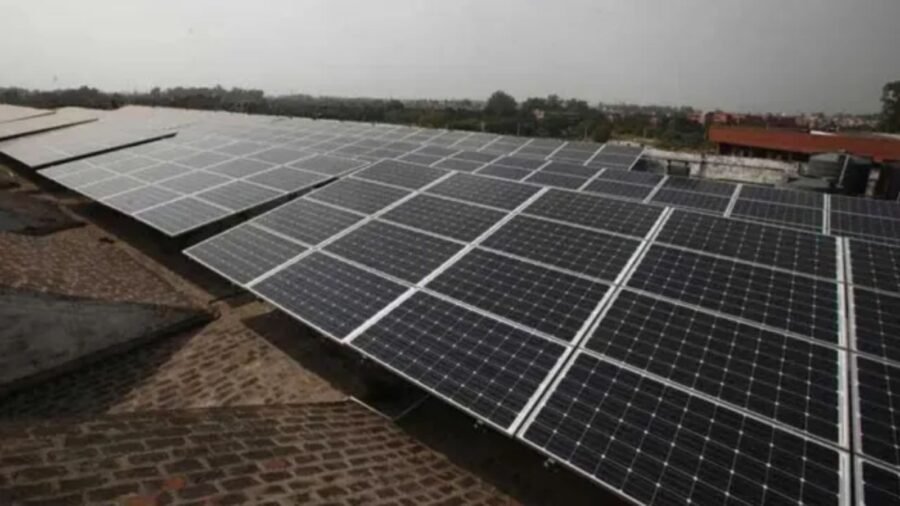
India has emerged as a global climate leader, securing its position as the world’s third-largest installer of renewable energy (RE) capacity. It has not only achieved its previous Nationally Determined Contribution target of 50 per cent non-fossil fuel capacity by 2030, five years ahead of schedule, but also set an ambitious revised target to achieve 60 per cent cumulative electric power installed capacity from non-fossil fuel sources by 2035. With 283 GW of RE already installed and another 150 GW in the pipeline, India’s trajectory toward the 500 GW RE capacity target by 2030 appears firmly on track. The remarkable progress has been built on more than a decade of sustained policy focus and technological advancement. India has, in essence, solved the easier hard problem: Deploying RE capacity at scale. A more complex challenge has emerged: ensuring that these intermittent renewable sources can be reliably integrated into the grid while maintaining system stability and containing costs for consumers.
Advertisement
Electricity generation from intermittent RE sources does not always align with demand. The grid must continuously balance supply and demand, and this mismatch creates operational strain. In the first six months of this year, India experienced solar curtailment of approximately 8,133 million units (MUs). Part of this curtailment stems from transmission congestion in corridors where renewable projects concentrate, but a significant portion arises from a simpler yet intractable problem of insufficient demand during peak solar generation hours.
Moreover, the grid faces technical stability concerns that become more acute with higher RE generation. Solar and wind resources are inverter-based technologies, meaning they operate fundamentally differently from traditional synchronous generators. This shift reduces the short-circuit ratio (SCR) at grid nodes and introduces new vulnerability to small-signal oscillations and frequency disturbances. Growing RE penetration is increasing the need for flexible power sources that can rapidly step in when solar or wind generation unexpectedly declines. The current architecture, designed around predictable thermal generation, struggles to absorb rapid generation swings.
Compounding these challenges, the obvious solution of battery energy storage systems (BESS) faces serious headwinds. While utility-scale storage will play an important role in the long run, its widespread adoption continues to face practical constraints including high costs, import dependence, and limited domestic value addition. A recent Uttar Pradesh tender for four-hour peak battery storage priced electricity at ₹6.45 per unit even after government viability gap funding. For comparison, the weighted national Average Power Purchase Cost (APPC) for coal-based thermal power is around ₹4.67/kWh, while utility-scale solar power is available at roughly ₹3.65/kWh in FY 2024-25. So,
Advertisement
India must look beyond familiar solutions and leverage multiple complementary mechanisms to stabilise the grid.
The most direct path forward lies in increasing electricity consumption during peak renewable generation hours. If the system cannot store surplus solar energy affordably, it must use it immediately. Industrial electrification represents the logical anchor for this strategy. India stands at a technological inflection point where numerous industrial processes are ripe for transitioning to electrified alternatives. Heat pumps, pulsed electric field drying, resistance ovens, and other advanced technologies are all approaching commercial viability. Many industries have signalled genuine interest in renewable integration through rooftop solar systems and open access procurement, yet they confront a fragmented ecosystem of multiple vendors, regulators, and service providers. What industry needs is not subsidies but coherent support systems.
Central to this vision are energy transition orchestrators that can serve as single-window solutions for transitioning industries. These organisations would bundle energy efficiency solutions, process electrification support, clean heat integration, and RE-procurement into comprehensive packages. Critically, they must demonstrate expertise in demand aggregation to secure favourable pricing from renewable generators and possess strong financial capabilities to access low-risk and low-cost project finance. India should establish a dedicated policy framework to encourage such organisations and define regulatory pathways for their operation.
Electric vehicle (EV) charging represents another powerful lever for daytime demand. India’s emerging EV market currently lacks strong price signals that incentivise charging during high-solar hours. Time-of-use tariffs should create a larger gap between peak and off-peak electricity prices so that consumers have a stronger incentive to shift flexible electricity use away from peak demand periods. Equally important are innovative interventions such as the ‘Charge at Workplace’ policy, where employees charge vehicles during work hours when solar generation peaks and EVs stand idle. Madhya Pradesh’s 2025 EV policy has already begun signalling support for such arrangements, and futuristic organisations have begun offering workplace charging as a talent attraction benefit. Scaling these initiatives requires coordination between utilities, employers, and regulators.
Distributed RE paired with small-scale battery storage offers a third avenue for demand matching. India’s rooftop solar program has achieved remarkable scale, with over 49.8 lakh installations demonstrating public appetite for distributed generation. The next logical phase involves pairing these systems with residential battery storage and creating hybrid systems with surplus midday generation charging home batteries for evening consumption. Further, grid-tie inverters equipped with smart controllers can limit solar feed-in based on real-time grid requirements, creating a distributed flexibility resource. This approach distributes storage across millions of households rather than concentrating it in utility-scale facilities, thus reducing bulk battery costs while improving local voltage stability.
Finally, India must acknowledge a difficult truth that at higher RE generation levels, curtailment will become a routine operational necessity rather than an exceptional event. The current approach treats curtailment as a failure of policy and planning. A more sophisticated framework would treat it as a grid-balancing tool and ensure generators receive fair compensation when dispatched to reduce output. This reframing enables predictable behaviour and reduces generator resistance to renewable integration. Several market instruments can support such a framework, including Congestion Revenue Rights (CRRs), competitive curtailment markets, and balancing market settlements. Together, they can improve predictability, allocate costs efficiently, and reduce resistance to RE integration while maintaining system reliability.
India’s RE transition now enters a second phase fundamentally different from the first. The initial challenge was deployment; the emerging challenge is integration. Success requires simultaneously addressing three dimensions: Elastic demand that responds to renewable availability, distributed storage that buffers generation variability, and market mechanisms that fairly compensate flexibility services. None of these solutions is novel independently, but their coherent orchestration within India’s regulatory framework requires dedicated focus and coordination. This will ensure that India’s RE achievement becomes a model of effective grid integration while mainstreaming deep electrification as a robust, future-proof strategy across all demand sectors.
Saraswat is associate director, Clean Power, Electric Mobility and Emerging Technologies, and Gupta is associate director, Energy Transition at Vasudha Foundation

Moon gardens are trending: 5 plants and easy tips to create one at home
By Sohail Khan · 28 Sep
Turmeric, honey, and yoghurt: Decoding Ananya Panday’s glow secret
By Sohail Khan · 28 Sep
SpaceX puts Starship megarocket in orbit for first time
By Sohail Khan · 28 Sep