How the Iranian Shahed Drone Transformed War—With China’s Help

The rapid rise of cheap one-way attack drones was made possible by a complex global supply chain that keeps leading back to China.
Updated on: Aug 26, 2026, 15:13:28 IST
Prefer HTon Google
Share via
Copy link
In early July, terrifying shrieks were heard across Kyiv. As part of a wider attack on the Ukrainian capital, Russia had launched cheap one-way drones powered by turbojet engines instead of propellers.
The Shahed drones, now more like missiles, were capable of flying up to around 300 miles an hour—roughly three times as fast as older versions. Some 30 people were killed in the attack, which also included ballistic and cruise missiles.
It was the latest innovation in one-way attack drones and, like others, it only became possible thanks to China, whose factories provided the engines, according to Ukrainian officials who examined some of them.
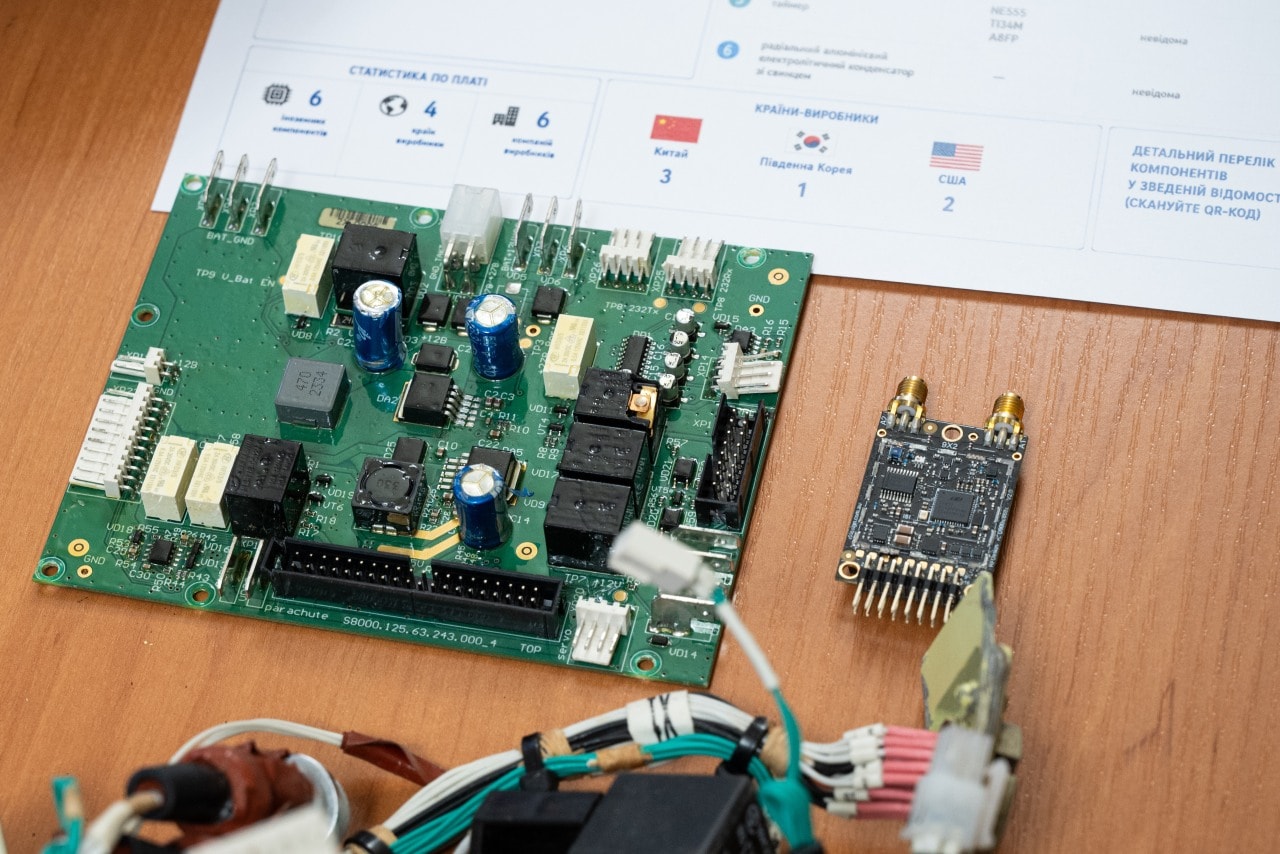
Washington’s main strategic rival has long served as arguably the most important clearinghouse for Shahed components, including engine parts, servomotors and gyroscopes, according to current and former U.S. officials and analysts.
It is part of a complex global supply chain that analysts say enabled an isolated country—Iran—to pioneer and share one of the most transformative military innovations of the era: cheap, flying, killing machines that have bedeviled the U.S. and its allies, added to the civilian toll in Ukraine and undermined America’s military edge in the Middle East.
China’s foreign ministry didn’t respond to a request for comment. It previously said it strictly regulates the export of “dual use” components, which can serve both civilian and military purposes. It rejects unilateral U.S. sanctions that punish unauthorized trading of such parts, saying they violate international law.
The Shahed—a deceptively simple and destructive flying wedge of fiberglass, microchips and explosives costing as little as $20,000—helps show how weapons proliferation has changed, and why tapping global supply chains is now so important.

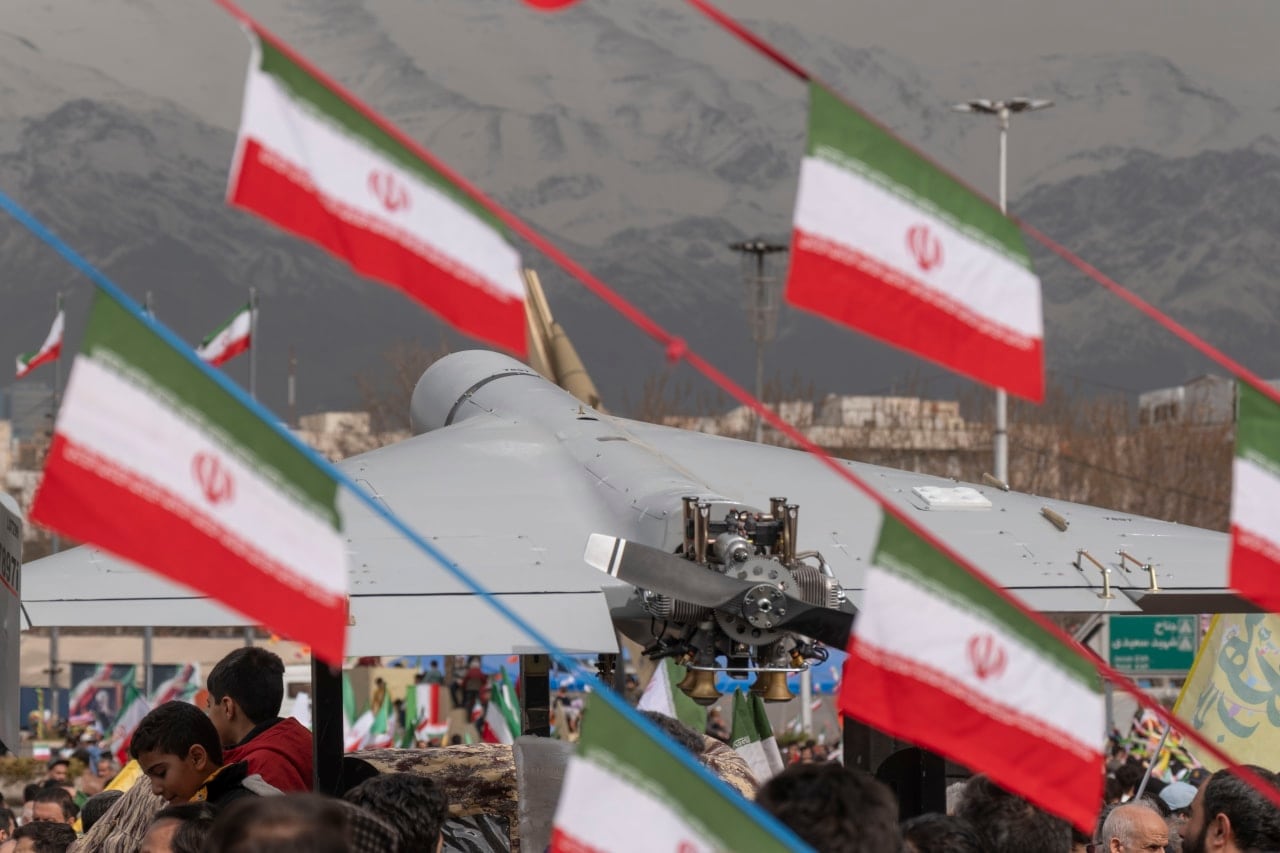
In the past, technological innovations in warfare tended to come from major powers that had their own industrial bases, enabling them to produce their weapons at scale. The AK-47 rifle is a good example: It was developed by Russian designers, influenced by a German assault rifle, then mass-produced by the Soviet Union’s sprawling factories.
In today’s world, however, any country with an idea for a weapon—even a middle power such as Iran—can turn to cheap parts suppliers abroad, especially in China.
To develop Shaheds, Iran employed a design pioneered by the U.S. and West Germany. To actually make them, however, Tehran had to source parts from across the globe, including Western nations as well as China. Yet even the Western parts tended to get moved through shell companies in mainland China or Hong Kong to disguise their origin, and over time, many were replaced by components made there, according to former U.S. officials, Ukrainian officials and analysts.
Hong Kong’s government said it vigorously enforces United Nations sanctions but not those imposed unilaterally by individual nations, which it says violate international law.
The Shahed and its variants continue to wreak havoc. Shahed drones helped devastate a U.S. base in Bahrain at the start of the war with Iran, fueling Navy logistics problems. Ukraine’s air force says Russia has launched Shaheds each night this month. Such drones have also forced the U.S. and its allies to burn through pricey interceptors.
China and India have revealed their own versions. Iran has also sold its drone technology to Venezuela, Syria and Ethiopia, according to the U.S. Department of Defense, while Russia’s Africa Corps has used Shaheds in Mali. The U.S. military, meanwhile, was inspired by Shahed technology to develop a low-cost drone that it has used in the war with Iran.
“We’re going to see these things everywhere,” said Mick Ryan, a military analyst and retired Australian Army major general.
Born from isolation
The first warning was the buzzing. The crew of the MV Mercer Street, an oil products carrier sailing off Oman’s coast, heard a loud hum followed by an explosion in the waters behind them early on July 29, 2021. A few hours later, a similar light green, delta-shaped drone slammed into the pilot’s cabin, killing the Romanian captain and a British security officer.
They were the first known victims of the Shahed-136 drone, whose precursors had only appeared in Iranian state media and 2019 strikes on Saudi oil facilities.
The drone was the product of decades of work by Iran to rebuild its air force, which had been decimated by purges and defections after the country’s 1979 revolution, as well as U.S. embargoes on parts for American-made aircraft.
Iranian engineers likely benefited from Western designs, analysts say. In the 1980s, the U.S. and West Germany collaborated on a drone to take out radar systems. An Israeli company later built a similar drone known as the Harpy.
Iran likely had some access to Harpy drones used by Israel in Syria or Lebanon, said Farzin Nadimi, a senior fellow at the Washington Institute for Near East Policy. But the design had also been widely known for years in military journals.
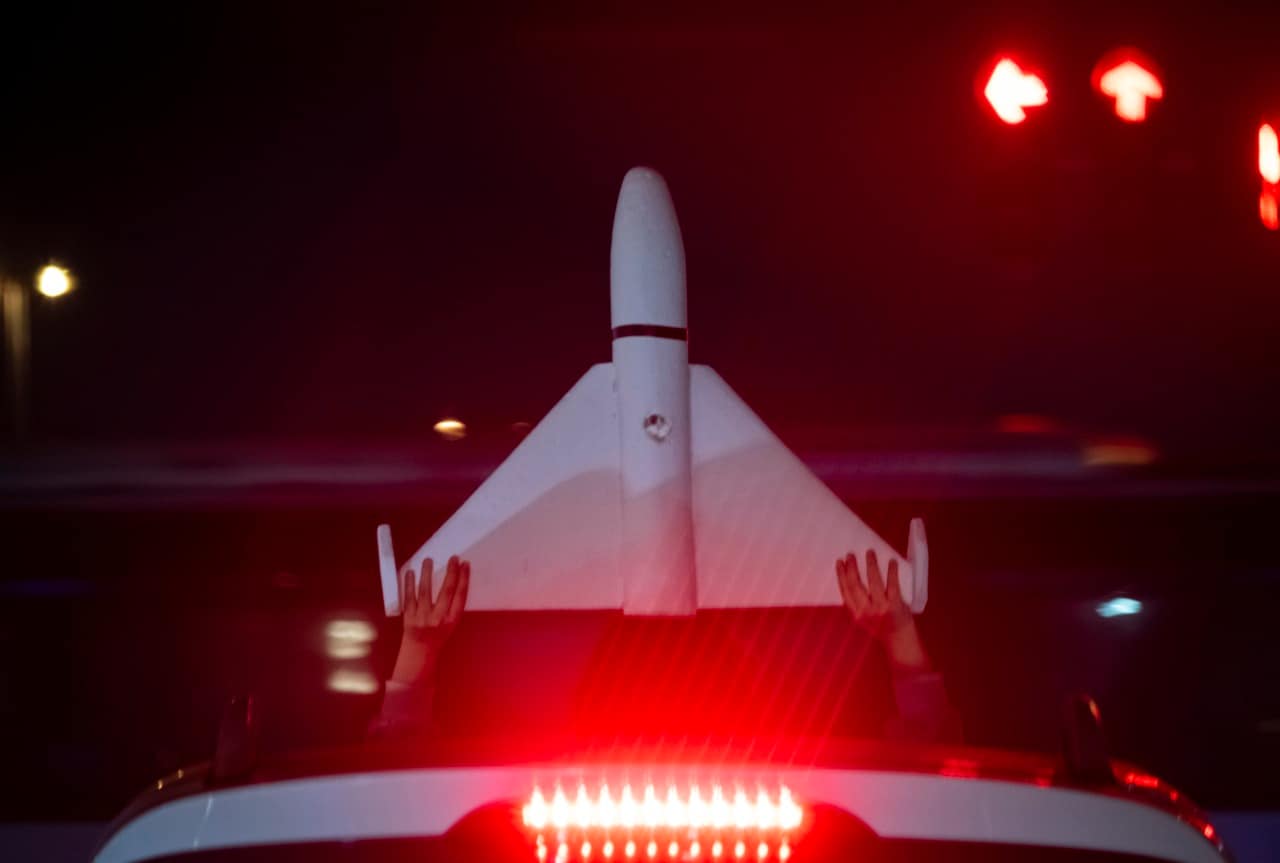
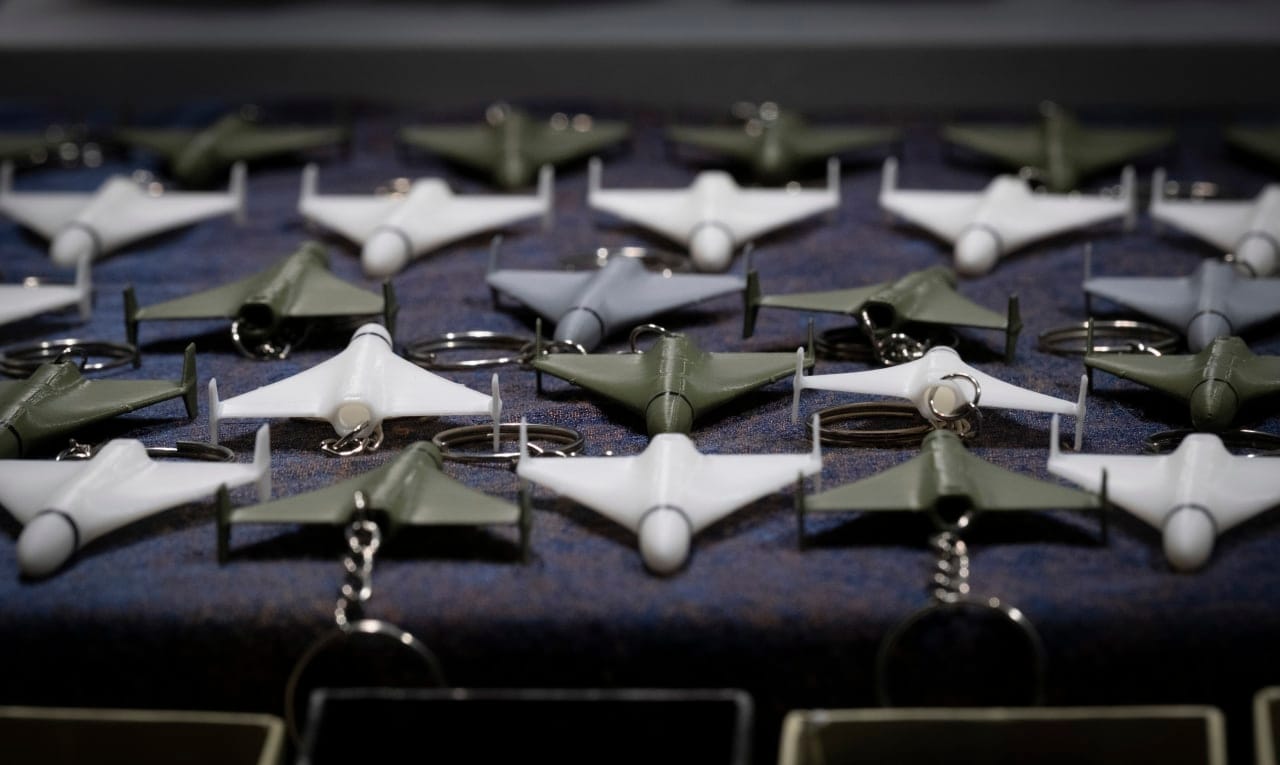
Early Iranian drones, including some tested during the 1980s Iran-Iraq war, were used for reconnaissance and air support, with antitank rockets strapped under the wings.
But those UAVs were highly inaccurate. That spurred a shift toward one-way attack drones, which Iranian engineers reckoned could still do significant damage, even if they didn’t hit their targets. The name Shahed, or “witness,” came from Shahed Aviation Industries Research Center, an Iranian company tied to the Islamic Revolutionary Guard Corps, U.S. officials and analysts say.
One big obstacle for Iranian engineers was coming up with an engine that could sustain high speeds and temperatures for hours at a time. The best option was a German-designed engine known as the L 550 E.
A 2008 WikiLeaks cable from U.S. diplomats to their German counterparts detailed how Iran obtained the engine from its maker, Limbach Flugmotoren, possibly with the help of intermediaries using fake documents to throw customs inspectors off the scent.
In 2012, a Chinese company began distributing Limbach’s engines and then bought the German company outright in 2017, making it easier for Iran to import the engines. The Treasury Department later sanctioned the Chinese company’s affiliate, Xiamen Limbach Aircraft Engine, for supplying the engines to Russia for its drone program.
Xiamen Limbach didn’t respond to requests for comment.
Iran eventually developed its own engine based on the Limbach models, led by Oje Parvaz Mado Nafar Company, a Revolutionary Guard-linked firm, according to the U.S. Treasury. But it, too, relied on cheap components sourced through China.
The U.S. imposed sanctions on Mado in 2021. Ukraine later said the company’s co-owner and chairman, Brig. Gen. Abdollah Mehrabi, was directly responsible for a 2022 deal that sold more than 13,000 Shaheds to Russia, along with components and manufacturing equipment, for $324 million.
Iranian and Russian officials didn’t respond to requests for comment.
The U.S. sanctions against Mado also targeted a Chinese businessman named Ma Jie for helping supply parts. The work allegedly included arranging meetings between Iranian defense officials and Chinese suppliers and using companies in mainland China and Hong Kong to buy parts to make engines for Shaheds, such as aluminum alloy castings.
Iran’s and Russia’s one-way drones have also relied on parts from Western countries. These include microcontrollers from Texas Instruments and linear regulators from STMicroelectronics in Switzerland, according to teardowns of the drones by Ukrainian state researchers, leaked documents from Russia and analysts.
However, investigations by the Treasury Department found that virtually all of the American and European parts were being diverted through Chinese intermediaries. Shell companies, often in Hong Kong, would order parts from Western suppliers while disguising that the ultimate destination was Iran or Russia.
Texas Instruments said it “strongly opposes the use of our chips in Russian and Iranian military equipment and the illicit diversion of our products to Russia and Iran.” STMicroelectronics said it doesn’t support or condone the use of its products in applications outside their intended purpose.
Chinese advancements
Over time, Western components have been disappearing from the Shahed, Ukrainian officials and analysts say, even as the drones gain more sophisticated navigation and attack capabilities.
Col. Oleksandr Zaruba, a senior government researcher in Ukraine, said in June that Shaheds are now found with more antennae, modems and SIM cards to correct flight paths using local networks—and that the components increasingly come from China.
Some of the drones have been found with antiaircraft weapons, Zaruba added, which would make them a far greater threat to the planes and helicopters used to shoot them down. Photographs of one such drone shown to reporters in Kyiv in June showed a large antiaircraft missile strapped to the top of a Shahed, an echo of the antitank weapons that Iranians attached to early drones in the 1980s.
The missile wasn’t functional and was likely intended to scare off aircraft attempting to down the drone, Zaruba said.
Russia sometimes launches Shaheds, which it calls Geran, alongside ballistic missiles in an effort to overwhelm defenses. The missiles carry more punch and caused many of the deaths in the July 2 attack on Kyiv. But Shaheds are cheaper and can be sent in far greater numbers, straining Ukrainian defenses.
Ukrainian President Volodymyr Zelensky singled out Russia’s use of turbojet-powered Shaheds after the July 2 attack. Ordinarily, Ukraine is able to stop more than 90% of the older one-way drones Russia sends. But the new turbojet models can outrun interceptor drones made by Ukraine and must be downed by jet fighters or Ukraine’s limited supply of interceptor missiles, Ukrainian officials say.
The Chinese company that Ukraine’s government says makes the turbojet engines, Telefly Telecommunications Equipment, was founded in 2010 in the southern Chinese commercial hub of Shenzhen. It is chiefly a maker of computer hardware and communications equipment, but also sells its own line of micro turbojets, which are small engines used in drones.
Telefly didn’t respond to requests for comment.
After Ukraine publicized the discovery of Telefly engines in Russian drones, the turbojets section disappeared from English-language pages on the company’s website. They can still be found on its pages in Chinese and other languages and on other Chinese vendors online.
“For a long time the focus for making the Shahed was about getting Western parts. They focused on that a lot,” said Kerri Bitsoff, a former Treasury Department official. “Now I think that has shifted as China has become better at manufacturing parts and technology like this.”
Write to Austin Ramzy at austin.ramzy@wsj.com
See Less