How a new mining Bill threatens to reignite Centre vs state tensions
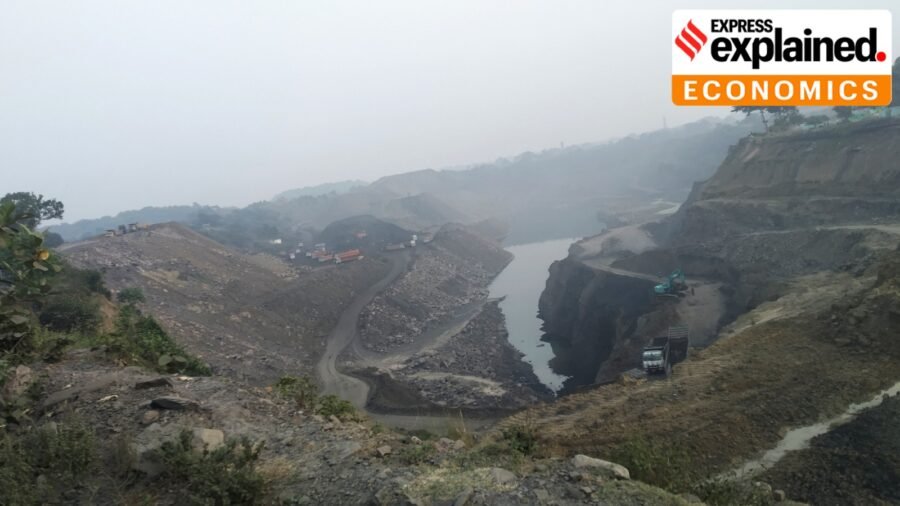
The passage of the Mines and Minerals (Development and Regulation) Amendment Bill, 2026, in both Houses of Parliament has reignited a long-running tussle between the Centre and states over the taxation of mineral resources and the revenues they generate.
The amendments seek to restrict states from imposing specified levies on mineral rights and mineral-bearing land, even as several mineral-rich states have begun exploring such levies following the Supreme Court’s landmark 2024 ruling upholding their power to tax mineral rights.
The move has drawn sharp opposition from states. Jharkhand Chief Minister Hemant Soren has threatened protests against the amendments, saying they could significantly dent the state’s prospective revenue, while Kerala Chief Minister V D Satheesan has raised concerns over their implications for India’s federal structure.
Among the states, Tamil Nadu and Jharkhand are the ones who have already imposed such levies, while Karnataka has proposed a similar measure.
The Bill will also extinguish unpaid or unrecovered dues arising from such levies imposed before it comes into force, with some estimates putting the value of such outstanding dues across the mining sector at around Rs 2 lakh crore. The Centre, however, maintained that unchecked state-level levies could raise the cost of key minerals, feeding into inflation and infrastructure costs.
So, what exactly does the amendment change, how much revenue could states stand to lose, and what does it mean for the Centre-state balance over mineral taxation?
Fiscal certainty for mining industry
According to Mines Ministry officials, the amendments seek to address what the Centre considers excessive cess and other levies imposed by some states following the Supreme Court’s 2024 judgment.
Story continues below this ad
In its July 25, 2024 ruling, the Supreme Court upheld the power of states to levy taxes on mineral rights and mineral-bearing land. It also waived interest and penalties on tax demands for the period before July 25, 2024, and allowed the payment of such dues to be staggered over 12 years from April 1, 2026.
The judgment overruled the 1989 ruling in India Cement Ltd v. State of Tamil Nadu, which had held that royalty was a tax and that states lacked the legislative competence to tax mineral rights, as the subject fell under the Union List. The 2024 ruling opened the door for states to raise additional revenue from mining.
Subsequently, Karnataka proposed a tax on non-auctioned iron ore mines, while Jharkhand and Tamil Nadu introduced mineral-bearing land (MBL) taxes. In Jharkhand, the MBL tax on iron ore was initially set at Rs 100 per tonne and later raised to Rs 400 per tonne. Tamil Nadu has imposed an MBL tax of Rs 160 per tonne on limestone.
B K Bhatia, mining industry expert and former Director General of the Federation of Indian Mineral Industries (FIMI), told that the amendments would help prevent states from imposing multiple and excessive levies on mining companies.
“Apart from royalty, District Mineral Foundation and National Mineral Exploration and Development Trust contributions, mining companies currently pay various other cesses, including environmental and pollution cesses. But the mineral-bearing land tax was the biggest additional burden on the industry,” Bhatia said.
Story continues below this ad
According to him, while the amendments will help the mining industry by providing greater certainty over the fiscal burden, they are unlikely to result in any material revenue loss for states, as most of these levies have been legally contested for decades, resulting in large amounts of pending dues.
On Thursday (August 13), a senior official at the Mines Ministry said that there are around 14 levies in the mineral sector and these levies will continue to be there. “All we are saying is all these levies together should not be beyond a certain percentage,” a senior ministry official said, adding that this percentage will only be decided after consultation with all the states.
States’ revenue loss
The dependence on mineral revenues is particularly significant for mineral-rich states. According to a Comptroller and Auditor General of India report on state finances, states’ own non-tax revenue stood at Rs 3.3 lakh crore in 2024-25, of which 41% — or Rs 1.36 lakh crore — came from receipts related to mineral and petroleum.
While these minerals and petroleum receipts accounted for a mere 3.4% of all states’ revenue receipts, for mineral-rich states, the proportion was much larger: 23% for Odisha, 13% for Jharkhand, and 5% for Chhattisgarh.
Story continues below this ad
Prabhat Ranjan, Senior Director at Nexdigma, a global consulting and advisory firm specialising in tax, regulatory, risk, governance, and business advisory, said the amendments would, in effect, serve as a cost-containment and investment-certainty measure for mining companies, but concerns over potential revenue loss for states cannot be brushed aside.
“The outcome should not be viewed as a choice between competitive mining and state revenues. Instead, the Centre should use the new framework to establish reasonable and transparent guardrails, while ensuring adequate consultation with mineral-producing states,” he said.
“The reform will only succeed if it reduces fiscal unpredictability for industry without leaving mining states inadequately compensated for the burdens they bear,” he added.
On Thursday, Jharkhand Chief Minister Hemant Soren, in a letter to Prime Minister Narendra Modi said mining revenue accounted for approximately 84.9% of the state’s own non-tax revenue in 2024-25. Soren claimed the Mineral Bearing Land Cess, which the state has been imposing on mining companies, was expected to generate approximately Rs 11,000 crore annually.
Story continues below this ad
“These figures demonstrate that mineral-related revenues are not marginal receipts but a critical component of the state’s fiscal capacity. Any substantial restriction on this revenue would directly affect the state’s ability to sustain developmental, welfare and social-security interventions,” the letter read.

The Koran and politics of purdah
By Sohail Khan · 22 Sep
Persistent antagonism towards Urdu
By Sohail Khan · 22 Sep
How ‘kaata wash’ helps preserve the delicate Dhakai jamdani sari
By Sohail Khan · 21 Sep