HMT-made tractor, ‘70s jeep among planters at Srinagar’s first-ever ‘waste-to-wonder’ garden
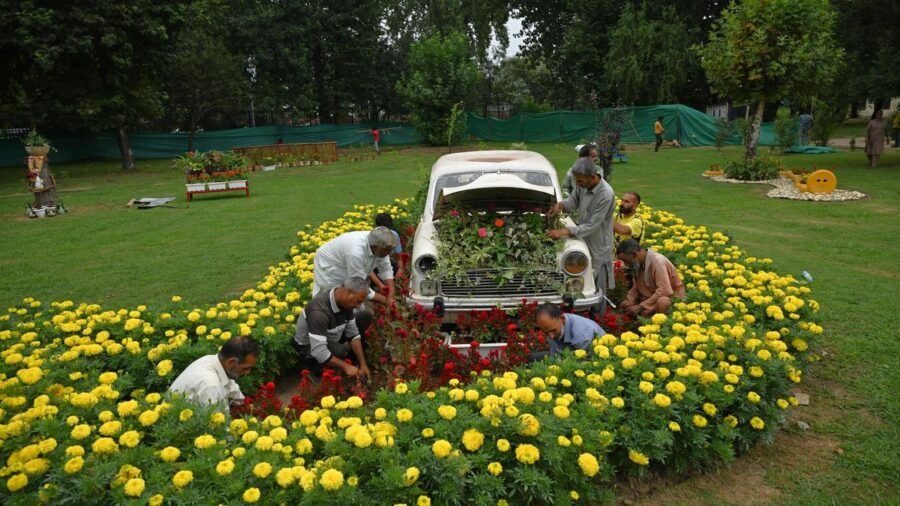
A rare tractor made by HMT Ltd from the 1970s, an old jeep of the Jammu and Kashmir Garages Department and a pre-1970 ticket counter of the famous Chashme Shahi Garden have doubled up as planters in the first-ever zero-carbon-producing recreational and healing garden inaugurated on Friday (August 21, 2026) in Srinagar.
“We tried to use abandoned vehicles like jeeps, wooden ticket posts and tonga (horse-driven cart) from the pre-70s as installations in the garden. It’s our bid to have a waste-to-wonder theme garden in Srinagar. The lights of the garden are run by solar panels. It’s the first garden with zero carbon emissions. All the installations in the garden are donated. We have not purchased any installation,” said Masooma Banoo, Director, Floriculture, Kashmir, told .
The garden is located at the centre of Srinagar’s Polo View area, providing a rare green space for the nearby congested localities of Barbar Shah and Maisuma. “We want locals, especially women and children, to use the park to enjoy the installations and learn about the flower varieties of Kashmir. We would be happy to incorporate any installations offered by locals for the garden,” said Ms. Banoo.
Kashmir has a total of 271 gardens, with the highest number of around 93 gardens in Srinagar. It’s adorned with installations like a vintage Ambassador car, a classic Kashmiri tonga, a floral boat, a floral scooter, a heritage jeep, a floral tractor, old tyres and other reclaimed items.
The garden also launched a rare initiative of “Take a plant and make a promise”. “We will be distributing free plants like succulents, caladiums and hanging varities among locals with a promise to nurse them at homes,” said Ms. Banoo.
Meanwhile, J&K Chief Minister Omar Abdullah inaugurated the garden on Friday (August 21). “The initiative was aimed at promoting recycling, reuse and greater public awareness about plastic waste. The message of the garden was to encourage responsible reuse and prevent plastic waste from ending up in drains,” said Mr. Abdullah.
The garden has been conceived as a thematic model landscape based on the principles of Reduce, Recycle, and Reuse (RRR). Nearly 90% of the materials used in its construction have been sourced through recycling and refurbishment rather than fresh procurement, making the project an example of resource-efficient and sustainable landscaping.
“The garden has been planned to offer continuous bloom from spring through late autumn. Plant selection and bloom-succession scheduling are aimed at keeping the site visually vibrant and florally active across changing seasons,” said officials.

Fewer autos on Mumbai roads as drivers stay home over Marathi test
By Sohail Khan · 22 Aug

Nitin Nabin holds first meeting with BJP’s new national team
By Sohail Khan · 22 Aug
Leave a Reply