Hanging stays as mode of execution, SC leaves door open for future scientific review
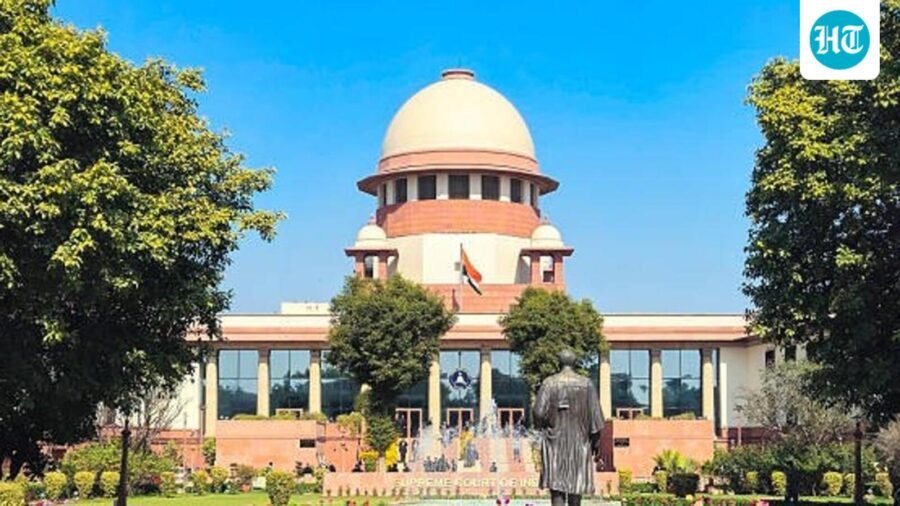
However, the bench made it clear that its dismissal of the challenge would not foreclose future scrutiny of the method of execution
Published on: Aug 18, 2026, 11:07:58 IST
Prefer HTon Google
Share via
Copy link
The Supreme Court on Tuesday declined to issue any judicial mandate for replacing hanging with any other “less painful or humane” method of execution and affirmed the constitutional validity of the hearing as a, but left the door open for the Union government to examine alternatives in future in light of scientific and technological developments.
A bench of justices Vikram Nath and Sandeep Mehta held that no case was made out for reconsidering the top court’s 1983 Constitution Bench judgment in Deena @ Deena Dayal vs Union of India, which upheld hanging as a constitutionally valid mode of executing a death sentence.
However, the bench made it clear that its dismissal of the challenge would not foreclose future scrutiny of the method of execution.
“The dismissal does not foreclose any future scrutiny based on scientific knowledge and subsequent developments,” the bench said while pronouncing its operative order.
The court further observed that nothing in its judgment prevented the Union government from reviewing the existing method and considering an alternative aligned with scientific developments, neurological changes or other future developments that could minimise unnecessary pain while preserving the dignity of condemned prisoners.
The judgment came on a petition filed by senior advocate Rishi Malhotra, appearing in person, challenging the constitutionality of execution by hanging under Section 354(5) of the Code of Criminal Procedure, now reflected in Section 393(5) of the Bharatiya Nagarik Suraksha Sanhita, 2023. The provision mandates that a death sentence be carried out by hanging.
Malhotra had argued that hanging was an archaic and painful method of execution and violated the right to life with dignity under Article 21. He had urged the court either to strike down or read down the statutory provision and replace hanging with a more humane alternative, including by allowing condemned prisoners a choice in the mode of execution.
The issue had been before the Supreme Court since 2017. During the proceedings, the Union government had informed the court that the question of alternative methods was being examined at the highest level by a committee constituted for the purpose.
When the matter was heard in January, the bench had questioned whether deciding upon a less painful method of execution fell within the domain of a constitutional court and whether the judiciary could direct the executive to alter a method prescribed by statute.
“The question is who should decide all this,” the bench had observed, while also taking note of the psychological impact of executions on those tasked with carrying them out and others witnessing them.
The Union had maintained that hanging remained the “safest and quickest” method of execution and had opposed lethal injection as an alternative, citing instances of botched executions in the United States and concerns over medical professionals participating in such procedures.
See Less

At least five CRPF personnel injured in accident on Jammu-Srinagar National Highway
By Sohail Khan · 18 Aug


Leave a Reply