Hanging, lethal injection, beheading: How countries carry out executions
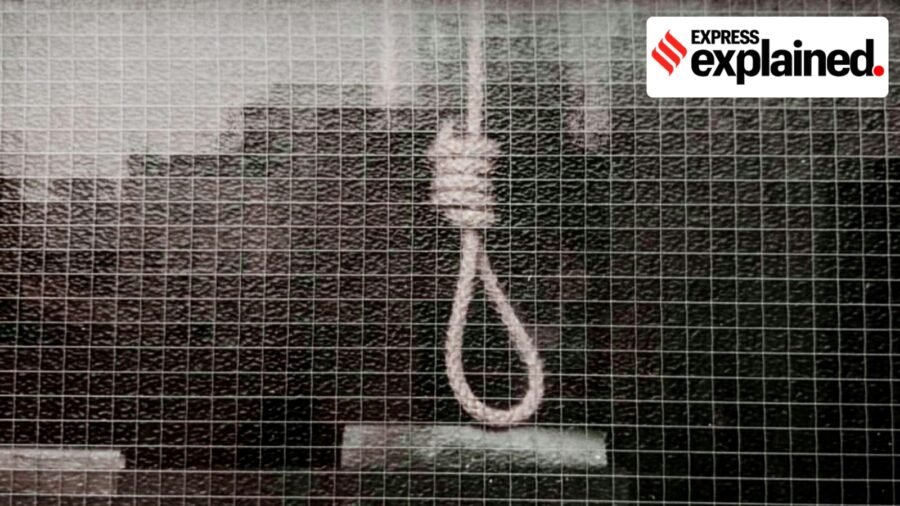
On Tuesday, a Supreme Court bench comprising Justices Vikram Nath and Sandeep Mehta dismissed a petition that sought the abolishment of hanging as the method to carry out the capital punishment.
The public interest litigation (PIL), filed by Senior Advocate Rishi Malhotra in 2017, argued that execution by hanging involves “prolonged pain and suffering”.
The petition sought that the mode of execution be replaced with an alternative such as intravenous lethal injection. Attorney General R Venkataramani had told the court earlier this year that the issue was being examined at the highest level.
One hundred and thirteen countries, or more than two-thirds of the world’s nations, have abolished the death penalty in law or practice, according to Amnesty International. Yet, its ‘Death Sentences and Executions’ report for the year 2025 showed a 12% increase in executions compared to the previous year. What is it about hanging that the petition argued against and what other modes of execution are observed around the world?
Hanging in India
In India, hanging remains the prescribed method and is an influence of British Common Law. Historically, hanging was carried out through the practice of the short-drop. As the name suggests, it’s literally a short drop that causes slow (and agonising) asphyxiation.
Today, modern executions rely on the long-drop method. The longer drop is meant to immediately snap the second cerebral vertebrae and, thus, the spinal cord. This causes an instant drop in blood pressure and renders the individual unconscious. The method, however, demands precision.
The length of the drop must be calibrated to the individual’s weight and height. A drop that is too short can fail to break the neck and result in prolonged strangulation. Conversely, a drop that is too long can risk decapitating the person. The Union government has consistently argued in the Supreme Court that the lack of medical infrastructure and healthcare professionals makes hanging an administratively predictable method.
What jurisprudence has said
Story continues below this ad
Standard prison protocols dictate that the body be left hanging for 30 minutes after the trap door opens. The legal debate over methods of execution is largely between how state power and human rights intersect. Article 21 of the Constitution guarantees the right to life and personal liberty which is interpreted to extend to the right to dignity in death as well.
There are broadly two lines of thought:
Abolitionist: Reformists argue that hanging can take too much time if there are any errors, constituting cruel and inhuman treatment. In the past, it has been argued that methods such as shooting may be more effective.
Retentionist: The Union government maintains that hanging remains the “safest and quickest” method of execution. The State has opposed lethal injection by citing numerous, highly publicised botched executions in the US, alongside the ethical complications of requiring medical professionals to participate in lethal procedures.
Globally, nations are categorised based on their legal framework and actual practice of the death penalty. According to recent Amnesty International reports, the global trend is heavily skewed toward abolition.
Modern execution methods
Story continues below this ad
The search for a humane method of execution has led to varied practices, each carrying its own scientific and ethical controversies. Hanging is the most commonly followed method and used heavily by nations rooted in British common law, including India, Singapore and Japan. Other prevalent methods are:
Lethal injection: This is the primary method in several US states where the death penalty is allowed and heavily utilised in China. China is responsible for more executions than the rest of the world combined, according to Amnesty International. In this method, a sequence of drugs is administered to a convict — an anesthetic, a paralytic and finally potassium chloride. The procedures can often get botched owing to compromised venous access.
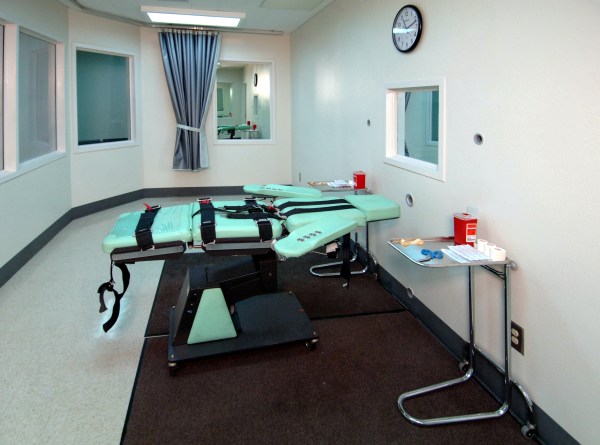 The lethal injection room at the San Quentin State Prison in California, US. Wikimedia Commons
Shooting (firing squad or single bullet): This is used in China, North Korea, Somalia and parts of West Asia. While visually violent and traumatic for executioners, proponents argue it causes near-instantaneous cardiac or neurological destruction.
Beheading: Saudi Arabia carries out executions by beheading with a sword. It is highly reliant on the executioner’s precision.
Story continues below this ad
Nitrogen hypoxia: A recently introduced method in the US involving the inhalation of pure nitrogen gas. It is designed to cause asphyxiation without triggering the hypercapnic alarm response — that panicked feeling of suffocation. Critics argue it has not been sufficiently vetted and amounts to human experimentation.
The Supreme Court’s recent ruling highlights a universal tension that as long as capital punishment exists, the quest for an execution method that reconciles the absolute finality of state violence with human dignity remains both scientifically and philosophically unresolved.

The Koran and politics of purdah
By Sohail Khan · 22 Sep
Persistent antagonism towards Urdu
By Sohail Khan · 22 Sep
How ‘kaata wash’ helps preserve the delicate Dhakai jamdani sari
By Sohail Khan · 21 Sep