Gwalior man fined for over 3,400 kiss marks on car: Under what law was he penalised?
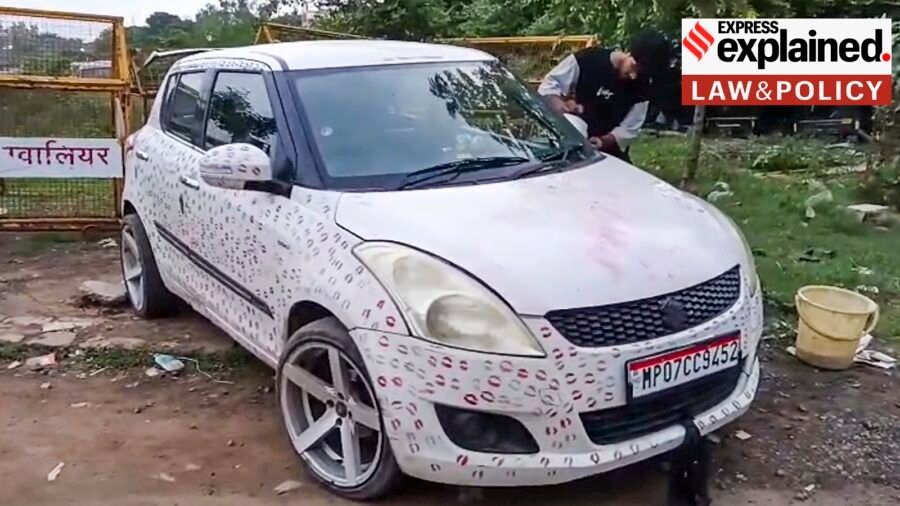
A Gwalior man’s white Swift car was covered in over 3,400 kiss marks by his girlfriend recently, prompting police action. A Rs 5,500 fine was imposed on the man and he was asked to clean the car to remove the marks. The police action came two days after the car began plying on the roads and its visuals began making the rounds on social media, PTI reported. Car owner Aditya Sikarwar told reporters that his girlfriend decided to decorate the car in this manner following a “foreign trend”.
He has now been fined under the Motor Vehicles Act of 1988, which, among other provisions on registration and mandatory safety measures, prescribes rules for alterations to motor vehicles.
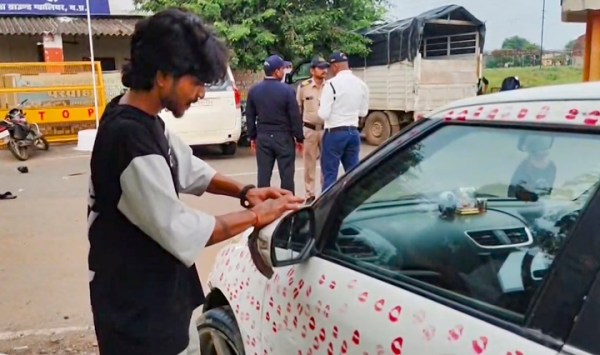
A man removes his girlfriend’s kiss marks from a car.
Story continues below this ad
What does the MV Act say about alterations to vehicles?
Section 52 of the MV Act details provisions on motor vehicles alterations, describing the term as “a change in the structure of a vehicle which results in a change in its basic feature.”
Sub-section (1) says, “No owner of a motor vehicle shall so alter the vehicle that the particulars contained in the certificate of registration are at variance with those originally specified by the manufacturer…”
In order to drive their vehicles, all drivers must obtain Registration Certifications (RCs) issued by the local Regional Transport Office (RTO). It includes information such as the vehicle registration number, its colour, and engine number. Alterations cannot differ from the details registered in the RC. Section 52 does not allow modifications to a vehicle without following procedure or updating registration records.
Story continues below this ad
Some exceptions are mentioned in the law. These include modifications of the engine, or any of its parts, “for facilitating its operation by different type of fuel or source of energy including battery, compressed natural gas, solar power…” under specified conditions.
Further, when making modifications, the owner of the vehicle shall, within 14 days of the making of the alteration, report it to the registering authority within whose jurisdiction he or she resides and shall forward the RC to that authority together with the prescribed fee. If that registering authority differs from the original registering authority, they must communicate the details of the entry to the original authority.
And what is the punishment for violation?
Section 182A(4) of the MV Act says that any vehicle that is altered in a manner not prescribed under the Act shall be punishable with imprisonment upto six months or fine of Rs 5,000.
Further, Section 177 on general provisions for punishment mentions a first offence penalty of Rs 500 in cases when there is a violation of an MV Act provision but no specific penalty. This is why the man in this case had to pay a total fine of Rs 5,500.

Moon gardens are trending: 5 plants and easy tips to create one at home
By Sohail Khan · 28 Sep
Turmeric, honey, and yoghurt: Decoding Ananya Panday’s glow secret
By Sohail Khan · 28 Sep
SpaceX puts Starship megarocket in orbit for first time
By Sohail Khan · 28 Sep