Green Card alert: Indian applicants to face fresh hurdles under new rule, here’s what you need to know
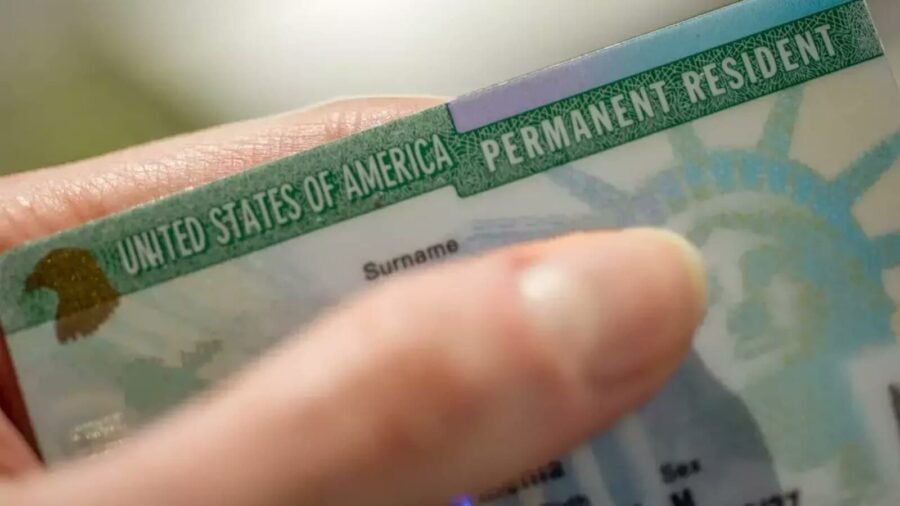
Green Card alert: Indian applicants to face fresh hurdles under new rule, here's what you need to know
Indian nationals seeking employment-based Green Cards face heightened scrutiny from September 18, as USCIS updates public charge guidelines.
Published on: Aug 19, 2026, 22:04:27 IST
Prefer HTon Google
Share via
Copy link
Indian nationals awaiting employment-based Green Cards may encounter increased scrutiny starting September 18, when new guidance from the US Citizenship and Immigration Services (USCIS) regarding 'public charge' comes into effect.
A public charge assessment can lead to the denial of a Green Card application if USCIS determines that the applicant is likely to rely on government assistance. This change is especially significant for individuals who have been in the employment-based Green Card backlog for years and are getting ready to submit Form I-485 for adjustment of status to permanent residency (commonly known as a Green Card).
New USCIS guidelines may hinder employment-based Green Card applications for Indians
The updated guidance modifies the criteria by which USCIS officers evaluate the likelihood of an applicant becoming a public charge. Officers will take into account the entirety of an applicant's situation, which includes age, health, family status, assets and financial resources, education and skills, along with other pertinent factors. Additionally, USCIS may request evidence of potential employment, such as job offers and anticipated salary or wages.
In an official statement, the USCIS said, “To make public charge inadmissibility determinations, USCIS officers will consider the five statutory factors and any other factor relevant to assessing the alien's likelihood at any time of becoming a public charge, including the alien's receipt of means-tested public benefits, such as cash assistance for income maintenance, housing assistance, food stamps, financial aid for college, or any other similar benefit.”
In cases where an officer identifies that an applicant for lawful permanent residence is inadmissible only on the grounds of being likely to become a public charge, the officer may offer the applicant the opportunity to post a public charge bond.
DHS revoked public charge regulations implemented under Biden govt
The guidance is in accordance with the Department of Homeland Security's choice to revoke the public charge regulations established during the Biden administration in 2022. The final rule was revealed on July 16 and subsequently published in the Federal Register on July 20.
Experts weigh in
According to an assessment carried out by immigration attorneys Cyrus Mehta and Damira Zhanatova, “The public charge rule would provide even more discretion to officers to deny adjustment of status applications in light of the USCIS memo that indicates that adjustment of status requires extraordinary discretion,” as per Forbes.
“The Trump administration has been open about disfavoring immigration to the U.S., whether legal or illegal. The new public charge rule provides the Trump administration another powerful tool to restrict legal immigration to the U.S.”
According to the Kaiser Family Foundation, a non-profit organization dedicated to healthcare, around 13.5 million individuals enrolled in Medicaid or CHIP live with at least one non-citizen. This demographic encompasses 5.6 million citizen children who may be at risk of decreased enrollment. The analysis suggested that between 1.4 million and 4.1 million Medicaid and CHIP enrollees residing with a non-citizen could leave the program as a result of the newly established rule.
Which applicants are not subjected to this rule?
Simultaneously, several applicants are not subject to this regulation. This group encompasses refugees and asylees, specific Afghan and Iraqi nationals who collaborated with or for the US government, individuals affected by qualifying criminal activities, some entrants from Cuba and Haiti, special immigrant juveniles, victims of human trafficking, some self-petitioners under the Violence Against Women Act, and applicants for Temporary Protected Status, among others.
In the year 2023, nearly 1.2 million people were issued Green Cards, with about 78,100, representing 7 percent, hailing from India. Of those, 60 percent of Indian recipients acquired their Green Cards as immediate relatives of US citizens or Green Card holders, or as other family members of citizens.
In general, the updated policy broadens the basis on which Green Card applications may be evaluated and rejected, while maintaining exemptions for various applicant categories.
(With PTI inputs)
See Less

What should Germany do about its rising right?
By Sohail Khan · 10 Sep