From Main Vaapas Aaunga to Dhurandhar: How Bollywood changed who the real enemy is
I finally saw Main Vaapas Aaunga this week, when it was released on Netflix. Like many before me, I was heartbroken to see Keenu and Jiya spend a lifetime pining for each other, separated by a border that sliced across the land, leaving an ever-festering wound. A wound that infected our destiny with communal hatred and wars, fuelled cross-border terrorism, and claimed the lives of thousands. But what made the film special, especially given the colossal success of Dhurandhar 1&2, was its refusal to assign blame, stereotype communities, or divide the roles of hero and villain between nations or religious groups. The film also made me think about how the nature of ‘us and them’ has changed in Bollywood films, especially in those with patriotic or socially relevant themes.
Films meant to inspire national pride or feelings of patriotism traditionally asked us to stand together against a common enemy. Whether it’s our frequently unfriendly neighbour, colonial powers, corrupt and sectarian politicians, a rival sports team, or social evils like casteism, the antagonist threatened our collective social fabric or way of life. Some films honour Indian soldiers and police officers who made the ultimate sacrifice for the nation. We have had films about Indians who worked tirelessly to create social change or advance in the fields of science, technology, and industry. Sports biopics and dramas also foster feelings of national pride and unity because the joy of watching an Indian athlete or team win often erases all our other differences.
However, over the past decade or so, there has been a slow but perceptible shift in how we characterise the enemy or threat. The line between entertainment and propaganda is frequently and deliberately blurred to appease netizens and politicians who can be offended by anything from the hue of a bikini to the title of a film. Though Pakistan was always and perhaps rightfully portrayed as a threat to our security, some filmmakers and actors are choosing to produce, direct and act in films where the threat is repeatedly determined by religious identity. Certain religious groups are portrayed as being susceptible to evil and anti-national sentiments, thereby posing both an internal and external threat to our country.
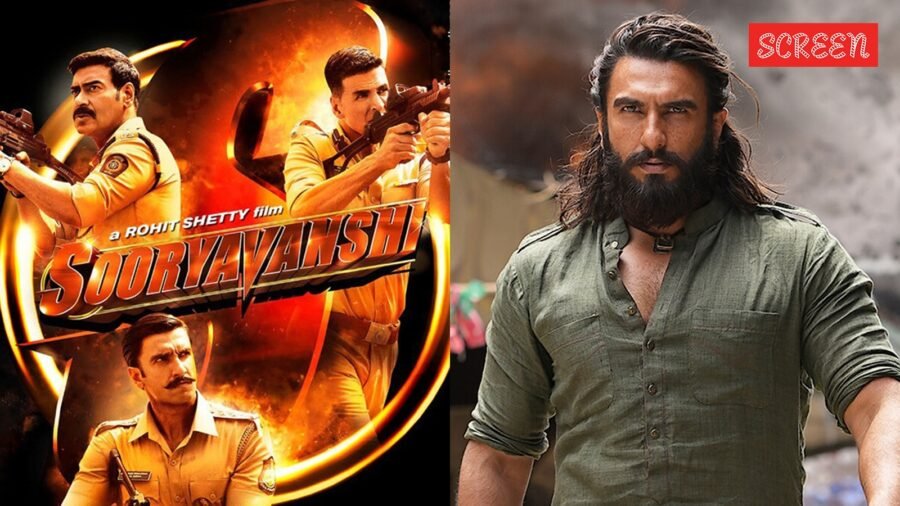
Look at a massy franchise like Singham and the cop universe, created by motorcade aficionado Rohit Shetty. In 2011, it started strong with Bajirao Singham (Ajay Devgn) hunting down the vile politician Jaikant Shikre (Prakash Raj). However, with Sooryavanshi, which starred Akshay Kumar, the tone of the franchise began to change. Sooryavanshi (Akshay Kumar) is chasing the perpetrator of the 1993 Mumbai blasts when he unearths a plot where 40 terrorists are living undercover in India under Hindu aliases and plotting attacks. Quite typically, there are two token ‘good’ Muslim cops whom the Hindu hero makes sure to praise for their loyalty and patriotism. Interestingly, the ‘star’-studded cop universe has no representation from any minority communities and just one token woman, Shakti Shetty, played by Deepika Padukone.
Negative characters from Sooryavanshi went on to become a part of Singham Again, which was written as an adaptation of the Ramayana. So, from being a small-time cop in Goa, Singham was likened to Lord Rama, who has to rescue his wife Avni (Kareena Kapoor Khan) after she is kidnapped by Danger Lanka (Arjun Kapoor), a reference to Ravana. But as it turns out, Danger Lanka is actually Zubair Hafeez, a man who walks around with a knife in his mouth to butcher people. It’s puzzling why a film drawing inspiration from Hindu mythology would have the forcible addition of a Muslim villain. Especially because in the epic, Ravana was half Brahmin and a devotee of Lord Shiva. Adipurush, which was a retelling of the Ramayana, depicted Ravana with a curiously long beard and kohl-rimmed eyes, visual details that are often linked to how Islamic terrorists are portrayed on screen.
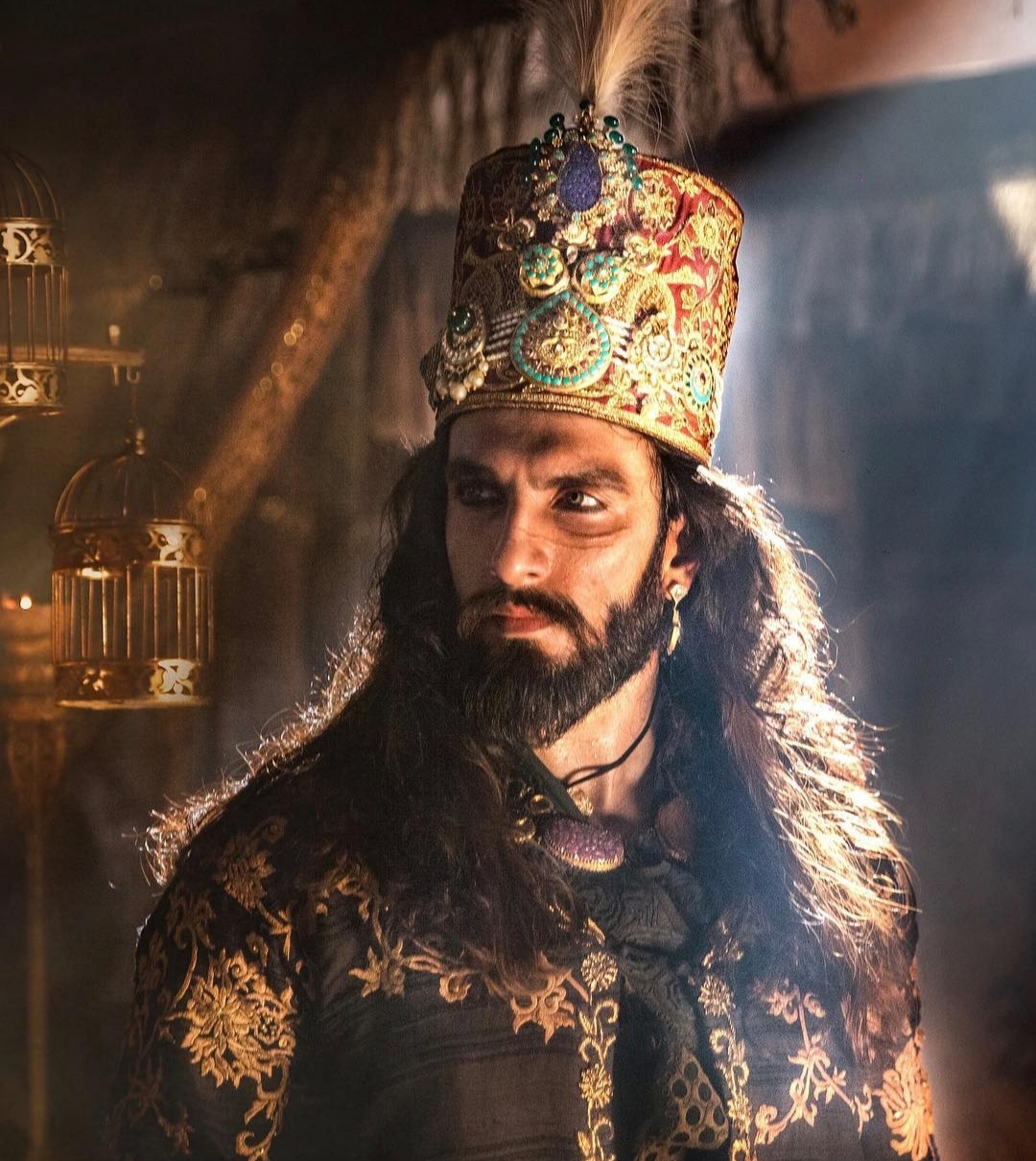 Ranveer Singh as Alauddin Khilji in Padmaavat.
Padmaavat was the first of many period or historical dramas in the past decade where the villains were all cruel savage invaders from foreign lands who didn’t have one redeeming quality between them. In Padmaavat, Ranveer Singh played Alauddin Khilji, a man who ate meat like a wild animal devouring its prey, murdered members of his family for power, had an ambiguous equation with his male attendant, and lusted after another man’s wife. Panipat had Sadashivrao Bhau (Arjun Kapoor) face off against Sanjay Dutt’s Ahmed Shah Abdali. In Tanhaji, Ajay Devgn played the titular role, a man tasked with reclaiming a fort captured by a Rajput chieftain named Uday Bhan who was loyal to the Mughals. In Samrat Prithviraj, Akshay Kumar played Rajput King Prithviraj Chauhan and battled the Afghan invader Muhammad Ghori (Manav Vij).
The more recently released Chhaava told us the story of Sambhaji Maharaj (Vicky Kaushal), who fought valiantly but was tortured and killed by Mughal emperor Aurangzeb (Akshaye Khanna). Riteish Deshmukh made his directorial debut with Raja Shivaji, where he played the titular role and battled Afzal Khan, yet another Muslim invader villain played by Sanjay Dutt. While one can argue that all these films are based on historical events, choosing to revisit stories from centuries ago which allow the repeated portrayal of a community as violent and intolerant is worrying. The Taj Story, The Kerala Story, and even films in southern languages like Thupakki, Beast, and Vishwaroopam, all feature this very clear othering of characters, assigning heroism to one religious group and villainy to another. While there have been exceptions like Raazi, Shershaah, Sam Bahadur and now Main Vaapas Aaunga, these are few and far between.
Story continues below this ad
In the past year, Dhurandhar 1 & 2 were both hugely successful films mounted on a vast canvas with a massive ensemble cast and some brilliantly filmed action sequences. However, I couldn’t help but notice the very clear demarcation of religious identity when it came to segregating good and evil. Apart from Jaskirat/Hamza (Ranveer Singh), who is Sikh, all the good guys in the film belong to the majority community. We are never told Alam or Jameel Jamali’s real names. The repeated religious chants to celebrate Indians dying in terror attacks, or to wish ill on India, were especially excessive. Though the characters saying the dialogues are Pakistani, the choice to link the followers of a certain religion with a proclivity for violence and betrayal seemed deliberate.
Seventy-nine years ago, we won our independence from colonial rule after a hard-fought struggle that included violent and non-violent protests, negotiations and a lot of blood, sweat and tears. Our enemy then was a group of foreigners; now it’s our mistrust of each other. The recent protests at Jantar Mantar were significant not just because of the political impact they had, but because citizens across all age groups, religious identities, economic strata and genders came together as Indians and presented a unified front demanding answers and accountability from elected officials. One can only hope that the unity we witnessed marks a new beginning for us as a country and, by extension, our cinema as well. Perhaps we will move past stereotypes, prejudices, and past baggage to create stories that celebrate our diversity and our shared dreams for a better future.

‘Kangana Ranaut is a joke now,’ says Rajeev Masand: ‘I miss her as the actor’
By Sohail Khan · 29 Sep