Freedom of a nation and naval strategy
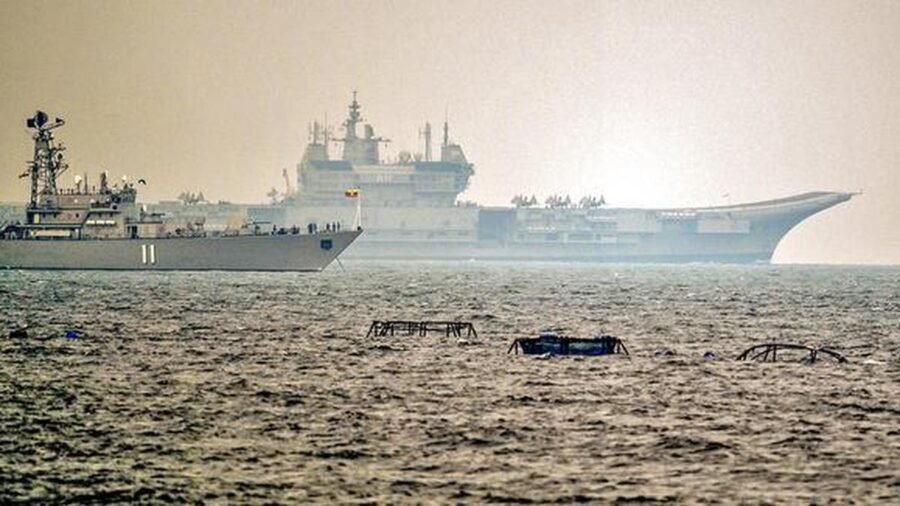
These past few turbulent months have seen a quiet change in the language of reportage of strategic conversations. Chokepoints, sea lanes, freedom of navigation, and other such terms had been confined to professional military education and naval staff colleges. They now appear in business bulletins and prime-time panels.
The Strait of Hormuz, shuttered by Israeli and U.S. strikes in February, and the Houthi blockade against Saudi Arabia declared on July 20 have done what decades of naval commentary could not. They have made the ocean’s chokepoints a matter of arm-chair commentary and coffee-table chats.
There is a quiet irony in this. The vocabulary the world is only now acquiring was written into Indian naval strategic lexicon some decades ago, in the plainest possible terms. In 2007, the Indian Navy published an unclassified document, titled “Freedom to use the seas: India’s maritime military strategy”. Its founding premise is “the freedom to use the seas for our national purposes, under all circumstances”. That was not a slogan reaching for effect. It was a doctrine, written nearly two decades before Hormuz made the phrase popular.
As India enters its 80th year of Independence, that gap between what the Navy has long understood and what the wider public is only now discovering is worth a reflective pause. It points to a truth that rarely gets told in full: the freedom of this nation has always been, first and last, the freedom of its ocean. Not a metaphor stretched to fit the occasion, but the literal, load-bearing fact of how India has fed itself, traded, defended its shores, and projected its confidence into the world. A nation’s sovereignty and its command of the sea lanes that sustain it are not two stories running in parallel. They are the same story.
A maritime nation
August 15 is conventionally narrated as a land story of borders drawn, provinces divided, a line struck across Punjab and Bengal by a man who had never visited India before. It is a fair telling, but a partial one, and it has quietly crowded out a richer inheritance. It drowns out the fact that India’s oldest and most enduring claim to greatness has been maritime, not territorial. K.M. Panikkar made the sharper version of this argument in India and the Indian Ocean (1945): India’s subjugation was not fundamentally a story of armies overrun on land, but of a civilisation that had, over centuries, ceded command of the sea to whoever chose to contest it. The colonial period did not begin with a land invasion. It began with ships arriving at ports India could no longer control. The corollary is the one worth dwelling on as the nation marked the Independence Day of 2026 when India has been most itself, most prosperous, most confident, and most outward-facing than ever. It is because the nation held the sea, not merely the land beneath its feet.
A power worth naming properly
Before it was lost, Indian maritime prowess was formidable, and this is worth stating plainly rather than in passing. The Satavahanas built sustained prosperity on Indo-Roman trade running through Malabar’s ports. The Cholas, at their height, fielded naval forces that reached into Southeast Asia, not for territorial conquest, in Rajendra Chola’s 11th-century expedition against Srivijaya, but to keep the sea lanes free of piracy and to project the authority of an Indian power across two oceans.
Chinese chronicles of the Song dynasty record embassies from the Chola kings, a reminder that Indian sea power once commanded recognition as far as the courts of East Asia. By the 12th century, a quarter of the world’s economic output is estimated to have run through Indian shores. This was a maritime economy, built and held by Indian hands, centuries before any European fleet entered these waters.
That command did not decay for want of skill or ambition. State patronage for shipbuilding receded, and religious injunctions against crossing the ocean took hold in parts of the subcontinent, discouraging exactly the seafaring that had built Chola and Satavahana wealth. Into the vacuum stepped Arab and Chinese traders, and later European fleets carrying no such inhibitions. Instead of a pseudo eulogy on “Indian Knowledge Systems”, the lesson worth carrying into this anniversary is not one of loss dwelt upon, but of proof already furnished. India has held the sea before, decisively and on its own terms, and knows precisely what it takes to do so again.
Resistance without a ‘doctrine’
And when the sea had to be reclaimed, it was Indians who did the reclaiming, well before any modern navy existed to do it for them. The Kunjali Marakkars held the Malabar coast against Portuguese carracks for the better part of a century, using shallow-draught vessels to exploit geography the heavier European ships could not follow into. Kanhoji Angre, from his forts along the Konkan coast, turned Maratha sea power into a standing irritant that European trading fleets could not dislodge for decades. Chhatrapati Shivaji Maharaj, who held that mastery of the ocean was the mark of a truly formidable power, built the forts and the fleet that made Angre’s resistance possible in the first place.
Neither the Marakkars nor Sarkhel Angre had access to the word “doctrine”. But what they practised as asymmetric resistance, calibrated to deny an adversary free use of the sea, is recognisably the same logic the Indian Navy would later commit to paper. It is a lineage worth being proud of on its own terms a few centuries before India had a navy in the modern sense. It had Indians who refused to cede a vision and an operational hold over the oceans.
Repeated argument
What is less often told is how much of a self-actuation it took to carry Panikkar’s 1945 warning to a Navy that writes its own doctrine. Independent India’s strategic culture, for much of its first four decades, remained stubbornly land-centric. One can understand this, given wars fought in 1962 and 1971 were along the northern and western borders. The sea, even as it carried the bulk of India’s trade, struggled to hold the attention of a strategic establishment consumed by the “two-front” framing of Pakistan and China. It took a sustained line of naval thinkers to keep the maritime case alive against that gravitational pull.
Rear Admiral Raja Menon’s writing through the 1990s and 2000s pressed the argument for a codified Indian maritime strategy including sea denial, force structure, the discipline of thinking about the ocean as a theatre in its own right at a time when the institutional instinct still deferred reflexively to the Army. Admiral Arun Prakash, both as Chief of the Naval Staff and in the years since, has been a persistent public voice for indigenous shipbuilding, naval modernisation, and the case that maritime power is not an adjunct to India’s strategic autonomy but a precondition for it.
Each generation, in effect, had to re-argue what Panikkar had already said in 1945. And each round of arguing eventually hardened into doctrine: the Indian Maritime Doctrine of 2004, Freedom to Use the Seas in 2007, Ensuring Secure Seas in 2015, and now the MAHASAGAR vision and the Indian Navy Maritime Security Strategy of 2026. This is not a story of sudden foresight. It is a story of an argument that had to be won repeatedly, inside India, before it could be written down.
Doctrine meets its moment
The events of this year have not required the Navy to revise its thinking so much as confirm it. The Indian Ocean’s nine chokepoints, through which more than 60% of the world’s maritime trade and some 80% of its oil moves, have behaved exactly as the doctrine anticipated they might, as points of leverage, not mere geography. One can easily recall the scale of the Hormuz disruption earlier this year and the shipping delays and cost spikes that followed even the threat of closure. What is worth noting on this particular anniversary is not the crisis itself, but the fact that India’s naval establishment had already built its planning assumptions around exactly this kind of contingency.
Freedom as a verb, not a plaque
Independence Day tends to be marked as commemoration of something that happened in 1947. The maritime record suggests a different grammar. “Freedom to use the seas… under all circumstances” is not a monument. It is a standing verb, something that has to be exercised continuously, contested afresh with every generation, as Sardar Panikkar, Raja Menon, Arun Prakash and many others understood in turn.
The Navy’s current leadership speaks in the same register. Taking charge as the 27th Chief of the Naval Staff this May, Admiral Krishna Swaminathan noted that the Indian Navy “stands vigilant to protect national interests wherever they are and is very actively deployed in a regional security environment that continues to remain challenging, complex, unpredictable, and uncertain”. Coming in the scenario of the Hormuz blockade and as we now see the Houthi action, it reads less like a routine assumption-of-command remark than a restatement of what the doctrine has said since 2007. The Indian Navy chief has stated what every strategist must be unequivocal about: freedom to use the seas, under all circumstances, is not claimed just once. It is exercised continuously, or it is not truly held ever.
Eighty years ago, the Indian Navy inherited a handful of former Royal Navy vessels and little else. Today, it operates from a doctrine the rest of the world is only beginning to read, commanded by officers who speak of vigilance as a permanent condition rather than a crisis response. That is India’s maritime inheritance, properly understood on its 80th Independence Day. It is not merely a border patrol and not even a coastline to be defended as an afterthought to the land. It calls to the very premise on which the nation’s freedom was built, lost twice over: in Kunjali Marakkar’s century and in this one, now duly reclaimed.
Commodore (Dr) Johnson Odakkal is a maritime scholar, strategic affairs analyst, and Indian Navy veteran. He serves as Adjunct Faculty of Maritime and Strategic Studies at Naval War College, Goa.
Expert Explains | Why China’s answer to frontier AI risk looks different from America’s
By Sohail Khan · 22 Sep
‘What is a normal blood pressure for someone over 70?’
By Sohail Khan · 22 Sep
The science of Gaganyaan parachutes | Explained
By Sohail Khan · 22 Sep