Flu questions answered: N95s, crowds, precautions, and the 2-metre rule

Flu cases are once again drawing attention as seasonal influenza continues to circulate, leaving many people wondering how best to protect themselves and others from infection. From staying home when unwell to maintaining respiratory hygiene and wearing a mask in certain situations, simple precautions can help limit transmission. But with differing advice on when masks are necessary, the question is: who really needs to wear one, and when can an N95 offer meaningful protection?
According to reports, the Delhi Medical Association and Indian Medical Association have recommended mask use for people with flu symptoms, particularly in crowded or healthcare settings, while ICMR Director General Dr Rajiv Bahl has said routine mask use is not necessary for everyone. “We are not asking people to wear masks because the infection spreads through respiratory droplets, which do not travel very far. They travel about two metres at most,” he said at a media interaction.
Dr Sulaiman Ladhani, Consultant Pulmonology, Wockhardt Hospitals, Mumbai Central, explains why the advice may not be as contradictory as it appears.
Story continues below this ad
Should you wear a mask if you have flu symptoms?
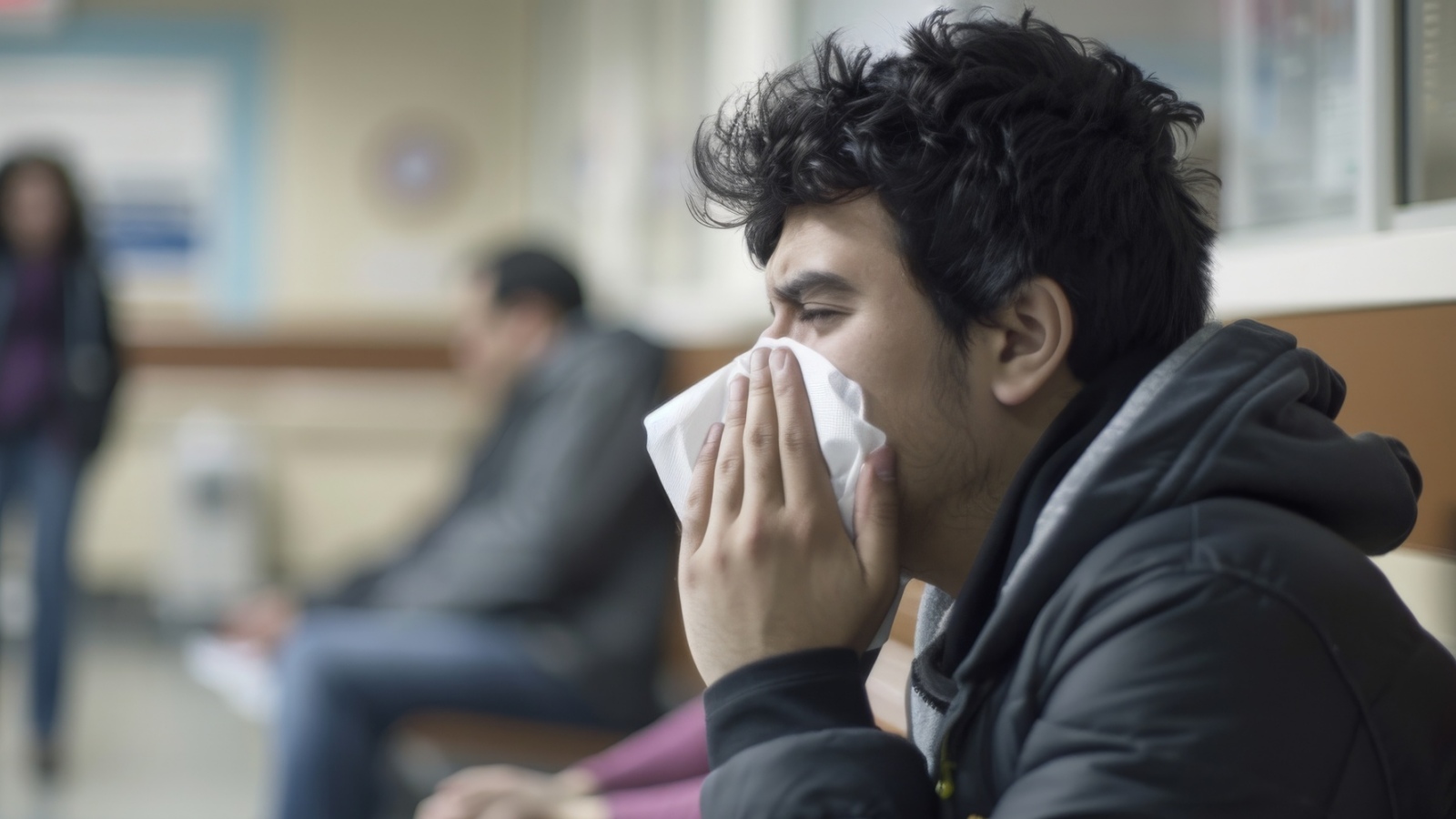
According to Dr Ladhani, a mask can be useful when a person with flu symptoms cannot avoid being around others.
“The advice is not really contradictory; it reflects different levels of precaution,” he says. “A person with flu symptoms should take reasonable steps to prevent spreading the infection, especially around older adults, children or people with weak immunity.”
He adds that a well-fitted mask can be particularly useful in crowded or poorly ventilated settings. However, this does not mean that every healthy person needs to routinely wear a mask.
“Routine mask use by every healthy person is not necessarily required,” Dr Ladhani says.
Story continues below this ad
 Why are H1N1 cases rising in the country
When is an N95 mask useful?
“If you have fever, cough, sore throat or other flu-like symptoms and cannot avoid being around other people, wearing a well-fitted mask is a sensible precaution,” says Dr Ladhani.
An N95 respirator provides a higher level of filtration than a loose-fitting mask and may be particularly useful when close contact cannot be avoided in crowded or poorly ventilated indoor settings, he explains.
This may also apply at home if someone unwell needs to be in proximity to family members, particularly those who may be at greater risk of severe illness.
“At home, masking can provide an additional layer of protection when you have to be close to family members, particularly those at higher risk of severe illness,” Dr Ladhani says.
Story continues below this ad
However, he stresses that masking should not be viewed as a substitute for staying home. “The most important measure remains staying home and limiting close contact while unwell; a mask should complement, not replace, these measures,” he says.
Is flu transmission limited to two metres?
While ICMR has said that respiratory droplets generally do not travel very far, Dr Ladhani cautions against treating two metres as a strict boundary for influenza transmission.
“It is better not to think of influenza transmission as being limited to a fixed two-metre ‘droplet’ distance,” he says.
According to Dr Ladhani, influenza can spread through respiratory particles of different sizes, particularly during close contact. Transmission is also more likely in crowded or poorly ventilated indoor environments.
Story continues below this ad
Who should get the flu vaccine?
The vaccine is not recommended for all as part of an immunisation programme in India. “However, the vaccine is readily available and those who are at a high risk may choose to get it after consulting their doctor. They should prefer to get the vaccine recommended for the northern hemisphere as it is likely to be closer to the strains in circulation and therefore offer better protection,” said Dr Bahl.
What precautions should you take at home and work?
“The most practical precautions include staying home when unwell, avoiding close face-to-face contact, improving ventilation, practising good hand hygiene and covering your mouth and nose when coughing or sneezing,” says Dr Ladhani.
At work, people with symptoms should avoid meetings and close interactions with colleagues where possible. If entering a crowded or poorly ventilated indoor space is unavoidable, a well-fitted mask can offer additional protection.
Dr Ladhani also advises people not to ignore signs of severe illness. “Anyone who develops breathing difficulty, chest pain, worsening symptoms or other signs of severe illness should seek medical attention promptly,” he says.
Story continues below this ad

When tech becomes a tool for gender violence
By Sohail Khan · 27 Sep
A caution about letting religion trump politics
By Sohail Khan · 27 Sep
Before you buy baingan, press it: How to spot fresh brinjal at the market
By Sohail Khan · 26 Sep