Expert Explains | Why the fresh US sanctions on Iran is unlikely to have significant impact
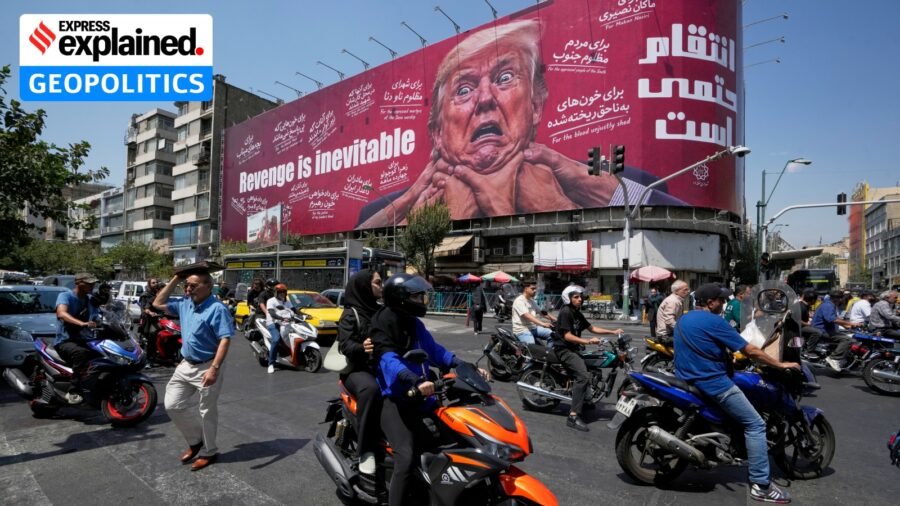
On Monday (August 24), the US threatened to impose severe sanctions on any country or entity that maintains economic ties with Iran.
US Treasury Secretary Scott Bessent, who announced ‘Operation Economic Outcast’, termed it “Economic D-Day”, a reference to the June 1944 Allied offensive against Nazi-occupied France.
The US has issued fresh sanctions against Iran’s digital assets, technology, gold, aviation and shipping sectors, with the Office of Foreign Assets Control sanctioning “nearly 60 entities, individuals, and vessels in multiple jurisdictions that enable the Iranian regime’s recklessness”. These include sanctions against firms across countries such as China, UK, France, Singapore, UAE and Ukraine.
In the hours following the announcement, Pakistan’s Chief of Defence Forces, Asim Munir, made his second trip to Tehran since the March war. Islamabad described the visit as part of its efforts to “promote regional peace and stability”. Al Arabiya also reported that Munir spoke to US President Donald Trump in the lead-up to the visit.
Story continues below this ad
These interlinked developments come at a time when the US appears to be shifting away from its military strategy that has failed to dislodge the Iranian regime. Both countries are entering a de facto ceasefire following the expiry of the interim peace framework’s 60-day implementation period. What do these developments mean for any future US-Iran negotiations?
D-Day sanctions
The US’s new ‘Economic D-Day’ sanctions are only the latest in a series of sanctions regimes that Washington has had in place against Iran since 1979, the year of the revolution. President Trump intensified these sanctions through his “maximum pressure” campaign in his first term (2017-2021). While the Joe Biden administration diluted this campaign’s measures, the second Trump administration renewed them in February 2025.
This meant that by the time the US attacked Iran a year later, the Iranian economy was reeling from inflation crossing 50% (near hyperinflation), national per capita income dropping to about $5,000, rising youth unemployment and the rial in near free-fall. The currency has now fallen to around 2 million rial per US dollar.
Hence, despite the US’s aggressive framing of these sanctions, they only represent the intensification of its historic economic outlook towards Iran.
Story continues below this ad
On August 25, US Secretary of State Marco Rubio reportedly said Washington was pivoting from strikes to sanctions, indicating an apparent US disinclination for resuming military action. This comes even as Iran continues to strike tankers passing through the US-backed southern channel near Oman in the Strait of Hormuz.
Limited effects of sanctions
Historically, US sanctions on Iran have proven to have a limited deterrence effect. Despite their adverse economic effect, the principal affected party is the citizenry of Iran with government actors consolidating power further as the sole arbiter of resources.
It was the George Bush administration that shifted from blanket sanctions to targeted financial and sectoral ones in 2005 and 2006. President Barack Obama expanded and intensified this targeted approach through the Comprehensive Iran Sanctions, Accountability, and Divestment Act in 2010.
Trump, however, triggered a reversal through the Countering America’s Adversaries Through Sanctions Act sanctions regime in his first term.
Now, the imposition of the D-Day sanctions reflects the limits of military means as an effective coercion instrument against the Islamic republic. But they also represent a large-scale unlearning of Washington’s lessons from its history of economic coercion against Tehran. Iran has near-continually been the most heavily sanctioned country in this century. Its sustained ability to both prevent regime collapse as well as to militarily respond to American attacks successfully in 2026 have already proved the ineffectiveness of Washington’s historic economic measures.
Story continues below this ad
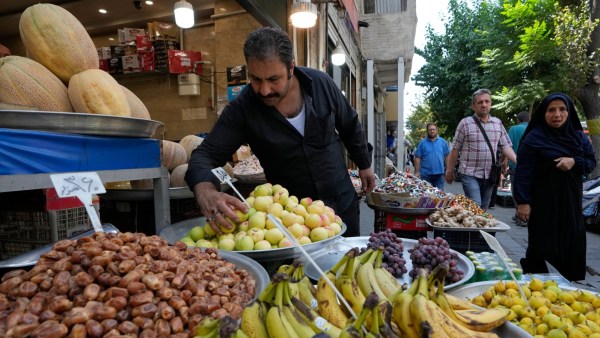 A fruit seller at Tehran’s Grand Bazaar on August 25, 2026. Photo: AP/Vahid Salemi
Tehran’s popularisation of a “resistance economy” has meant that the current Iranian generation has been forced to largely normalise living conditions under external economic duress (supplemented by internal corruption).
While this has indeed meant frequent popular pressure on the regime through demonstrations, the current war-time conditions and mood of national solidarity mean that the Trump administration’s nationwide economic targeting will only harden Tehran’s resolve. Arguably, such conditions can also help the Iranian government find greater public acceptance for increased austerity measures to absorb the impact of the new sanctions.
It is worth remembering that the new American sanctions are not occurring in a pre-February 2026 reality — when the regime did have any organic trigger for national solidarity, was reeling from the effects of the December-January anti-government demonstrations and was negotiating with the US for nuclear concessions in exchange for relief from existing sanctions.
Rather, Iran’s solidified control over the Strait of Hormuz following the US-Israeli war has left it with economic leverage to meet economic coercion. It is arguably the adverse impact on energy shipping through the narrow waterway that was among the prominent triggers for the pivot Rubio referred to.
Renewal of mediation?
Story continues below this ad
For Iran, the D-Day sanctions do not represent any new US posture, apart from Washington’s reduced appetite for military exchanges. Rather, it hardens Iran’s learning that escalation is the only way to deal with Washington’s attempts to undermine its bargaining power.
Indeed, Tehran’s escalatory actions since the war began — from strikes on Gulf countries to attacks on shipping, especially vessels following the US-approved route — have improved Iran’s bargaining position in negotiations for a final deal.
For Washington, the new economic measures (despite their effects being old) allow the Trump administration to project strength and cushion its potential return to negotiations with Tehran after military failure. Iran itself specifically requires the US to return to the framework and uphold Article 5 — which provides for joint Omani-Iranian administration of Hormuz). This was among Iran’s demands from the US, conveyed through Munir, as reported by the Islamic Revolutionary Guard Corps-affiliated Tasnim News.
In any case, Iran and Oman are continuing to discuss Article 5’s implementation. On Tuesday, the Omani Foreign Minister asserted that both sides expected to announce a joint temporary transit corridor through the Strait of Hormuz and joint mine clearing operations soon. The US President claimed on the same day that the strait had been cleared of all mines. On Wednesday, Iran and Oman reached agreements on their share of Hormuz and revenues.
Iran will feel the need to continue proving its readiness for continued fighting (at least until the US mid-term elections in November), alongside indirect negotiations with the US through Pakistan. Ultimately, while D-Day sanctions or fresh US strikes on Iran might trigger a resumption of war, both sides remain focused on bettering their bargaining positions.
Story continues below this ad
The author is Senior Research Associate, Council for Strategic and Defense Research, Delhi.

40 years ago August 27, 1986: Five killed in Pakistan violence
By Sohail Khan · 27 Aug
On mines and minerals, Centre-state compromise is in tatters
By Sohail Khan · 27 Aug
Dolly Parton pushed her way in, and stayed
By Sohail Khan · 27 Aug
Leave a Reply