Electors receive notices, some for 50+ age gap between self and parent, others less than 12
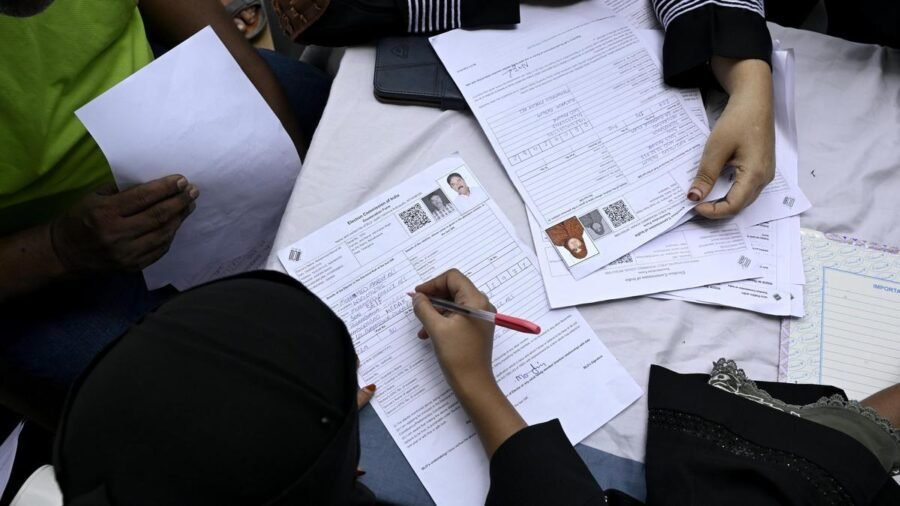
With the Special Intensive Revision (SIR) exercise now in the notice phase, from August 17 to October 15, electors who have found their names on the draft elector roll have either begun receiving notices specifying the category of logical discrepancy that has been found against their name, or have been repeatedly checking the Election Commission of India website to see if a notice has been issued to them.
An elector pointed out that the notice she received did not carry an issue date, did not have a signature of the officer, or a stamp, but was handed over nonetheless. Furthermore, hearing dates in certain cases in Karimnagar were scheduled for August 26, coinciding with the celebration of Milad-un-Nabi.
An elector who faced this problem, a resident of Mukarampura who requested anonymity, pointed out that while the time and date of the hearing had been mentioned, the venue had not. She came to know of it by word-of-mouth.
A copy of the notice, and its reply, which was shared with , stated that the alleged anomaly was that the age difference between siblings was less than nine months. “The age difference is more than two years. There could have been some discrepancy in capturing age in older records,” she said, adding that only the name of the Assistant Electoral Registration Officer was given on the notice.
Another elector, who lives near Sultan Shahi, was issued a notice stating that the age difference between her and the parent to whom she was mapped was only 12 years. She indents to contest the claim, saying it was an error in recording her father’s age.
Afshan Siddiqui (name changed) a resident of Jubilee Hills who operates a cloud kitchen, received a notice pointing out an anomaly that the age difference between her and her father was more than 50 years. “Instead of waiting for a hard copy of the notice, we thought it best to check the ECI [Election Commission of India] website. The anomaly listed was that the age difference between my father and me was more than 50 years. I have submitted a birth certificate and a copy of my passport online,” she said.
Those who wish to check whether a notice has been issued against their name can do so by visiting voters.eci.gov.in. The webpage lists the following options: filling the enumeration form, searching for one’s name in the last SIR, and submitting a document against a notice issued. It, however, does not have an option that explicitly states ‘check if notice has been issued’.
Those who did check clicked on the the third option: ‘submit document against notice issued’. This takes the user to another page where one has to enter the EPIC number or a reference number from the notice. After entering the details, an OTP is sent to the registered mobile number. Once this is entered, electors on the draft roll against whose names a notice has not been issued see the message: “No notice has been issued as on [date of check]. Check after a few days.” However, electors whose mobile phone numbers are not linked to their EPIC receive an error message.
Another elector from Malkajgiri constituency said that when the website, in some cases, is asking users to ‘upload extract of the last SIR’. This has left them confused, he stated.
Volunteers and activists who have been helping people fill enumeration forms and assisting them in gathering documents after they have received notices pointed out that there have been instances in which electors were unaware of hearing dates. They said it was only after they managed to check online that they came to know how close the hearing dates were.
“We have submitted a representation to the Chief Election Commissioner of India and the Chief Electoral Officer, Telangana, asking for at least 15 clear days from the actual serving of the notice, and not the date on which it was printed. It takes time for people to gather records, and there are other practical problems such as those unfamiliar with the process, people with disabilities and those with limited educational backgrounds,” said M.A. Mujeeb of ADALAH, which submitted the representation in conjunction with ASEEM, another NGO working on elector issues.
Others pointed out that the District Election Officers and the CEO, Telangana, should focus on creating greater awareness by educating the public. M.A. Akram, an activist, said, “More and more videos should be made. The notice phase is as crucial, if not more, than the enumeration phase. Only instructional videos released by the CEO, Telangana, and the District Election Officers, and shared widely on social media, will put an end to the confusion.”

Efforts are on to throw open Vijayapura airport by early next year, says KSIIDC chairman
By Sohail Khan · 26 Aug
ACB probe into Guntur civic body ‘tender manipulation’ identifies ₹1.18 crore loss
By Sohail Khan · 26 Aug

Leave a Reply