Ecological equity needs constitutional protection
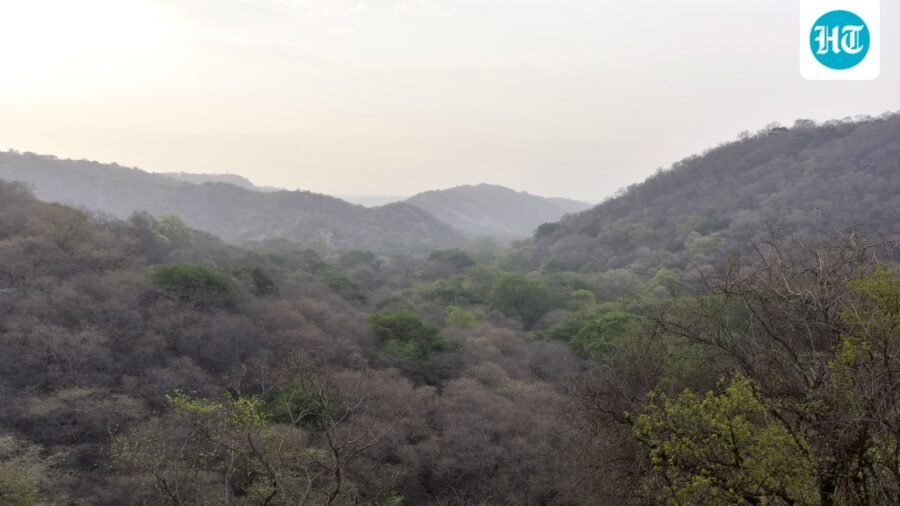
Forest-rich states shoulder ecological responsibilities. They preserve carbon sinks, stabilise monsoon systems and maintain biodiversity
Published on: Aug 18, 2026, 06:48:24 IST
Prefer HTon Google
Share via
Copy link
Ecological inequality is now one of the most significant, yet least recognised, forms of inequality in India. Geographic variation may explain this asymmetry, but it cannot justify constitutional inequality; when unequal ecological burdens shape people’s lives so differently, the issue becomes constitutional. Article 14 of the Constitution has two connotations: equality before law, which prohibits arbitrariness, and equal protection of laws, which requires differentiated support for unequal situations. Article 38(2) directs the State to reduce inequalities “among groups of people residing in different areas.” Ecological inequality fits squarely within this mandate.
The Himalayan, Northeastern, and Western Ghat regions carry far higher ecological fragility, greater watershed responsibility, and a significantly heavier disaster mitigation burden than the plains. This mismatch between the constitutional principles and ecological reality has created a blind spot India can no longer afford.
Forest-rich states shoulder ecological responsibilities whose benefits flow to the entire nation. They preserve carbon sinks, stabilise monsoon systems, and maintain biodiversity. Industrialised states enjoy higher fiscal returns with lower ecological burdens. Applying identical rules to both produces outcomes that are not only inefficient but constitutionally infirm. This asymmetry also distorts equal opportunity under Article 16. Forest-rich states cannot industrialise freely due to statutory protections, which limit jobs, infrastructure, and fiscal capacity.
Uniform national environmental policies ignore unequal forest distribution, pollution exposure, climate vulnerability and access to natural resources. When applied to states with radically different ecological burdens, these become a source of inequity. Indian jurisprudence has focused on forest diversion, compliance and illegality, without addressing ecological inequality under Articles 14, 38(2) or 21. Recognising ecologically fragile states as a distinct class under Article 14, supported by Article 38(2), would enable asymmetric regulatory obligations, targeted fiscal transfers and region-specific forest strategies. India’s forest policy recognises ecological asymmetry by prescribing 33% forest and tree cover nationally and 66% in hilly and mountainous regions; yet, budgetary allocations and governance frameworks treat plains and hill states as identical. This cannot achieve ecological equality unless the Centre supports states in proportion to their ecological burdens.
Judicial interventions have expanded Article 14 to prevent arbitrary environmental harm, but they have not recognised ecological inequality between states. Continuous mandamus in forest matters has centralised decision making without acknowledging differentiated ecological burdens. Ecological justice requires positive discrimination — fiscal transfers, differentiated regulatory burdens and asymmetric development pathways — which clashes with traditional readings of equality as non-discrimination. The Constitution does not prohibit asymmetry; it prohibits arbitrariness. Differentiated ecological support is thus an expression of equality.
The Forest Rights Act (FRA) and the Biological Diversity Act are held as guarantees of the rights of forest-dependent communities. FRA is built on a linear architecture: rights and titles are issued once, with no ecological feedback. But forests regenerate and shift through cyclical processes requiring baselines, monitoring and adaptive management. Without these, Gram Sabhas hold authority without stewardship capacity. The Northeastern states have faced a dual crisis: shrinking forest cover alongside persistently weak economic growth. Experiencing forest loss without corresponding economic opportunity creates precisely the regional inequality Article 38(2) seeks to minimise.
The Compensatory Afforestation Fund Act (CAMPA) offers a financial structure but fails to deliver ecological justice: 90% of the collections in a state goes to that state’s CAMPA fund, while 10% goes to the national fund. This national fund should support regions facing ecological deficits, irrespective of where the funds were collected. Yet the absence of utilisation rules — and non-transparent management of the national fund — has prevented it from serving this purpose.
Justice-oriented forest governance model must recognise circularity — the ecological rule that every right over a forest must carry a responsibility to sustain its regeneration. Embedding this principle can harmonise rights, responsibilities and regeneration, and Payment for Ecosystem Services can reward communities for sustaining ecological functions. Article 21 gives this argument its deepest grounding: Unequal forest distribution translates directly into unequal environmental rights. Articles 14 and 21 converge to articulate a single mandate: Ecological equality is integral to the right to life.
A justice-oriented model must acknowledge that forest-rich states subsidise the nation’s climate stability, forest-poor regions require sustained ecological investment and forest-dependent communities deserve protection. Articles 14, 38(2) and 21 offer a coherent constitutional blueprint for this.
Sudhanshu Gupta is a retired member of the Indian Forest Service and an international member of the Forest Stewardship Council. The views expressed are personal
Get Current Updates on India News, Elections 2024, Lok sabha election 2024 voting live , Karnataka election 2024 live in Bengaluru , Election 2024 Date along with Latest News and Top Headlines from India and around the world.
See Less

A foot-and-mouth disease strain is back after 60 years: Why SAT-1 is raising alarms
By Sohail Khan · 8 Sep
The BAPS sect, a vow of celibacy, and the Paris row
By Sohail Khan · 8 Sep
Delhi building collapse: How NDRF conducts search-and-rescue operations
By Sohail Khan · 8 Sep