E. coli bacteria found in drinking water at some railway stations, CAG flags violation of norms
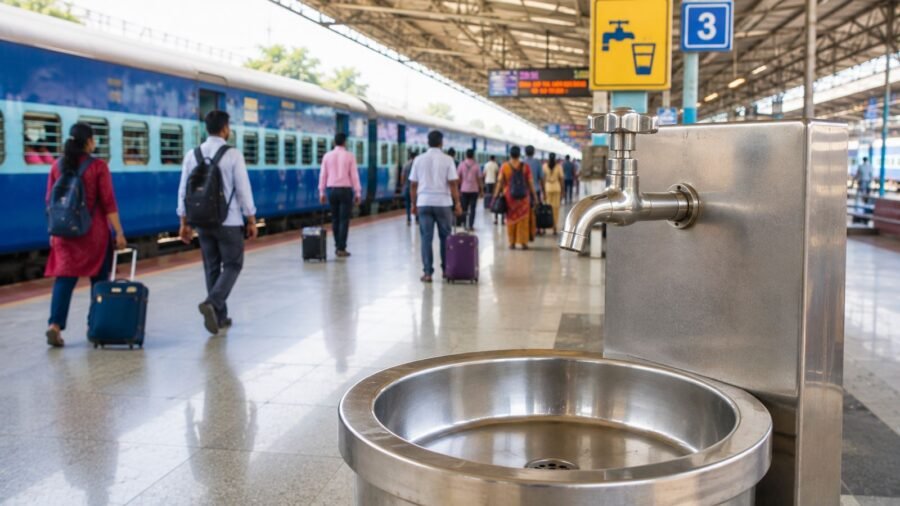
The Comptroller and Auditor General (CAG) has flagged violations of water quality norms after E. coli bacteria was found in drinking water at several railway stations. The findings have raised concerns about water quality and passenger safety.
In its Report No. 31 of 2026, titled ‘Passenger Amenities and Sanitation at Non-Suburban Railway Stations in Indian Railways’, the CAG said E. coli bacteria was detected in drinking water samples collected from water coolers at several railway stations.
“Inspection of the water supply systems was not carried out as per prescribed periodicity. There was shortfall in testing of drinking water for residual chlorine, bacteriological analysis and chemical analysis. Low/high level of chlorine in drinking water, presence of total coliforms bacteria (including E-coli bacteria) as well as deficiencies in parameters tested indicated unsatisfactory quality of drinking water at stations. Tests prescribed in the ‘Uniform Drinking Water Quality protocol’ were not carried out for several parameters,” it said.
E. coli found in drinking water at 8 railway stations
The CAG report found E. coli in water cooler samples at eight railway stations. These included Coimbatore and Palakkad Junction in Southern Railway, Hyderabad in South Central Railway, four stations in Central Railway – Chhatrapati Shivaji Maharaj Terminus, Bhiwandi Road, Kalyan and Lonavala – and Madhupur in Eastern Railway.
Drinking water tests found lacking at several railway stations
The audit also found total coliform bacteria, including E. coli, in drinking water samples collected from platform taps at 49 stations across eight railway zones in 2022-23 and 56 stations across nine zones in 2023-24.
Further, bacteriological tests other than total coliforms were found to be unsatisfactory at eight stations across four zones in 2022-23 and 11 stations across five zones in 2023-24.
The auditor also found that chemical testing of drinking water was not conducted by Health Inspectors at 179 stations across 11 railway zones. At another 77 stations in six zones, the tests were not carried out as frequently as required. As per the prescribed rules, drinking water should be tested twice a year.
Story continues below this ad
CAG calls for stricter drinking water checks
The CAG said the Ministry of Railways, in its reply in September 2025, stated that action had been initiated based on the audit findings. The action relates to shortcomings in the frequency of drinking water tests and unsatisfactory test results.
“However, the fact that unsatisfactory test results had been reported at different locations on multiple occasions indicates that Railways needs to work out a more effective system to ensure provision of safe drinking water to passengers at all railway stations,” it said.
The auditor also noted that despite significant spending on station cleaning, sanitation remained inadequate at several railway stations.
CAG recommendations
The CAG recommended that Indian Railways strictly follow the prescribed protocols for inspecting water supply systems and testing drinking water quality. It also called for comprehensive testing covering all parameters under the Uniform Drinking Water Quality Protocol.

The Indian Express Group, OpenAI team up to improve experience for consumers
By Sohail Khan · 8 Sep
ED wants Kerala police to file FIR against Pinarayi Vijayan, daughter Veena
By Sohail Khan · 8 Sep
Unusual sighting in an Odisha forest: 5 baby orangutans
By Sohail Khan · 8 Sep