Delhi does not need another pollution plan
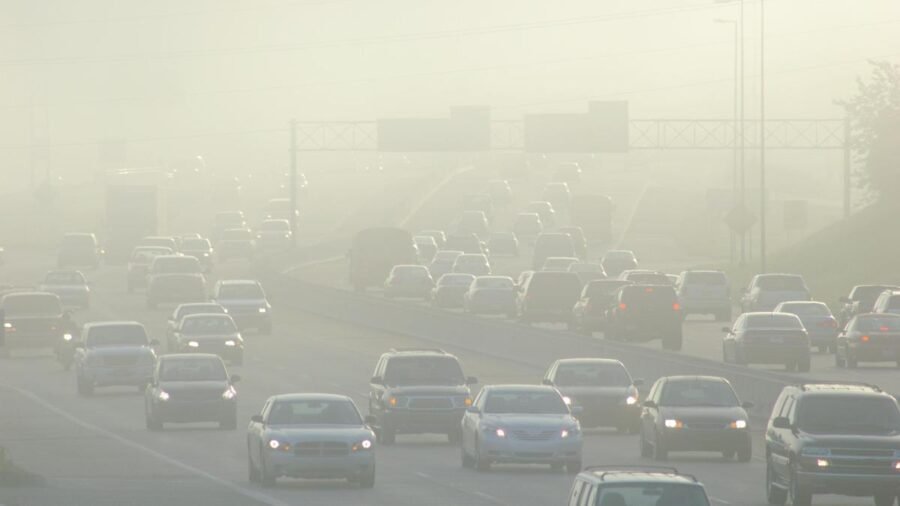
Delhi is going to spend ₹8,300 crore to fight air pollution. That number sounds reassuring. It is large enough to suggest that the government has finally decided to take the capital’s air crisis seriously. The proposed seven-year programme, backed substantially by World Bank financing, promises better data analytics, stronger coordination between agencies, anti-smog guns, a better electric vehicle policy, improved monitoring and measures aimed at transport, construction, waste and industry. But before Delhi congratulates itself for making a historic investment in clean air, there is a more basic question worth asking: Do we really need ₹8,300 crore to know what is making Delhi’s air unbreathable?
Delhi’s pollution problem is not an information problem. It is not as though the Government of Delhi is waiting for a sophisticated data platform to reveal that millions of vehicles travel through the city every day, that construction sites generate enormous quantities of dust, or that industrial activity can release pollutants into the air. We already know the sources. What we have repeatedly failed to demonstrate is the political willingness to deal with them.
Every winter, Delhi goes through the same ritual. Air quality deteriorates, AQI numbers dominate television screens, emergency restrictions are announced, construction is halted, political parties blame one another, and citizens are told to stay indoors. Then the weather improves, the restrictions disappear and the political urgency disappears with them. The air, however, does not suddenly become clean.
One of the biggest problems with Delhi’s approach to air pollution is that the government continues to behave as though it is fundamentally a winter crisis. It is not. Winter may trap pollutants closer to the ground and turn an already serious problem into a public health emergency. But the emissions themselves are produced throughout the year. Vehicles do not stop emitting in April. Construction sites do not stop generating dust in May. Factories do not suddenly become cleaner in June. Waste does not stop being burned because the temperature rises.
So why are many of our strongest interventions still activated only when the crisis becomes visible? A serious clean-air policy should not ask how Delhi can survive another winter. It should ask how Delhi can prevent the same pollution from being produced in the first place. That requires something less glamorous than a new dashboard: year-round enforcement.
Hybrid work
Take traffic. Delhi has spent years discussing electric vehicles, road infrastructure, and public transport. All of these matter. But there is another question that governments seem remarkably reluctant to ask: how many journeys actually need to happen? The pandemic demonstrated that a large amount of white-collar work can be performed remotely. Delhi is home to thousands of offices, consulting firms, technology companies, financial institutions, and other organisations where employees do not necessarily need to be physically present every day.
Why should the government not work with employers to encourage meaningful hybrid-work arrangements where the nature of the job permits it? A city does not have to ban cars to reduce traffic. It can reduce the number of journeys people need to make. That is a policy intervention. It does not require ₹8,300 crore.
The same logic applies to construction. Delhi does not need to wait for an air-quality emergency to enforce dust-control measures at construction sites. It can require compliance throughout the year, impose meaningful penalties for violations, and make enforcement routine rather than seasonal. The same applies to industrial emissions. If an industrial unit is polluting beyond permissible limits in November, it is not reasonable to assume that the problem disappears in April. Monitoring and enforcement need to be continuous.
Better data is useful. Better coordination is useful. Air-quality monitoring is essential. But there is a growing tendency in environmental policy to mistake better measurement for better governance. A sensor can tell us that the air is polluted. A dashboard can tell us where the pollution is coming from. An anti-smog gun can suppress dust temporarily. None of them answers the most difficult question: what are we actually willing to stop?
That is where clean-air policy becomes politically uncomfortable. If construction is contributing to pollution, are we willing to impose meaningful restrictions on construction companies throughout the year? If traffic is contributing to pollution, are we willing to make commuting less necessary? If industrial units are violating standards, are we willing to shut them down? If employers can reduce unnecessary commuting through hybrid work, are we willing to ask them to do it?
These are not technological questions. They are political ones.
The involvement of the World Bank may provide financing, technical expertise and institutional support. There is nothing inherently wrong with that. But international financing should not create the illusion that Delhi’s pollution problem requires an imported solution. Delhi does not need an international institution to tell it that its residents are breathing dangerous air. It needs its own institutions to enforce the rules they already have.
The danger is that ₹8,300 crore becomes another enormous expenditure whose success is measured by what the government builds rather than what Delhi breathes. How many monitoring stations were installed? How many anti-smog guns were purchased? How many agencies were brought together? How much money was disbursed? These are outputs. The outcome is much simpler: Did pollution actually fall?
Sustained investment
It would be unfair to dismiss the entire programme before it begins. Delhi desperately needs sustained investment in public transport, cleaner technology, better monitoring, stronger institutions and regional coordination. But ₹8,300 crore should come with an equally serious demand for accountability.
The government should establish measurable annual targets for air-quality improvement, identify which interventions are responsible for achieving them, publish the results and explain failures openly. Most importantly, the government must stop treating clean air as a seasonal project.
Delhi’s residents do not breathe only between October and February. They breathe every day. That means pollution policy should operate every day too.
The real test of the ₹8,300-crore plan will therefore not be whether Delhi has better technology, more data or greater international support seven years from now. It will be whether the government was finally willing to confront the sources of pollution it has known about for years.
Because Delhi does not suffer from a shortage of plans. It suffers from a shortage of sustained political will to enforce them.
Shazia Azmat is a specialist in ESG strategy and transformations in PwC India

How a Naga film secured entry to the Oscars, alongside India’s official selection
By Sohail Khan · 21 Sep
When everything falls apart: What ‘lifequakes’ can teach us
By Sohail Khan · 21 Sep
Rahul Khanna, 54, gives a peek into his breakfasts
By Sohail Khan · 21 Sep