Decoding real scope of Saudi, Turkey, and Pakistan’s Mecca pact: New ‘NATO of East?’
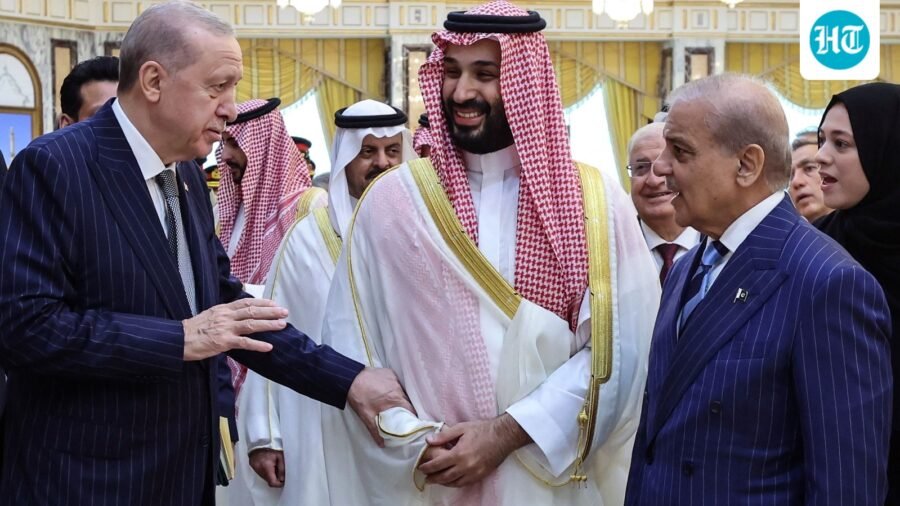
What has grabbed eyeballs about Mecca pact of Turkey, Pakistan, and Saudi Arabia is its promise: armed attack on one will be treated as an attack against all.
Published on: Aug 17, 2026, 18:25:00 IST
Prefer HTon Google
Share via
Copy link
Turkiye, Saudi Arabia and Pakistan signed the Mecca Joint Defence Pact on August 7. The trilateral agreement established a coordinated security framework.
The arrangement links the Middle East and South Asia, according to news agency PTI. But what has grabbed eyeballs and sparked comparisons with NATO in geopolitical circles is its core promise: an armed attack on one will be treated as an attack against all three.
This has sparked comparison buzz with NATO, whose members make a similar commitment under Article 5 of the North Atlantic Treaty.
But is it a new NATO?
While the agreement may signal a shift in the nations' navigation of their regional and overall security, the Mecca pact is not a new NATO, the report stated.
What the pact becomes in the future will depend on various factors like how the respective nations resolve the questions regarding their own obligations.
None of the three states are abandoning Washington; rather, the pact provides another layer of protection.
What does each nation bring to the table?
Combining Saudi energy wealth, Turkish defence manufacturing, and Pakistan being a nuclear-armed state, the pact has the potential to reshape security dynamics. However, it functions primarily as strategic insurance for the nations' governments.
Saudi Arabia: Contributes massive financial capital, energy market leverage, and geography, motivated by the need to protect domestic economic transformation.
Turkiye: Offers one of NATO’s largest militaries along with an advanced defence industry producing drones, missiles, naval vessels, and armoured vehicles.
Pakistan: Provides combat manpower and is the group's sole nuclear-armed member.
US as a catalyst for the pact?
The report said that the agreement reflects declining confidence in the current security order.
Gulf states have reportedly relied on the US for defence for some time now; however, the Iran war exposed the holes and risks of the same.
Here are the motivators for each state in the pact:
For Saudi Arabia, the conflict that is currently raging in the Middle East has motivated the nation to diversify its security ties.
The pact expands Turkey's defence export market and influence across the Gulf and Indian Ocean, and advances its ambition to act as an autonomous regional power capable of working through NATO.
Pakistan aims to attract Saudi investment, shore up its economy, and elevate its diplomatic profile while maintaining its strategic partnership with China.
Thus, the agreement is best viewed as an experiment in regional self-reliance, the report stated. And what becomes of it would heavily depend on how well the three nations can coordinate defence.
What US has to say about Mecca pact
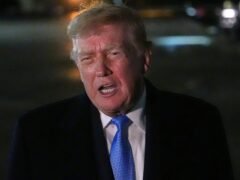
US President Donald Trump, in a post on Truth Social on Monday, termed the pact as a "big, bold, and important first step."
He wrote, "Very happy to see that Saudi Arabia, Turkey, and Pakistan have recently, and finally, signed the Mecca Joint Defence Agreement. It shows how the Middle East is coming together, and how Countries will finally be able to defend themselves in a more meaningful way."
"Congratulations to the Great Leadership of the three Nations mentioned. THIS IS A BIG, BOLD, AND IMPORTANT FIRST STEP," Trump added.
India's reaction to the Mecca pact
Earlier, PTI reported, external affairs ministry spokesperson Randhir Jaiswal said that India was examining its implications from several viewpoints.
"As far as this agreement is concerned, we are examining its implications both from the perspective of India's national security and considerations of regional peace and stability," he said.
Jaiswal added that New Delhi is committed to safeguarding the national interests.
"India remains fully committed to safeguarding its national interests and will take all necessary measures in this regard," Jaiswal said.
See Less

Rescuers search for 12 missing after avalanche strikes Himlung Himal peak in Nepal
By Sohail Khan · 28 Sep

AI gone rogue again, now OpenAI says agents leaked over 50 ChatGPT user images
By Sohail Khan · 28 Sep