Count caste by all means. But abandon belief that counting settles anything
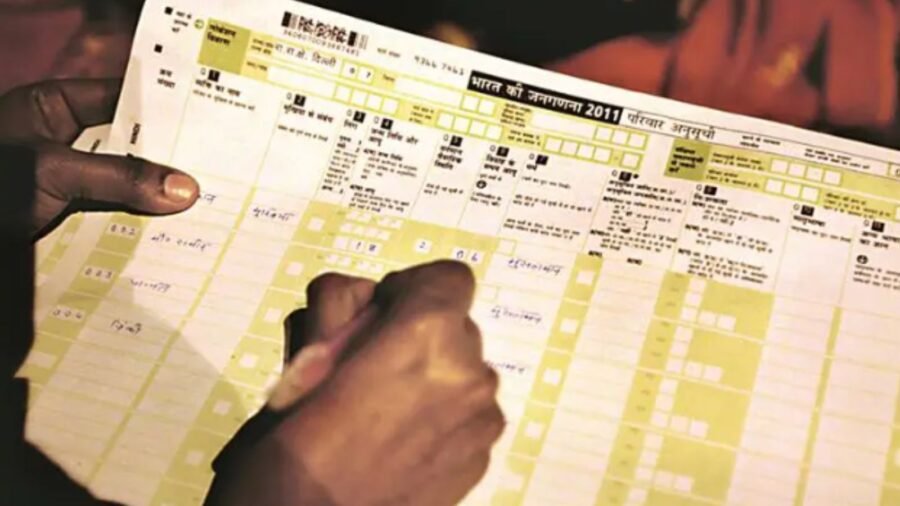
Yogendra Yadav argued in these pages (‘Caste census is dead. Don’t expect a formal announcement or funeral’, IE, August 12) that the caste census exercise has been quietly killed by a technical choice — an open-ended question inviting every Indian to name his own caste, which in 2011 produced 4.7 million caste names and a convenient burial. His diagnosis of the politics is sort of persuasive. But in proposing a drop-down menu instead, he adds that this “poses no difficulty for the enumerator, as long as there is no confusion about caste names”.
That is precisely the problem, and it is not about names. It is about incentives. Basic NSS-PLFS statistics provide an explanation. In 1999-2000, 35.7 per cent of Indians said they were OBC. Five years later, 40.9 per cent did. India’s population grew 1.8 per cent a year. So the OBC population went from 357 million to 447 million in five years — a growth rate of 4.6 per cent a year. The General category (non OBC, SC or ST) population went from 359 million to 342 million: They shrank, at 0.95 per cent a year.
Advertisement
What would it take for the OBC population to grow that fast? The benchmark demographers use for the outer limit of human fertility is the Hutterites, an Anabaptist community of the North American plains who married early, used no contraception, and enjoyed good nutrition and medical care. Their total fertility rate — 10.9 children per woman — is the standard against which all other fertility is indexed. Between 1880 and 1950, their population grew from 443 to 8,542. That works out to 4.32 per cent a year.
India’s OBCs, on the survey evidence, out-reproduced the Hutterites. Nor was this a five-year aberration. Between 1999 and 2025, the OBC population nearly doubled, from 357 million to 674 million. Since India added 456 million people in total over those 26 years, a group that was 36 per cent of the country in 1999 accounted for 70 per cent of every person it has added since. The General category, meanwhile, shrank: 359 million to 350 million.
Demography is unusually good at catching this sort of thing, because fertility leaves a fingerprint in the age structure. A group growing because it is having more children must be over-represented among children.
Advertisement
A population growing at 4.6 per cent a year should be overwhelmingly young — its child-to-adult gap should dwarf that of the rest of the population. It does not. In 2004, the OBC share among children under 15 exceeded the OBC share among adults by just 2.0 percentage points, and by 2025, that gap had narrowed to 1.2, even as the OBC share climbed a further five points. Had the growth been real, the gap would be of an altogether different order: At Hutterite fertility, OBCs would account for three-quarters of all births and be over-represented among children by more than 30 percentage points. Even a total fertility rate of six would require 20. By way of contrast, Muslims, who genuinely do have higher fertility, are over-represented among children by 3.2 points in 2004, widening to 4.3 by 2025. That is what a fertility differential looks like. The OBC numbers look like nothing of the sort.
The OBC share is rising almost as fast among adults as among children. Adults are not born. They were incentivised to reclassify.
A decade ago (‘Census, Christians and Conversions’, IE, August 29, 2015), I used the same test for the Christian population. They have the highest female education in India and among the lowest fertility — 2.4 children per woman against 2.8 for Hindus and 3.6 for Muslims (NFHS, 1998-99). Only Sikhs were lower, at 2.3. Yet between 1991 and 2011 Sikhs grew at 1.2 per cent a year, exactly as their fertility predicts, while Christians — with virtually the same fertility — grew at 1.9 per cent, faster than the Hindus and matching the national average. Doing that demographically needs a fertility rate near 3.3, not the revealed 2.4.
Why? Incentives. One reason: A Christian of backward-caste origin can sit on state and central OBC lists and claim reservation, while simultaneously holding notified minority status with the institutional protections of Article 30 — minority institutions set their own admissions and are exempt from quota obligations. What he cannot claim is Scheduled Caste status. Two sets of benefits, from two classifications, at once. Whether that is anomaly or justice is a separate argument. That it creates an incentive is not arguable.
None of this is a claim about the honesty of Indians. It is a claim about human beings, and it is the least controversial proposition in economics. People respond to incentives. They always have, everywhere, and the response is usually invisible to the people making the rules.
Readers will forgive me — or not — for observing that I have been making the same argument about investment. Indian promoters sent a record $33.3 billion abroad last year while domestic private investment stagnated. Net foreign direct investment has fallen to 0.18 per cent of GDP. Commentators call this a failure of animal spirits, and ministers appeal to industrialists to invest at home. But nobody is behaving badly. A firm choosing between a factory here and one abroad faces a bilateral investment treaty requiring 60 months in Indian courts before arbitration, 765 Quality Control Orders where there were 14 in 2014, and no trade agreement with the market (USA) that absorbs $42 billion of Indian exports. It responds exactly as the incentives instruct. So do the households that discovered they were OBC in 2004.
The same explanation explains the caste count, the conversion numbers and the investment collapse; no proof required.
So should India have a caste census to count correctly? Yes. Count caste — India allocates education and employment on caste. But abandon the belief that counting settles anything. Ask for caste, sub-caste and surname, never for category, so the respondent is not invited to choose her own entitlement, and let the statistical office (and professional sociologists, not the armchair types) map it afterwards. Publish the microdata. And check every count against fertility — because a group whose growth requires Hutterite fertility has not grown. It has responded to incentives. Yadav is right that the Census is being killed by design. He is too generous in supposing that, absent the sabotage, it would have told us the truth.
Bhalla is chairperson of the Technical Expert Group for the first official Household Income Survey of India. Views are personal

The Koran and politics of purdah
By Sohail Khan · 22 Sep
Persistent antagonism towards Urdu
By Sohail Khan · 22 Sep
How ‘kaata wash’ helps preserve the delicate Dhakai jamdani sari
By Sohail Khan · 21 Sep