Cheetah vs leopard: How to tell the difference
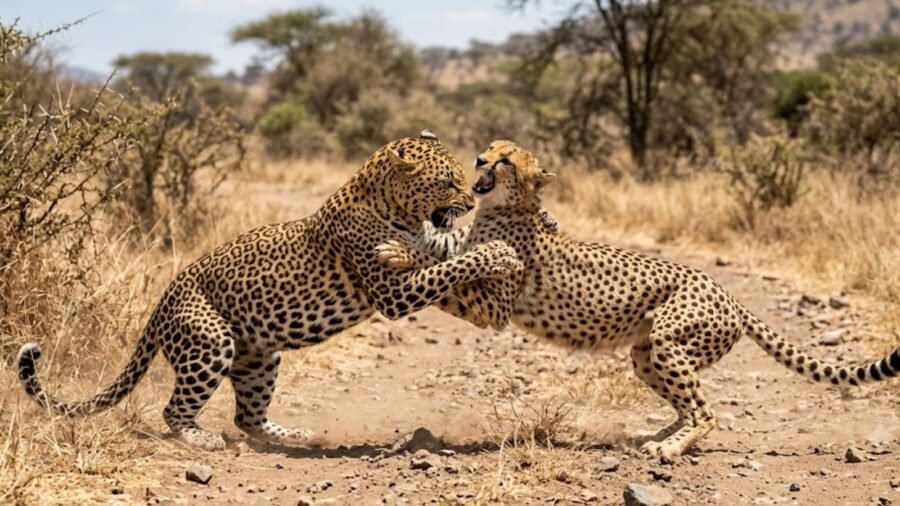
Both are iconic spotted wild cats, but the cheetah and the leopard belong to different evolutionary branches. Wildlife photographer and environmentalist Indrajit Ghorpade tells IndianExpress.com that the simplest way to understand the distinction is to look beyond their shared spotted coats.
The cheetah is a lightweight sprinter built for extreme speed in open, daytime habitats, while the leopard is a powerful, stocky ambush predator built around strength, stealth and tree-climbing ability.
Story continues below this ad
So, if you spot one in the wild, what should you look for?
Start with the appearance
According to Ghorpade, the differences in physical features, body shape, gait, and coat pattern are among the most distinctive ways to tell the two cats apart.
Spots vs rosettes
The first clue is their coat. Cheetahs have solid, round black spots spread across their bodies. Leopards, on the other hand, have rosettes — broken circles or rose-like clusters, often with darker centres. This difference in markings is one of the easiest visual cues when the animal is close enough to observe clearly.
Look at the face
Another striking feature is found on the cheetah’s face. Cheetahs have bold black streaks, known as tear marks or malar stripes, running from the inner corners of their eyes down towards the sides of their mouth. Ghorpade describes these as functioning somewhat like built-in sunglasses or an athlete’s eye black.
Story continues below this ad
The dark pigmentation helps absorb harsh sunlight and reduce glare, an adaptation that is useful for a daytime hunter moving across bright, open landscapes. Leopards lack these distinctive tear streaks.
Body shape tells another story
The two cats also have noticeably different builds. Ghorpade points out that cheetahs are slender and aerodynamic, with long, slim legs suited to running. Their bodies are designed for acceleration and speed.
Leopards are muscular, compact and heavy-chested. Their more powerful build reflects a hunting strategy based on stealth, strength and close-range attacks rather than prolonged high-speed pursuit.
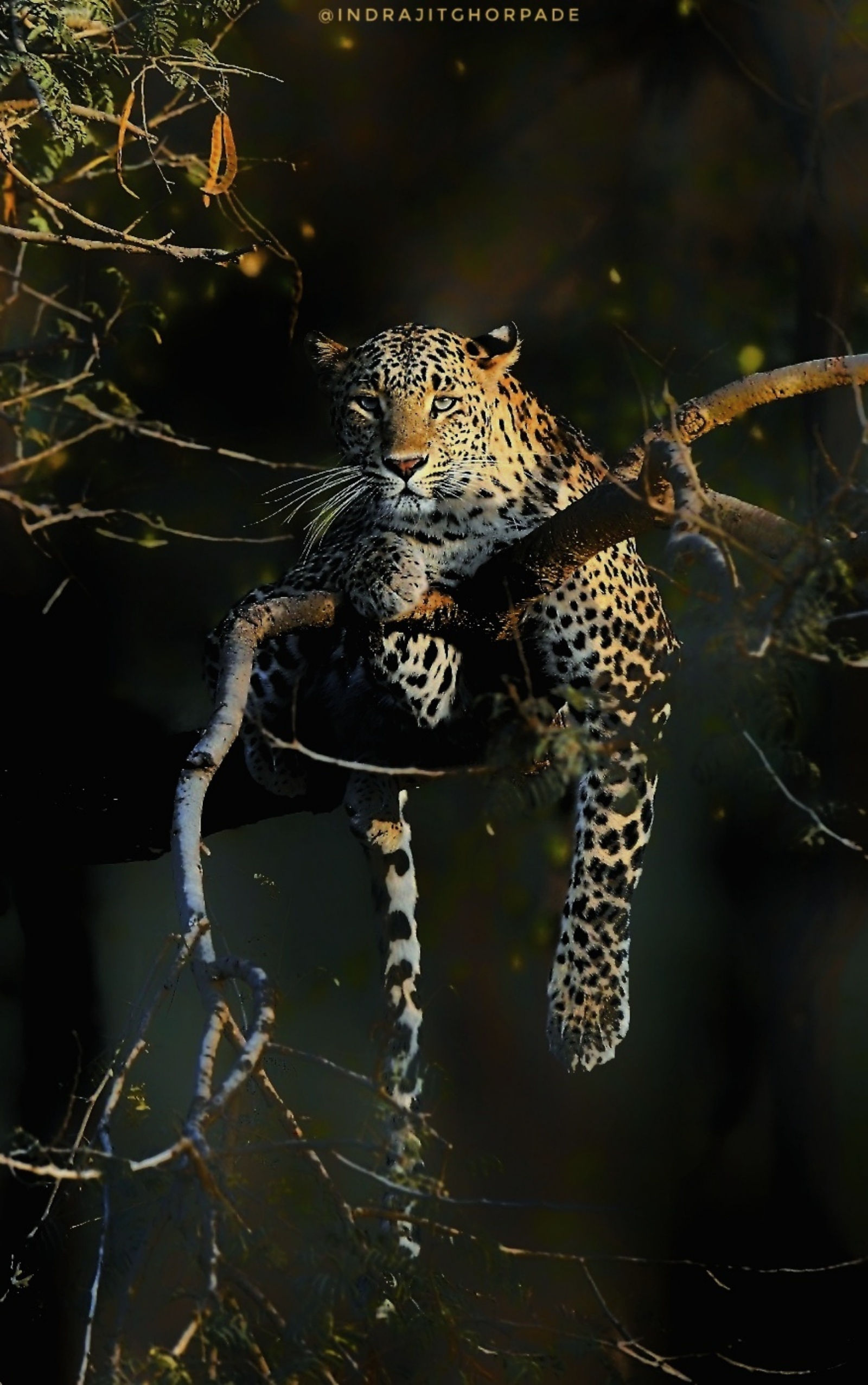 A cheetah captured by wildlife photographer Indrajit Ghorpade
Their claws are different, too
Story continues below this ad
Their claws offer another important distinction. Cheetahs have semi-non-retractable claws, which function somewhat like running cleats, helping them maintain traction while sprinting. Leopards have fully retractable, sharp claws. These are useful for climbing trees as well as gripping and grappling with prey.
Their hunting styles are almost opposite
The differences become even clearer when you watch how these animals hunt. Ghorpade describes cheetahs as sprinter hunters. They use their sharp daytime vision to identify prey and then rely on sheer pace to bring it down. Their hunting strategy is based on acceleration and a high-speed chase, with cheetahs capable of reaching speeds of up to around 112 km/h.
Leopards take a very different approach. They are ambush hunters, relying on stealth, stalking and getting close to their prey before launching an attack. Rather than chasing prey over long distances, they use cover and their surroundings to their advantage.
Where do cheetahs and leopards live?
Habitat is another useful clue. Cheetahs prefer open landscapes such as plains, grasslands and savannas. These environments give them the space they need to spot prey and build up speed during a chase.
Story continues below this ad
Leopards are considerably more adaptable. According to Ghorpade, they can be found in shrub jungles, forests and rocky landscapes, using vegetation, rocks and other natural cover to stalk prey.
Their contrasting body structures and hunting methods make sense in these different environments: the cheetah is built to run across open ground, while the leopard is built to move stealthily through varied terrain.
What happens after the kill?
Their different approaches to hunting also influence how they handle their prey. Cheetahs are relatively vulnerable after a kill. Because they are lighter and less powerful than several other large predators, they need to eat quickly before scavengers or stronger predators can take over their meal.
Leopards, by contrast, can use their strength and climbing ability to their advantage. They are capable of dragging heavy kills into trees, where the carcass is harder for competing predators to reach. This behaviour is another reflection of the leopard’s muscular build and its ability to climb.
Story continues below this ad
Explore more captivating stories about pets and animals here, and make us your daily stop for the latest from the animal kingdom.

Before you buy baingan, press it: How to spot fresh brinjal at the market
By Sohail Khan · 26 Sep
Why Anup Jalota calls his sea-facing home the ‘best vacation place in the world’
By Sohail Khan · 26 Sep
I have a ferritin face: What experts want you to know about low iron
By Sohail Khan · 26 Sep