Centre plans integrated command centres to step up border security
The Ministry of Home Affairs (MHA) is developing a technology-driven command-and-control system for India’s land borders that will integrate surveillance inputs from the field through a network of command centres stretching from forward areas to New Delhi, according to a senior government official.
The initiative, part of a new border management policy, is aimed at strengthening monitoring and response capabilities in border regions where physical fencing is not feasible, such as the 3,488-km border with China, which remains un-demarcated at several points from Ladakh to Arunachal Pradesh. A pilot project will start soon from the Pakistan border, the official added.
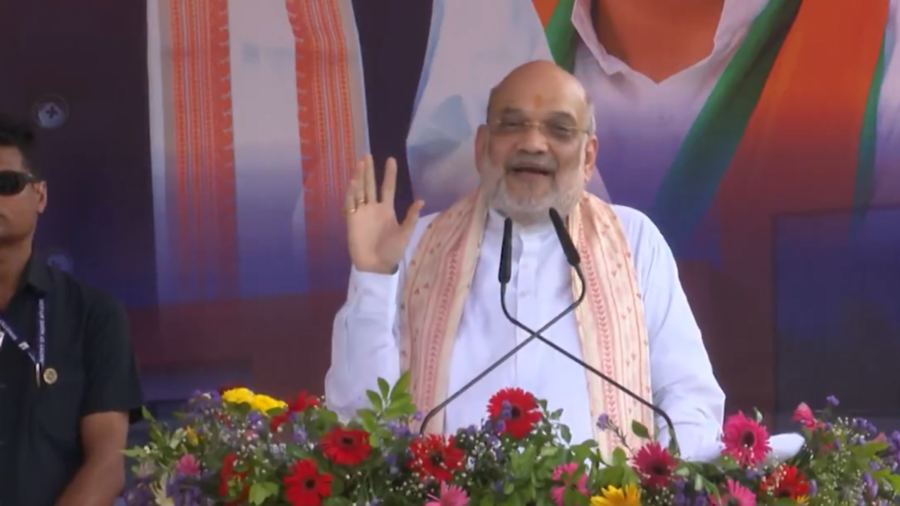
Home Minister Amit Shah had earlier announced a four-pronged border security strategy, which involves border guarding forces, local population, State police and technological solutions.
“There will be several small command centres along the land borders that will be linked to the field headquarters and further to Delhi headquarters. The live feed will help the border guarding forces to monitor and also save the resources, reducing the need for physical patrolling,” said the official.
Faster responses
The “smart border” architecture for all of India’s land frontiers would integrate artificial intelligence, sensors, surveillance systems and unified command-and-control centres to strengthen border security and enable faster responses to threats, the official said.
India shares 15,106.7 km land border with seven countries.
“The proposed framework is designed to bring together surveillance inputs from multiple technologies, including cameras, sensors, image-processing tools, drones and other monitoring systems, to create a common operational picture for agencies deployed along India’s borders,” said the official.
The system was envisaged as an integrated platform where information gathered on the ground could be transmitted quickly to command-and-control centres, allowing authorities to respond more effectively to infiltration attempts, smuggling networks and other security challenges, said the official.
Addressing the growing threat from drones, particularly for smuggling and reconnaissance, has emerged as a major focus area, particularly along the Pakistan border.
According to the official, border-management technologies would be tailored to local conditions rather than deployed uniformly. India’s land borders traverse deserts, mountains, riverine stretches, forests and densely populated areas, requiring customised solutions for different terrains and operational requirements, the official added.
“No two borders are the same. Just like the China border, which cannot be fenced, there are riverine stretches along the Bangladesh border, which are flood-prone. No fence can be put there. We are moving towards a concept where physical presence is not always required,” said the official.
On July 9, Mr. Shah addressed the first ever Land Border Districts’ Superintendents of Police Conference–2026. The meeting was attended by Superintendents of Police (SPs) of 119 border districts of 17 States and Union Territories, which share land border with Pakistan, Nepal, Bangladesh, Bhutan, China and Myanmar.
At the meeting, States were asked to submit their suggestions by December and the quadrangular security grid, which involves border communities and the local police, will be finalised in the next 1.5 years.

US military spending $2.2 bn to build small nuclear reactors
By Sohail Khan · 27 Aug


Leave a Reply