Bullying is not a rite of passage
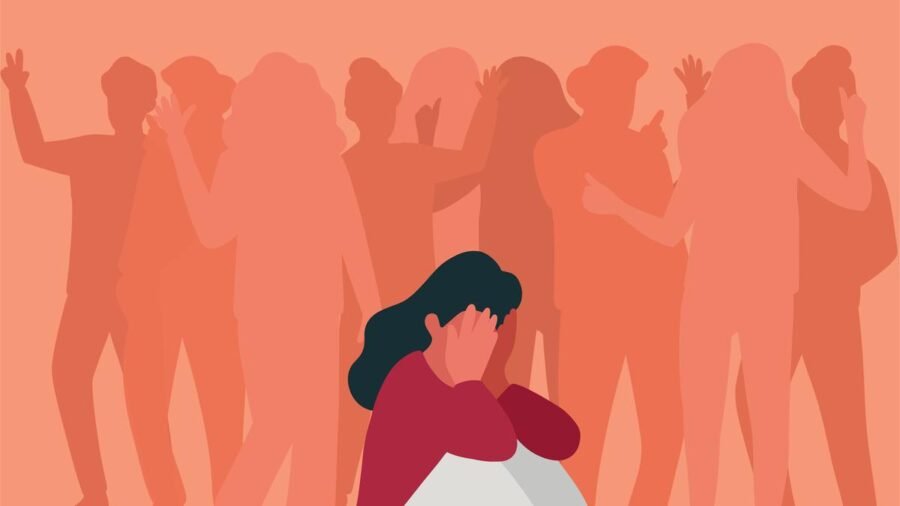
There are some images that we cannot shake off. Not because they are harrowing, but because they show something far more disturbing, the quiet crumbling of humanity in places where it should be strongest. A girl stands inside her classroom — hands crossed, head bowed, eyes begging for attention, searching for reassurance. Nearby other children are laughing. There is a teacher close by. Moments later the child runs out. She does not come back.
It is the story of the death of a nine-year-old Class 4 student in Jaipur on November 1, 2025 that sparked a national debate about bullying and institutional responsibility. For weeks, the tragedy remained another painful headline. Then, eight months on, CCTV footage released by her grieving parents sent shockwaves across the nation. The family affirms the video is not only about a child being bullied but also about a child trying desperately to be heard. While investigations must establish the facts, one thing is beyond dispute: every frightened child deserves to be heard before despair becomes irreversible.
Children do not always have the words to express emotional pain. Instead, they speak in silence. As a way of shaking hands. Eyes down. Through tears. The family says she repeatedly went to her teacher, while other students allegedly taunted and humiliated her.
Of all that has been unveiled since that November afternoon, one detail has broken the hearts of parents. The child was scared of heights. If a child is afraid of heights, she will not be tempted to go near the edge of a four-storey building. Fear of heights is instinctive. Another fear must be greater for that instinct to be overpowered.
What passed through her mind in those last moments we may never know. Only she knew the weight she bore. But her mother’s words force us to consider a painful possibility: whatever happened to her inside that classroom may have felt, in that moment, more terrifying than the height she feared. That thought alone should keep every educator up. Her family asserts that the CCTV footage raises questions about whether her distress was dealt with immediately. Now those allegations are subject to greater public and institutional scrutiny. Whatever the result of the investigations, one thing cannot be disputed. If a scared child calls for help, adults must respond — not after the next lesson, not after the next meet. Right away.
Bullying is not a rite of passage. For generations now, adults have been comforting themselves with dangerous myths. “They’re only children.” “It will make them stronger.” “We all went through it.” Such words have condoned many acts of cruelty. Bullying isn’t just harmless fun. It is repeatedly humiliating to diminish another human being. Sometimes it hurts. More often it leaves invisible wounds that quietly settle into a child’s confidence, self-worth and sense of belonging.
A daily repeated nickname. The laughter that comes when one child talks. Being deliberately left out. The face of mockery. The whisper that the rest of the world hears. Each of these acts in itself does not seem to be catastrophic. They can convince a child, together, that school no longer becomes a place of learning, but a place of survival.
An experienced teacher knows that children will not keep coming to a teacher for help unless something is terribly wrong. A loud voice can be ignored. A complaint can be taken the wrong way. But repeated distress is never normal. It is a sign. And signals must be responded to. Teaching has never been just in textbooks. Decades later, a student may forget every equation and every date — but they will never forget the teacher who made them feel they belonged. Children rarely remember all chapters. They always remember how they were treated by teachers. Academic excellence loses its meaning if emotional safety is absent.
It would be comforting to believe this tragedy belongs to one institution. But it doesn’t. There are children in every city who hate Monday mornings. Every school has students who practise excuses to skip class. There is always one — the child who has stopped raising her hand, stopped speaking, stopped hoping, wondering if anyone would notice if they simply disappeared. Bullying takes many forms today. Sometimes it happens in the hallways. Sometimes in WhatsApp groups. Sometimes via social media. Sometimes in whispers teachers never hear. Sometimes in laughter all take for fun. The place is changing. The damage wasn’t.
When success outweighs safety
Today’s education system is about rankings, board results, university placements, smart classrooms, robotics labs and international collaborations. These achievements count. But they are hollow if a child doesn’t feel safe sitting at a desk. Parents don’t often ask what the school’s best exam results are before asking a much easier question. “Will my child be safe here?” That question merits more than the soothing words printed in a prospectus. It requires proof. Active anti-bullying committees. School counsellors on site. Teachers trained to recognise emotional distress. Systems that protect vulnerable children before tragedy strikes.
Safety is not an after-school activity. It is the first responsibility of education. Listen Before It Is Too Late. Children seldom tell you they are sinking emotionally. They whisper instead. Parents and teachers must learn to listen to what children cannot yet say. The dinner table conversation might save more lives than the classroom lecture. A teacher who pauses for five minutes may accomplish more than the teacher who finishes the syllabus on time. The child who feels heard today may never know a loneliness that is unbearable tomorrow.
And no article can explain what happened in Amaira’s heart in those last moments. No investigation can ever erase the grief of her parents. No punishment can bring her back the future she was to have. But her story can still make a difference. It can change the way teachers respond to the next scared child. What parents think of the next weird silence. The effects of repeated cruelty as seen by classmates. How schools measure success — not only by grades and trophies, but by how safe the emotional health of every child who passes through their gates is. Maybe that would be the legacy that no family should ever have to create.
Every morning parents leave their children at the school gates based on extraordinary trust. They rely on teachers to teach them. They expect schools to be safe places. They think that childhood will remain unspoiled until the last bell is rung. That trust is holy. When it is broken, an entire society has to stop and reflect. Nonetheless, parents must actively enquire about anti-bullying mechanisms and counselling structures during parent-teacher meetings to prevent such incidents.
The unfortunate child’s desk is empty. Her books are shut. Her laugh is old in recollection. But her story still holds a question that resonates much further than one classroom in Jaipur: if a child folds her hands in front of the teachers who are supposed to care for her, will someone stop, listen and protect her? How we answer that question will determine the future of our schools and the character of our society. Because education starts with literacy. But civilisation starts with kindness.
aufaq.zargar@gmail.com

Woman wears same T-shirt after 7 years, shows 65-kg weight-loss transformation: ‘Baby Nonu…’
By Sohail Khan · 28 Sep
In great powers’ AI race, New Delhi’s place will depend on capabilities built at home
By Sohail Khan · 28 Sep