Bring back E10 for older vehicles. Work out food-versus-fuel trade-off
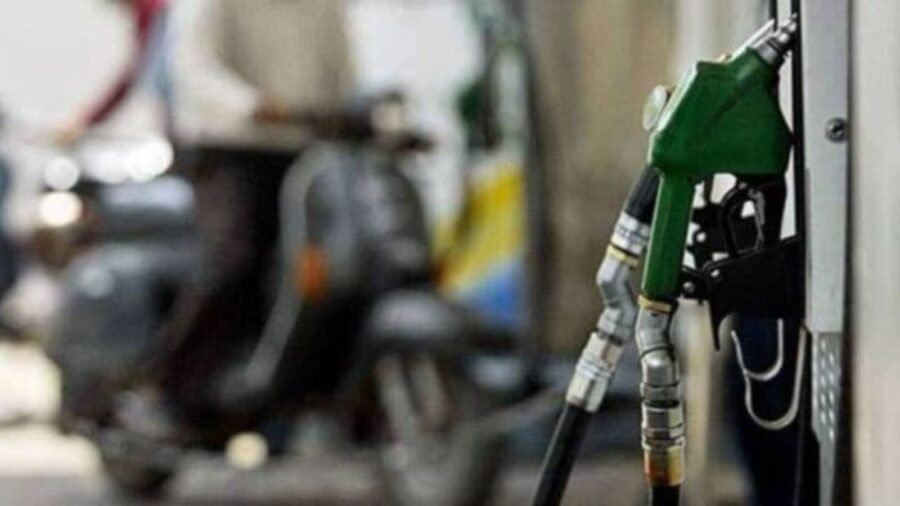
A complaint has been travelling fast online that the government’s E20 petrol wrecks engines and empties the tank faster. The charge is loud, but it is also, on the main point, wrong. However, dismissing it outright would be a mistake because beneath the noise lies a real problem and a much larger question.
Start with the engine, and the evidence does not support the fear of damage. Ethanol carries about two-thirds the energy of petrol, so a litre of E20 takes you a little less far, but the loss is small and does not signal any malfunction. Ethanol is only a fifth of the blend, so the energy penalty is around 6 to 7 per cent, not the 30 per cent doing the rounds. Carbon monoxide and unburnt hydrocarbons actually fall, which is good for the environment. On durability, which is the primary point of contention, the record is reassuring and counters the online narrative. The US, one of the global leaders in ethanol blending, had the Oakridge National Laboratory run 86 vehicles for a cumulative total of nearly 10 million kilometres on blends up to E20 and found no increased wear in cars not rated for E20. India’s own testing by ARAI, the petroleum institute, and Indian Oil reached the same conclusion. Thus, social-media worries about engine damage do not hold up.
Advertisement
However, one exception is genuine, that is, India has roughly 75 to 80 million older two-wheelers built before BS4 that run on carburettors. A carburettor cannot sense the extra oxygen in the blend and adjust for it, so on E20, the engine draws in too little fuel for the air it draws in and runs hot. Further, older rubber seals that are not rated for ethanol are a separate problem, as they degrade on contact with the fuel regardless of engine temperature. Retrofitting those seals with ethanol-compatible ones is cheap. Still, it happens one vehicle at a time, and covering 75 to 80 million two-wheelers that way will take years, even if every workshop starts today. The original roadmap anticipated this and requested that a lower-blend fuel remain on sale for these vehicles, but that fuel quietly vanished from the pumps and needs to return. Restoring a lower blend at the pumps, say, E10, alongside the option to buy E20, would calm most public concern, lower total ethanol use instead of raising it, and protect the existing fleet while the retrofit programme catches up.
With the engine argument settled, one must also ask the harder question that nobody is shouting about. How much further should blending go? Moving from E20 to E27 or E30 is a different decision altogether, because that is where fuel begins to crowd out food.
Consider the two import bills India is trying to shrink. The crude oil bill is huge, around Rs 11-12 lakh crore a year. The edible oil bill is far smaller, roughly Rs 1.6 to 1.75 lakh crore. Ethanol at E20 trims only 3 to 4 per cent of the crude bill. The edible oil gap looks less daunting and is far more closeable. India already produces about 40 per cent of its cooking oil and aims to reach 72 per cent by 2030-31. A gap that the government can not only close fully but also stop subsidising is worth more than one you can only nibble at forever.
Advertisement
The feedstock has shifted, and that turns a distant trade-off into a direct one. Maize now supplies about half of India’s ethanol, and grains together nearly 67 per cent. Maize competes with soybean, groundnut and mustard for the same fields. Two forces pull land towards it. First, ethanol from maize is procured at a fixed price well above the sugarcane route, which keeps the crop attractive, whatever the market says. Second, the leftover grain from distillation is sold as animal feed, undercutting soybean meal. Weaker meal prices, in turn, drag down soybean prices. The oilseed farmer loses twice.
Similarly, water needs a clearer eye too, especially when it comes to the headline figures, that is, thousands of litres of water used for every litre of ethanol. The figures generally quoted mix two very different things. Green water is rain that the crop would have received anyway. Blue water is drawn from rivers, canals, groundwater pumps and wells. It is the blue water that is scarce, and cane in Maharashtra and Karnataka draws heavily on already-stressed sources. So the water rule should target blue-water use, not the frightening total.
Even the climate case is unsettled. Any blending beyond E20 would come almost entirely from grain, and Indian life-cycle studies do not agree on whether grain ethanol is cleaner than the alternatives once cultivation and processing are counted. The green argument for going further may not withstand closer scientific scrutiny.
That is not to say that the ethanol programme has not delivered material gains. It has cleared sugarcane dues, lifted rural incomes and built an assured market. On the flip side, holding at E20 also carries its own costs. These include distillery capacity built for more, loans taken against expected demand, and a sugar surplus that ethanol helps absorb. These belong in the reckoning too, and like most public policy dilemmas, the honest course of action is to weigh both sides carefully.
Here is the principle that should guide the choice. Some instruments can be changed within a season and reversed if the evidence turns, such as the procurement price, the protection fuel, the water rules and the import duty on edible oil. However, the blend level cannot. Once land and water are committed to fuel, and distilleries and cropping patterns are built around it, pulling back is bound to be slow and painful. When some moves are easy to undo, and others are not, prudence says to move the reversible ones first and hold off on the irreversible ones until a thorough cost-benefit analysis is done.
In this context, the recommendation is modest. Bring back a lower blend, such as E10, for the older fleet of vehicles. Fix the price and water distortions that unintentionally favour maize over other crops, relook at the import duty on edible oil to support the push towards domestic self-sufficiency, and hold at E20 until India has thoroughly costed the food-versus-fuel trade-off, rather than assuming it away. The engine row we witnessed was never the real argument. The real one is about what we choose to grow, and what we will not be able to take back.
Nageswaran is Chief Economic Advisor to the Government of India and Poojari is consultant, Department of Economic Affairs. Views are personal
Rishi Sunak, Ro Khanna, Dinesh D’Souza: united by colour; divided among white nationalists
By Sohail Khan · 28 Sep
From Nepal to India, how AI is improving disaster management
By Sohail Khan · 28 Sep
40 years ago September 28, 1986: Relief for Haryana farmers
By Sohail Khan · 28 Sep