BRICS Environment Ministers oppose European Union’s Carbon Border Tax
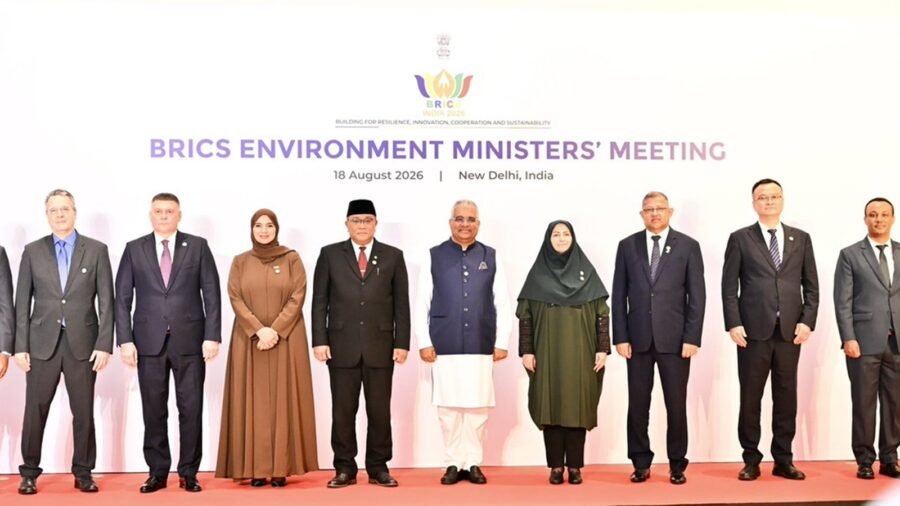
BRICS environment and climate ministers Tuesday opposed the European Union’s (EU) Carbon Border Adjustment Mechanism (CBAM) or Carbon Border Tax, calling it a unilateral, punitive, discriminatory and protection measure that is not in line with international law.
They reiterated that developed nations must urgently scale up climate finance, especially for climate adaptation. CBAM is an import levy on carbon-intensive goods like steel, iron, fertilisers, aluminium and cement. The tax was aimed as a measure to reduce the carbon footprint of imported goods, but the step has been seen as a trade barrier by developing countries.
Rolled out on October 1, 2023, with a reporting-only phase, CBAM was entirely effected from January 1, 2026, when importers were asked to purchase and surrender CBAM certificates tied to carbon emissions embedded in their goods.
In the ‘Adaptation and climate resilience’ part of the joint statement, member nations “expressed concern” that measures like CBAM “undermine efforts by countries, specifically the developing countries”, aimed at addressing the adverse impacts of climate change, increased adaptive capacity, and resilience. The meeting, chaired by India in New Delhi, brought together environment and climate ministers and senior officials from Brazil, Russia, India, China, South Africa, United Arab Emirates, Indonesia, Iran, Saudi Arabia, Egypt and Ethiopia.
In a joint statement issued at the conclusion of the 12th BRICS Environment Ministers’ meeting, the bloc of nine developing economies has also urged wealthy nations to deliver on the New Collective Quantified Goal (NCQG) reached at the COP (Conference of Parties) 30 held in Belem, Brazil, to triple adaptation finance to developing countries by 2035.
The joint declaration document invoked the principle of “common but differentiated responsibilities and respective capabilities” (CBDR-RC), underscoring that all cooperation commitments — from forest fire protocols to circular economy standards — remain voluntary and calibrated to each country’s national circumstances. It marked the culmination of a year of technical work by the BRICS Environment Working Group and its Contact Group on Climate Change and Sustainable Development. India formally handed over hosting duties for the 13th edition to China, which will lead the meeting in 2027.

ED chargesheets EaseMyTrip promoter in Mahadev betting app case, seeks to confiscate shares
By Sohail Khan · 21 Sep
‘Rock Star’ of Kuno is gone: Gaurav, an original Project Cheetah big cat, dies
By Sohail Khan · 21 Sep
Bid to pin blame of prison break on jailor lands Odisha official behind bars
By Sohail Khan · 21 Sep