Bihar’s alcohol ban has been a success for social wellness, data show
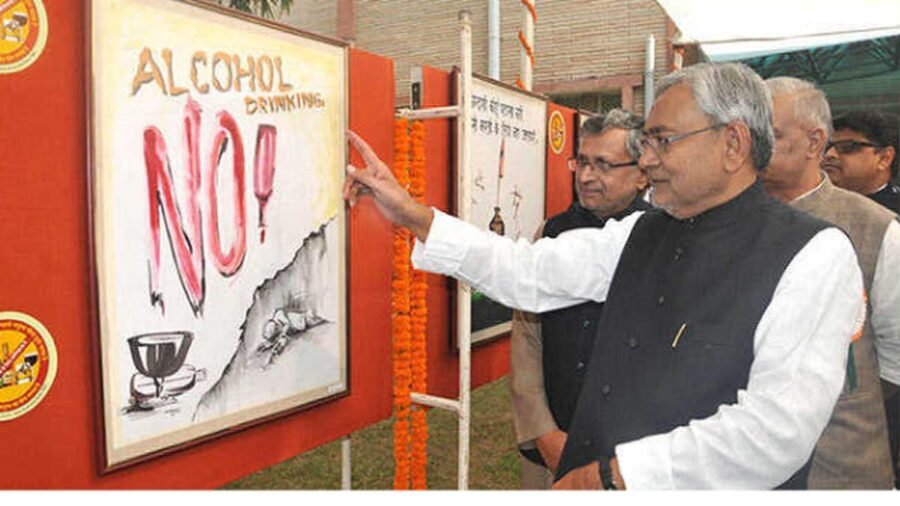
Recently, a report titled ‘Macro Perspective of Bihar’s Development Achievements, Unfinished Agenda, and the Way Forward’ presented at the India Policy Forum 2026 received widespread media attention. While it is a good and timely report, one of the recommendations it makes is flawed from public health and social development perspectives: that the State of Bihar should lift its alcohol ban.
To this end, the reports’ authors have argued that the ban has not really led to a decrease in violence against women and that the ban cost the State valuable revenue.
However, these contentions are incorrect and incomplete, respectively.
Caution with crime data
On the first: crime data from the National Crime Records Bureau are often used as a proxy for the most severe forms of violence against women. Per the report, the total number of crimes reported against women has increased over the years in Bihar and that this rise is not punctuated by the alcohol ban. However, the crime data do not cover all violence. Often, only severe violence is reported as crime. Instances of violence perpetrated by family members, friends, and those close to the victim in the community are also rarely reported. As a result, several instances of violence are unreported in this data.
While useful, crime data should also be used with caution. An increase in the total number of crimes ‘reported’ against women can be explained by well-known secular improvements in crime reporting in India, to de-stigmatisation, to public awareness, to better legal aid, and to efforts by the law enforcement. A rise in reporting is not synonymous with there being more crime against women per se.
Using a blanket outcome such as the total number of crimes against women is also problematic. Only certain crimes can be tied to alcohol use among violent perpetrators. An appendix figure in the report also shows that the incidence of rape in fact decreased or somewhat flattened out after the alcohol ban, especially until 2020, when the COVID-19 pandemic began. To understand policy effects, specific outcomes tied to how the policy is intended to act will be better than blanket outcomes.
Assessing a ban
Evidence generation and synthesis involve description, association, and causation. While descriptive evidence helps allocate resources and association helps identify patterns, neither can drive policy action, especially for interventions. Ideally, causal evidence should drive policy action. Well-conducted quasi-experimental studies designed to answer that question — e.g. “how much did the alcohol ban reduce violence against women?” — would be the way to go.
An emerging body of literature on how the ban has affected violence also includes a couple of quasi-experimental evaluations with better validity for causal claims. This literature supports two important conclusions.
First, the majority of these studies indicate that since the ban, intimate partner or spousal violence against women has decreased substantially in Bihar compared to decreases in other States in the same period, after accounting for several factors that could influence this relationship. One of these studies, in The Lancet Regional Health in 2024, concluded that the ban had prevented more than 21 lakh cases of violence. While there might be some differences with respect to the extent of reduction across physical, sexual, and emotional violence recorded by different studies, the reduction in intimate partner violence overall is clear.
Second, there is a limited number of studies investigating the effects of bans on crime outcomes. That said, the sole peer-reviewed quasi-experimental study on the topic, published in mid-2024, noted a significant drop in the number of assaults on women. More and better research is certainly required to tie the alcohol ban to crime outcomes.
Studies have also assessed the effects of the ban on non-communicable disease outcomes such as hypertension, diabetes, and obesity and have found substantial reductions among men. The aforementioned The Lancet study also noted that the ban prevented 18 lakh cases of overweight/obesity among men.
Taken together, the current quasi-experimental epidemiologic literature does not support the claim that the ban has not worked.
Distracting binary
Further, the argument about lost State revenue is based on an incomplete assessment. The losses worth “14% of the State revenue” need to be balanced against the medium- and long-term economic gains to society from better population health, safety, and wellbeing.
Health economic evaluations of the Bihar alcohol ban are key and are currently missing, although a 2019 estimate in the International Journal of Drug Policy estimated that alcohol use in India is associated with “an average loss of 1.45% of the gross domestic product per year to the Indian economy”, or around Rs 98 lakh crore, after adjusting for tax receipts. The social value of losses has also been estimated to be more than three-times the economic gains from alcohol excise taxes.
Even if the ban is to be lifted, doing so must not undo the health and social benefits it has achieved. The more relevant question to ensure this is: Over the last 10 years, have mental health and addiction services scaled up, public education and awareness increased, and employment and educational opportunities expanded?
Most importantly, ‘ban’ or ‘no ban’ are not the only policy alternatives. The last 70 years of alcohol research worldwide, endorsed by all major clinical and public health organisations, including the World Health Organisation, suggest a veritable menu of alcohol control policy options. Policies that restrict alcohol availability, such as rationing systems, could be a softer intermediate step, to be complemented with policies to control access, economics, and education. In other words, instead of debating lifting the ban, the focus should be on considering whether other, less restrictive and enforceable policy options will be better.
SiddheshZadey is a cofounder of the Association for Socially Applicable Research (ASAR) and a doctoral candidate in the Department of Epidemiology at Columbia University Mailman School of Public Health.


‘Trust before training’: How to help a rescued dog settle into your home
By Sohail Khan · 21 Sep