‘Ashoka-era stupa, bigger than Sanchi’: 90 years on, Ujjain mound comes under renewed focus
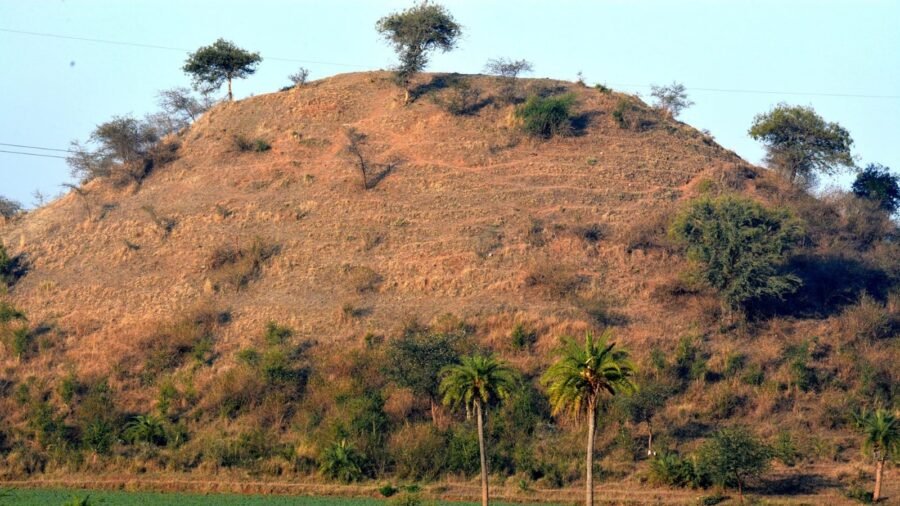
The Madhya Pradesh government has begun a push to excavate and restore monuments linked to Mauryan-era emperor Ashoka, beginning with a fresh excavation of Vaishya Tekri – after an almost 90-year-gap – in Ujjain.
The project comes amid a push by Chief Minister Mohan Yadav who has expressed interest in speeding up the excavation and restoration of the site, which belongs to his constituency of Ujjain.
The project also carries a larger historical significance for Madhya Pradesh. Ujjain was an important city in the Mauryan world, and Ashoka was considered traditionally associated with it before he became emperor.
Dr Shivakant Bajpai, ASI Superintending Archeologist (Bhopal), told , “We have sent a proposal to the DG, ASI, for excavation of the site. It will take at least three years for the excavation to yield meaningful results and may also take several more years for completion. Restoring the stupa will be another monumental task and our objective is to ensure it is restored without inflicting any damage to the site.”
The Archaeological Survey of India (ASI) believes that there is a possibility that a stupa larger than the famous Sanchi stupa may exist at this site. However, there is a need for a deeper scientific study to establish the fact.
The renewed focus on Vaishya Tekri is significant because the first excavation, carried out in 1938-39 by the Archaeological Department of the erstwhile Gwalior State, had already established that the enormous mound was not a natural formation but the remains of a major stupa.
The original excavation report, preserved in the Annual Administration Report of the Archaeological Department, Gwalior State, for Vikram Samvat 1995 (1938-39), provides a detailed account of what archaeologists found beneath the mound.
The excavation report described Vaishya Tekri as a “huge stupa”, estimating its base at approximately 350 feet in diameter and its height at not less than 100 feet. The height of the stupa at Sanchi is approximately 54 feet.
ASI officials said the name of the mound (or tekri) stems from the queen of Emperor Ashoka, who came from the Vaishya or merchant community. Ashoka is believed to have had a palace built there during his viceroyalty of Ujjain. However, at the time, the first archeologists who excavated the site opined that “excavations do not bear out the tradition.”
What the 90-year-old report said
Story continues below this ad
The monument’s size was only one part of what fascinated the excavators; its construction was unlike what they had encountered elsewhere. Instead of a conventional solid brick structure, the heart of the monument was made from local blackish murum, rammed hard to form the massive core. The exterior was then faced with brick masonry laid in mud mortar.
“The hearting is made up of local blackish murum rammed hard, while the facing is composed of brick masonry laid in mud mortar,” the excavation report stated.
The bricks were themselves exceptionally large. The report recorded the biggest as measuring 22¼ inches by 18¼ inches by 3¾ inches, while another variety measured 22¼ inches by 15¼ inches by 3¾ inches.
The excavators regarded the dimensions of the bricks as important chronological evidence. “The size of bricks indicates that the structure belonged to the Mauryan period (3rd century BC).”
That conclusion was further supported, the report said, by two coins recovered during the excavation — a punch-marked coin and a cast Avanti coin.
Story continues below this ad
The archaeologists consequently considered a possible connection with Ashoka, but again stopped short of presenting it as an established fact and opined that “it is possible that the stupa is one of the many which Asoka is said to have built.”
The ancient builders had also substantially altered the landscape around the stupa. The report says the enormous quantity of murum used for the core had been quarried from the surrounding area.
The excavators found that these quarry areas had effectively formed a regular square moat around the stupa, while leaving a gap between the moat and the monument itself. On the western side, they found evidence of a passage across the moat.
“In the centre of the West side of the moat there are the vestiges of a passage across the moat, for worshippers coming from the city, which was situated in that direction,” the report said.
Story continues below this ad
But the first excavation also demonstrated just how much of Vaishya Tekri had already been lost.
“The facing of the stupa has all but disappeared and it is not possible from what has survived to determine the exact plan and elevation of the stupa,” it said.
Most striking was the engineering at its base. “An unusual and ingenious engineering device has been employed in the construction of the masonry at the bottom of this stupa…”
The lower masonry was built in the shape of a bowl, supporting the superstructure and counteracting the pressure generated by the enormous mass of material above it. “This part of the masonry is built up in the shape of a bowl which supports the superstructure and with its slanting sides, resists the oblique thrust of the filling which is wide at the bottom and gradually narrows down as it rises up towards the top,” it said.
Story continues below this ad
The report also suggested that the monument had originally been taller than what survived. “The existing altitude of the stupa is slightly less in proportion to its base as compared with other stupas of the period but this can be explained by the fact that the top has been washed away,” said the report.
The modern challenge, though, is not simply to dig up the mound. The government and ASI will first have to secure control of the archaeological site. Ujjain district administration has sent a proposal to acquire the surrounding private land for Rs 40 crore for the excavation to begin in the first place.

Expelled leaders from Bihar Congress seek Rahul Gandhi’s intervention
By Sohail Khan · 8 Sep
Victims saved Rs 20, told liquor wasn’t fake: Inside Madhya Pradesh deaths
By Sohail Khan · 8 Sep