Anthropic’s Dario Amodei defends AI warnings, says public backlash reflects ‘crisis in trust’
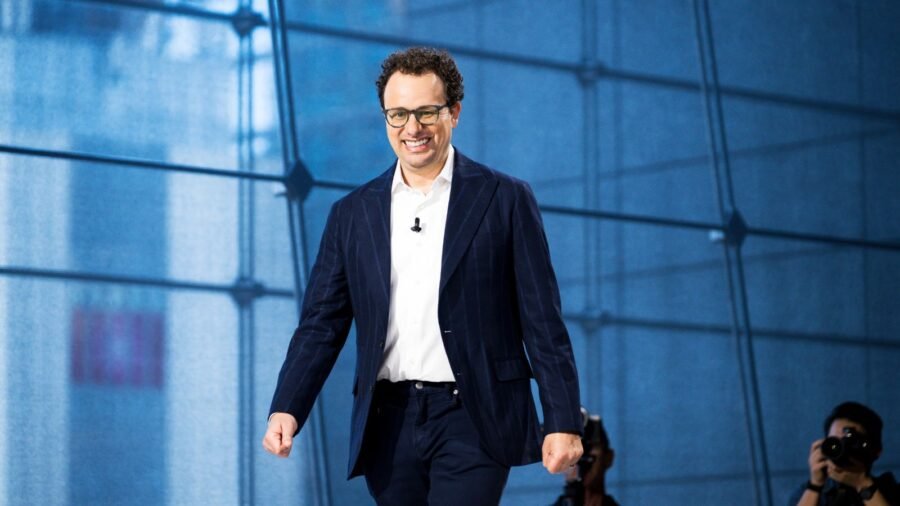
Anthropic CEO Dario Amodei recently took to X to make the case that he is not, in fact, an AI doomsayer.
Responding to comments by investor Gavin Baker, Amodei shot down the notion that he has been painting an overly pessimistic picture of AI and how it might shape the future. “I do not agree that my messaging has been disproportionately negative. In fact it has been about equally balanced between risks and benefits…” he said.
“I think it is fundamentally a crisis of trust. I think that ordinary people don’t trust companies, governments, or the tech industry and always suspect that we are cooking up some new way to screw them over,” Amodei said.
“I think by far the most accurate criticism of AI companies including Anthropic is that we haven’t yet delivered on our big promises to benefit the world. That is totally on us, and I think it’s the criticism you should be making, instead of all this stuff about messaging and marketing,” he added.
Earlier this week, Baker said – both on the All-In podcast and on X – that Amodei’s warnings about the dangers of AI have helped to fuel a backlash in the United States, particularly against data centres. Stating that Amodei has “lost the argument” when it comes to AI regulation, Baker further said, “I respectfully think he [Amodei] should make an effort to be a more positive advocate for his own industry.”
1/2 Thanks Gavin for an especially thoughtful exchange. I don’t usually spend much time on social media but I wanted to engage here because it really brings out the heart of an important conversation.
First, on regulation, I think that “either concentrate it in the hands of a… https://t.co/2W6vWJAE8Y
— Dario Amodei (@DarioAmodei) August 15, 2026
But Amodei has emphasised that he believes AI can deliver significant benefits, including potentially helping develop a cure for cancer.
This is not the first time Anthropic and its frontman have butted heads with others in Silicon Valley over the potential risks of AI. While the company claims that its concerns are justified, industry stakeholders like Baker argue that repeated dire warnings could lead to AI skepticism and invite government crackdowns.
In the US, the Trump administration’s approach to AI regulation lately has boiled down to ad-hoc government actions ever since Anthropic unveiled its Claude Mythos AI model in April 2026. The AI landscape has also seen several open letters and proposals for pauses over concerns that highly advanced AI models could enable cyber attacks or aid in developing biological weapons for warfare.
Story continues below this ad
However, there has been no tangible AI policy from the Trump administration yet.
Amodei’s views on AI regulation
On AI regulation, Amodei argued that Baker was painting “a false choice” between distributing AI widely without regulation, or concentrating the technology in the hands of a few companies through regulation.
“I know that there’s a sort of Silicon Valley shorthand where regulation = regulatory capture = concentration of power, but I’ve always found this to be an overly simplified picture of the world. Many people outside this bubble think of regulation as something that constrains corporate power and benefits ordinary people,” he said.
Some thoughts on Dario’s post:
1. Dario does not actually address Gavin Baker’s account of what he said – something he could easily deny if it were inaccurate.
2. Dario claims his critics live in a “bubble” where all regulation equals regulatory capture. He calls this an overly… https://t.co/Pz3HFfk3Uy
— David Sacks (@DavidSacks) August 17, 2026
Meanwhile, former White House AI czar David Sacks did not seem to buy Amodei’s defence. In a response on X, Sacks argued that regulation often occurs not for the good of the public, but because deep-pocketed industry groups convince the government to write rules as they see fit.
OpenAI advisor Fidji Simo, on the other hand, backed Amodei’s views. “The thing that frustrates me is that some people often draw a straight line from smarter models → cures, without acknowledging how much infrastructure is missing in between. We’ve still got a lot of work to do, people,” she said, further stating that AI training data and infrastructure is a bigger bottleneck than the regulatory bottleneck.
I disagree with Dario on most things, but this is spot on: “At this point, saying that AI will cure cancer is more a cliché than it is inspiring, and most people think it is deceptive. The thing that will work is actually curing cancer.”
The thing that frustrates me is that some…
— Fidji Simo (@fidjissimo) August 17, 2026
“I really do believe AI can cure all diseases but only if we build the infrastructure to translate intelligence into cures at the same pace that models improve (which is a high bar!). Otherwise, we risk having superintelligent AI with an incomplete picture of human biology, and delay that promise by years,” Simo added.

What is a kill switch, and why is it hard to build one for AI systems?
By Sohail Khan · 20 Sep
A smartwatch should fit your routine, not interrupt it. These five models go the extra mile
By Sohail Khan · 20 Sep
Nike Alphafly 4: 5 things (including the science) behind new marathon shoes
By Sohail Khan · 20 Sep