Amid row, Keralam increases financial assistance to Pulikali teams
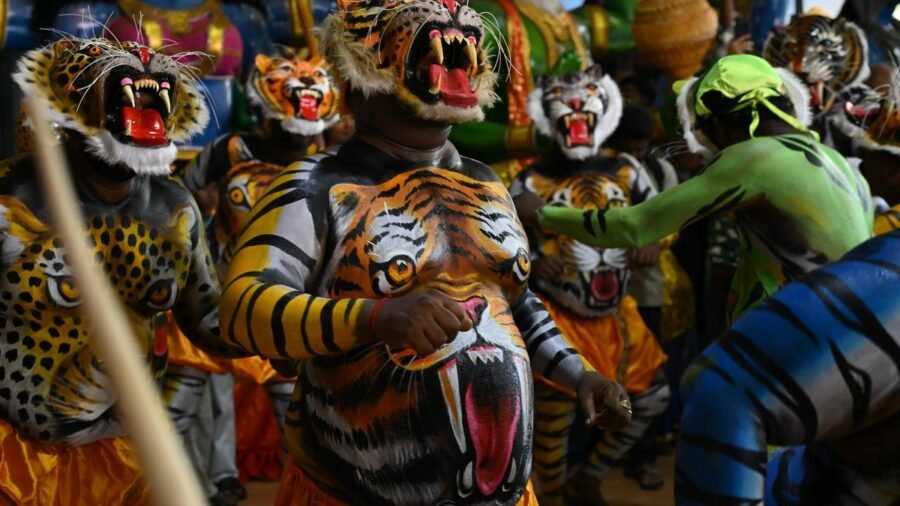
Amid a controversy over actor and writer V.K. Sreeraman’s remarks on Thrissur’s traditional Pulikali folk art, which drew sharp criticism from various quarters, the State government has decided to increase the financial assistance provided to Pulikali teams to ₹1 lakh from this year.
Stating that the government was committed to supporting Pulikali and its artists, Tourism and Culture Minister P. C. Vishnunadh said necessary measures would be taken by the Culture and Tourism departments to protect the art form and ensure the welfare of the artists.
Speaking to the media on the sidelines of the inauguration of a trade fair and exhibition organised as part of the Onam week celebrations in Thiruvananthapuram on Friday, the Minister termed Pulikali as a world-class art form that requires days of training and dedication.
“Not only in our State, but there is also a similar art form called Pilivesha, a high-energy traditional folk dance staged in the Tulu Nadu region of coastal Karnataka, particularly in Mangaluru and Udupi,” he said.
He also pointed out similar art forms exist in Odisha and West Bengal, while Kollam has its own bear dance and tiger dance traditions. The Minister said there was no need to body-shame or insult any art form or artist, adding that the time and dedication involved in painting the body like a tiger and performing the dance were commendable. He also noted the importance of Pulikali as a competition involving nine participating deshams in Thrissur.
Mr. Sreeraman later expressed regret over his controversial remarks after his social media post went viral and attracted criticism from various quarters. He acknowledged that his earlier opinion and choice of words were inappropriate and had caused distress to artists and others associated with the traditional Onam performance. He had earlier described Pulikali as an “artistic distortion that makes one feel nauseous when seen”.
Pulikali is a popular folk art form in Kerala, particularly in central Kerala. During Onam, performers paint their bodies with bright tiger-like stripes and take to the streets, dancing to the rhythms of traditional percussion instruments as part of the harvest festival celebrations.
Students’ body supports demonstrations against polytechnic merger with SHAKTI
By Sohail Khan · 21 Aug
TGIIC auction fetches ₹264 crore per acre in Raidurg
By Sohail Khan · 21 Aug
Now, protesters at Jantar Mantar seek overhaul of reservation system
By Sohail Khan · 21 Aug
Leave a Reply