Adopt policies for reuse of treated water
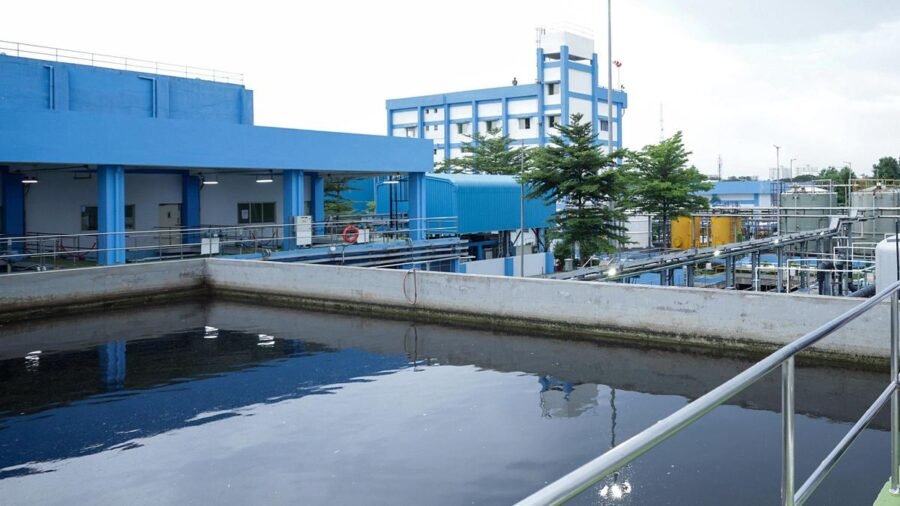
The recently notified treated wastewater reuse policies for Uttar Pradesh and Uttarakhand offer an instructive example of what contextualised policymaking can look like. Developed through an extensive consultative process, these policies do not apply a one-size-fits-all template. They account for the stark geographical diversity within each State, the distinct needs of hill communities versus densely populated plains, and embed principles such as fit-for-purpose reuse approaches, integration with urban planning and river rejuvenation, community participation, blended finance and public-private partnership pathways, and digital monitoring systems that make reuse accountable.
However, examples such as these remain the exception rather than the rule. Every summer, Indian States make headlines grappling with water scarcity and yet, the story never seems to change. Rampant groundwater extraction, and the relentless tug-of-war between agriculture, industry, and urban demand have become a recurring script. The real question is no longer whether India needs to rewrite this narrative, but how much longer it can afford not to.
Hidden opportunity
Treated wastewater is an untapped resource waiting to be mainstreamed. For agriculture, industry, urban landscaping, and ecological restoration, it offers something increasingly rare: a reliable, drought-proof supply. India’s water future may hinge less on discovering new freshwater reserves and more on the intelligence with which the country recycles what it already has. National missions such as the Atal Mission for Rejuvenation and Urban Transformation have done commendable work in scaling sewage treatment infrastructure, but pipes and plants alone do not close the loop. A treatment facility that discharges into a drain rather than feeding a farm or a factory is infrastructure without purpose.
What India needs is an ecosystem that converts capacity into practice: institutional coordination across departments, pricing signals that make reuse economically rational, quality standards that inspire confidence in end-users, and city-level roadmaps that translate national ambition into local action. The National Framework on Safe Reuse of Treated Water (SRTW), 2022 offers precisely the canvas India needs to navigate this transition. More than a guiding document, it represents a policy signal that reuse is no longer peripheral — it is a national priority. By mandating States to develop their own reuse policies, the Framework acknowledges that water solutions must ultimately be local, even when the vision is national. Several States have already responded, putting in place policies that set reuse targets and chart a path toward measurable milestones.
Treated wastewater, reframed correctly, is not a waste management problem; it is an economic opportunity. Its case rests on hard, computable value — building climate resilience, drought-proofing cities, reducing costly dependence on freshwater, enabling industrial and urban growth without straining existing supplies, and supporting low-carbon urban development at scale. Until this economic case is made clearly and credibly to State governments and planners, the policy will remain an aspiration.
Reuse succeeds only when utilities, urban departments, irrigation agencies, and industries stop working in silos and start working in an integrated manner. The financial momentum needed to hit reuse targets is rarely found in new budgetary allocations alone; it is unlocked by identifying synergies with existing schemes and convergence opportunities across programmes that are already funded and moving.
Need for awareness
There is one more constituency that cannot be overlooked: the public. Misconceptions about the safety of treated water run deep. The National SRTW Framework as well as the reuse policies for Uttar Pradesh and Uttarakhand have chosen to call treated water Apna Jal (our water), signalling something that no document can fully capture: that the shift India needs is not just infrastructural but psychological.
Experts working with State governments are witnessing a quiet shift in thinking — that the safe reuse of treated water is not just a policy consideration but a strategic imperative. Yet, several States remain on the sidelines. States that have not yet adopted a clear plan for water security through reuse are not just falling behind, they are running out of time to catch up.
Sonia Grover and Girija Bharat are water policy experts at Mu Gamma consultants

Cash transfers alone cannot tackle the problem of educated unemployment
By Sohail Khan · 29 Sep
Rabbit vs hare: Why one runs and the other hides
By Sohail Khan · 29 Sep