A new herb has emerged from Tamil Nadu’s sand dunes; here’s what makes it unique
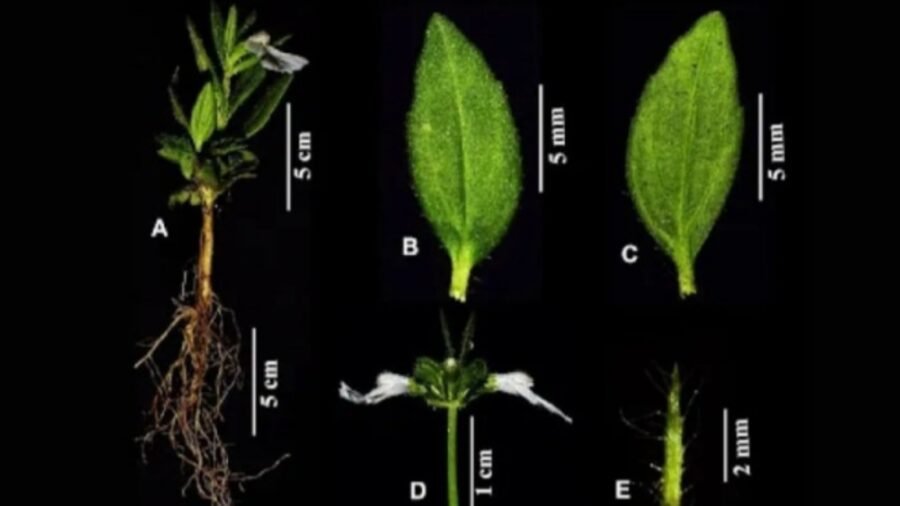
A newly discovered herb from the coastal dunes of Tamil Nadu has added another species to India’s botanical record. According to Research Matters, the plant has been named Leucas droupadiae after President Droupadi Murmu. Found along the Coromandel Coast in Cuddalore, the discovery underscores the rich and often overlooked biodiversity thriving in ecosystems that may appear barren at first glance.
Environmentalist Jasmit Singh Arora, also known as the “Gutli Man of India,” says the discovery is significant not just because it adds a new species to science, but because it draws attention to the fragile coastal dunes that support specialised plant life.
What makes Leucas droupadiae unique?
At first glance, Leucas droupadiae may look like a small, ordinary herb. But its physical characteristics set it apart from its relatives. According to Arora, the plant grows upright on a single, unbranched stem about 15 cm long. Its root system is also unusual.
Story continues below this ad
“While its relatives use deep taproots, it uses shallow, web-like roots,” Arora tells indianexpress.com.
The plant also produces distinctive golden-yellow fruits covered with dark brown spots, another feature that helps distinguish it from other members of the Leucas genus.
These seemingly small differences matter in taxonomy, where researchers must establish that a plant is genuinely distinct from documented species.
Story continues below this ad
Why is discovering a new plant so difficult?
“Identifying a genuinely new plant is very difficult. Scientists cannot just guess. They must study the plant’s entire life cycle for a full year,” says Arora.
Researchers then compare the plant with specimens and historical collections held in major botanical institutions worldwide. In this case, the plant had to be examined against the characteristics of the 155 already known Leucas species.
“Only by proving it does not match any of the 155 already known Leucas species can they finally confirm it is genuinely new to science,” Arora adds.
What does its discovery tell us about India’s sand dunes?
“This discovery shows that India’s coastal sand dunes hide unknown life, even in poor, sandy soil,” Arora says. Leucas droupadiae was found on Tamil Nadu’s Coromandel Coast, where it survives in conditions in which relatively few plant species can thrive.
Story continues below this ad
“Dunes are not empty wastelands, but special homes for unique species found nowhere else,” Arora explains.
Coastal dunes can also act as natural barriers against coastal hazards and support a range of specialised flora and fauna, making their conservation important beyond the survival of a single plant.
A new species of herb plant “Leucas Droupadiae” belonging to the mint family discovered along the sandy shores of the Coromandel Coast during a survey of the coastal dunes in the Cuddalore district of Tamil Nadu.
Read the Article: https://t.co/tO2yVuHP0W#Herb #TamilNadu #UPSC pic.twitter.com/Ch0yyegQEw
— Jagmohan Mehta (@jagmohanmehta) August 16, 2026
Why is the plant considered vulnerable?
“The plant lives in only one small spot in Cuddalore. Animal grazing and spreading eucalyptus trees threaten its home, so scientists label it ‘Data Deficient’,” says Arora.
The Data Deficient classification means there is not yet enough information to properly assess the species’ extinction risk. It does not mean the plant is safe; rather, more research is needed to determine its population size, distribution and threats.
How can Leucas droupadiae be protected?
“First, scientists must count the plants to learn exactly how many are left,” Arora says.
Story continues below this ad
He suggests several measures to protect its habitat, including restricting grazing in areas where the plant grows and managing eucalyptus plantations.
“We should build fences to keep hungry animals out. Third, we must stop planting thirsty eucalyptus trees nearby and remove some to save the soil’s water,” he explains.
Creating a protected area around the known habitat could provide another layer of protection. “Finally, making this single spot a protected nature area will keep the sand safe,” Arora says.

Dissent is not dysfunction, institutions need it
By Sohail Khan · 25 Sep
What does the IIT-Bombay suicide tell us? On campus, not all stress is equal
By Sohail Khan · 25 Sep
Bone health in later years must be built early in life
By Sohail Khan · 25 Sep