A girl, interrupted: Why a critically ill 14-year-old is at heart of tribal protests in Maharashtra
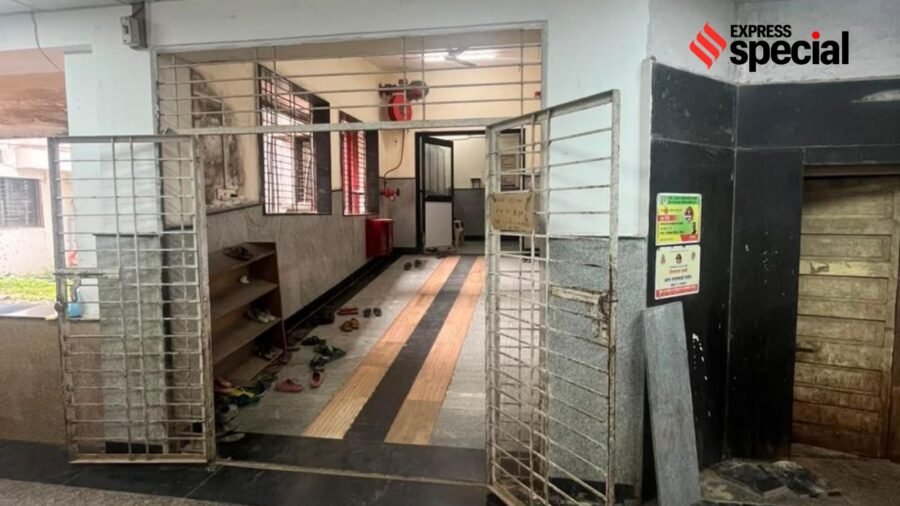
More than a fortnight after she was bitten by a snake at a residential school for tribals in Gadchiroli, Samruddhi, 14, is fighting for her life at the Paediatric Intensive Care Unit at Government Medical College (GMC), Nagpur – unaware that her case has become a catalyst, for protests over conditions in tribal schools and for government promises of change.
Samruddhi was among six tribal schoolgirls who were bitten by a common krait on August 10 night, as they slept on the floor of Japtalai Ashram School in Japtalai village of Gadchiroli. The school had no beds. Three of the girls died, two recovered.
Advertisement
Doctors say Samruddhi, who was initially treated at District Hospital in Gadchiroli, had intracranial bleeding, for which she needed brain surgery. She continues to slip in and out of consciousness, and needs ventilator help to breathe.
Her father Suresh Naitam sits quietly on vigil, refusing to leave her side. His wife Archana, her brother Roshan Madavi and some of Samruddhi’s teachers take turns to relieve him, all of them hoping to be there for the brief moments that the 14-year-old opens her eyes. Madavi says Samruddhi struggled to do even that at first. “Now she opens her eyes and looks around.”
Dr Avinash Gawande, Medical Superintendent at GMC, says Samruddhi’s condition is gradually improving, though she struggles to be off ventilator for long. She also remains paralysed, barring some response on her left side.
Advertisement
“It will take some time, but we are hopeful she will recover. Given Samruddhi’s young age and the fact that her body is still growing, we are hopeful of a good recovery,” says a hospital official.
What may have made a difference for Samruddhi and her dead schoolmates was a simple initiative to equip tribal schools with furniture – conceived eight years ago, in 2018-19. Under the ‘Kayapalat Abhiyan’, the Maharashtra Tribal Development Department undertook the improvement of living and learning conditions in government-run ashram schools and hostels across the state.
Manisha Verma, now Additional Chief Secretary, Maharashtra Skill Development, Employment and Innovation Department, had been instrumental in the planning of the scheme. A field officer and project officer with the Integrated Tribal Development Project in 1997-98, when she worked in remote tribal and forest areas, Verma says that a memory that stayed with her from that time was the frequent deaths of children from snakebites, and the unhygienic conditions for students in schools due to the absence of basic furniture.
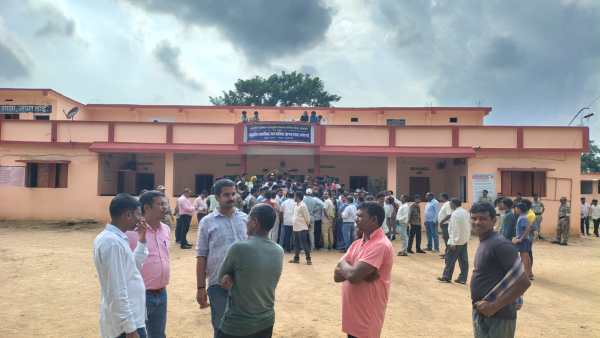 Japtalai Ashram School, where Samruddhi studied
When Verma became Secretary of the Tribal Development Department, her insights provided the framework for Kayapalat Abhiyan. “We undertook it with painstaking planning and execution. The resolve was very clear: no child should sleep on the floor, no child should study on the floor and no child should eat on the floor. It was fundamentally about giving the children a life of dignity,” Verma tells .
As per government figures, 502 government ashram schools and 491 government hostels, housing nearly 2.5 lakh students across some of Maharashtra’s most remote regions, were covered under Kayapalat Abhiyan. The department procured 30,809 large desks, 37,104 small desks and 22,135 bunk beds for these schools, apart from dining tables, chairs, cupboards and other essential furniture.
Field teams conducted ground reports to assess requirements, and to measure classrooms and dormitories to get the right parameters.
The Centre paid a substantial amount of the Rs 200-odd crore spent on the scheme.
The reason Samruddhi’s Japtalai Ashram School had no beds was that the programme covered only government-run ashram schools and not those government-aided but privately managed.
After the Japtalai snakebite deaths, the Tribal Development Department’s Nagpur Circle has begun inspections of 133 government-aided ashram schools across Nagpur, Gadchiroli, Gondia, Bhandara, Chandrapur and Wardha districts.
The licence of Samruddhi’s school has been permanently cancelled. Tribal department officials said the process to relocate the students is underway.
On Wednesday, Maharashtra Tribal Development Minister Ashok Uike had a five-hour meeting with tribal students protesting in Pune – as a hunger strike by some of them entered the 15th day. He promised that the government was committed to addressing all their concerns, including the snakebite deaths at Japtalai.
She wanted to join the police
From a young age, Samruddhi wanted to join the police force, says Suresh. “The government police recruitment exam requires proficiency in the local spoken language (Marathi),” he says, and this is why he sent his daughter to Japtalai Ashram School, located about 20 km from their home in Ranghi; the family speaks a local tribal dialect. One of Samruddhi’s cousins studied at the Japtalai school, and this was another factor for her parents.
She had been there only a month when the snake bit her and she landed in hospital.
While the family waits for her to recover, Suresh also worries about what awaits him in the village, where his son, younger to Samruddhi, is with his grandmother. “My crop has been completely destroyed. I rushed here without fencing the farm, and cattle entered the field,” he says. The family owns a 1.5-acre paddy field, which is their only source of income.
With no place for attendants at the GMC, Samruddhi’s parents and relatives sleep on the floor outside the ward. As Suresh sits inside, Archana watches on, a mat pushed against the wall, a small bag containing their clothes, bedsheets and other essentials beside her.

FPIs Invest ₹30,918 Crore In August, Remain Net Buyers For Second Straight Month
By Sohail Khan · 30 Aug
Mumbai This Weekend: Anime India Expo, Exhibitions, Stand-Up Comedy & More To Explore
By Sohail Khan · 30 Aug

Leave a Reply