A decades-old friendship, two tea families and the making of India’s first commercial matcha
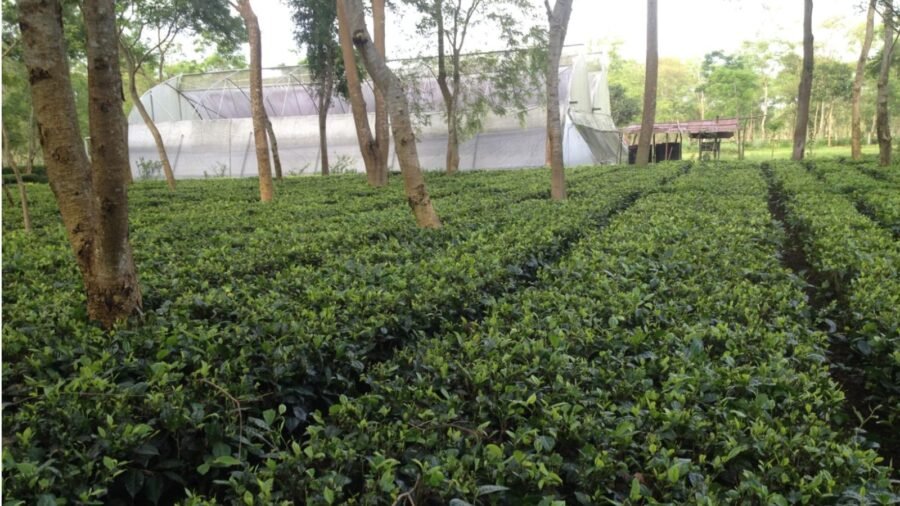
The first thing that strikes you at Chota Tingrai Tea Estate is the green.
Spread across more than 1,000 acres in Assam’s Tinsukia district, rolling tea plantations stretch as far as the eye can see.
Advertisement
By 7:30 am, the estate is already stirring: workers pass through the gates, tea baskets creak, and leaves rustle across the gardens. It is the familiar soundscape of an Assam tea estate beginning another day.
Inside the factory, however, something less familiar is underway.
Leaves grown in Assam are being turned into matcha, a tea deeply rooted in Japan’s centuries-old tea culture and now finding new audiences around the world.
The idea began with fourth-generation tea planter and Chota Tingrai director Mrityunjay Jalan. While studying in Singapore, Jalan was introduced to authentic green teas from Japan, China and Southeast Asia. Around the same time, green tea was becoming increasingly popular in India.
Advertisement
“Everyone suddenly wanted green tea because it was considered healthy,” says Jalan.
But what was being sold as green tea in India was often very different from the teas he had encountered abroad. It led him to wonder: could Assam, known around the world for its black tea, produce something closer to the green teas of Japan?
“Most of the green tea available in India would brew into an orange liquor. That meant it had already oxidised. It wasn’t really what Japan or China would call green tea.”
When he returned to Assam, Jalan began experimenting.
“I wanted to create authentic green tea and not the blended, commercially processed versions that dominated the market,” he says.
The answer would emerge from an unlikely source: a friendship between two tea-growing families that had begun nearly four decades earlier.
The Japanese connection
In the 1980s, Ichiro Hara of Japan’s Ume-no-En tea company travelled to Assam in search of black tea and met Jalan’s father, Mrigendra Jalan, who was managing the family business. Hara’s son, Shoji, accompanied him.
The Jalans were already rooted in Assam’s tea industry. Mrityunjay’s great-grandfather, Murleidhor, was among the first Indians to commercially plant tea in Assam in the 1920s and establish Chota Tingrai Tea Estate in 1943.
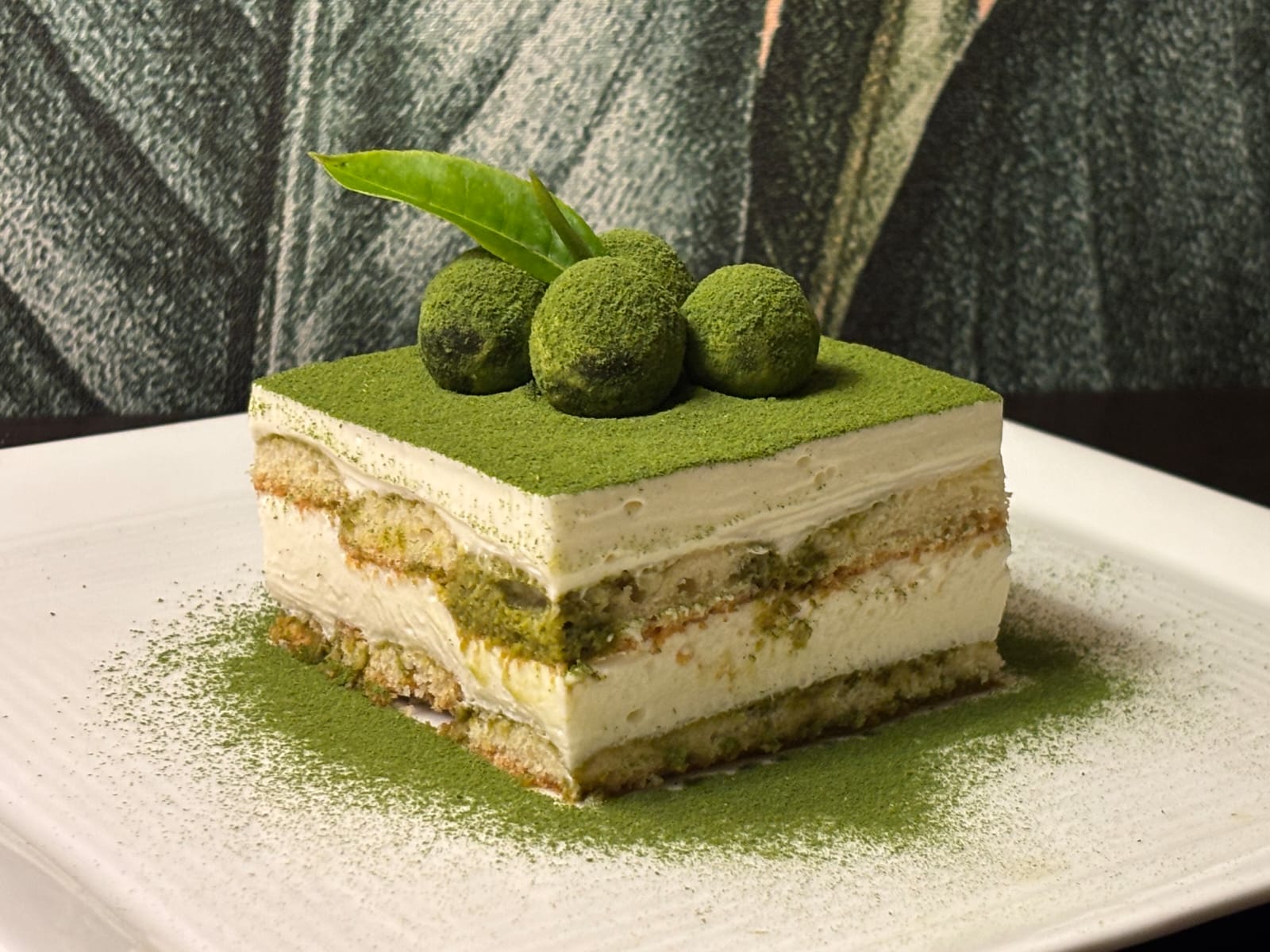 “Like coffee, tea can be adapted in desserts, drinks and other forms to appeal to different tastes and age groups,” says Chota Tingrai director Mrityunjay Jalan.
Their association led to the creation of Tea Land, a Ume-no-En subsidiary that processed and sold tea bags made with tea grown by the Jalans.
The business eventually ended. The friendship did not.
More than 30 years later, when the Jalans decided to establish a Japanese-style green tea facility at Chota Tingrai, they turned to the Haras again.
“In 2016, Mrigendra Jalan and his son, Mrityunjay, approached us with the idea of producing green tea in India. We consulted with a machinery manufacturer to design a production line that would minimise breakdowns, ensuring reliability even in India, far from Japan,” says Shoji Hara.
But starting Japanese green tea production in Assam came with uncertainties. Japanese and Indian tea varieties were different. So were the climate, harvesting practices and production traditions.
“The significant difference between Indian and Japanese tea varieties presented an unknown variable,” says Hara. “Fortunately, the Jalan family are an authority in the field and have been familiar with varieties similar to Japanese cultivars for fifty years.”
The Haras began introducing the Jalans to a network of Japanese tea experts, engineers and machinery manufacturers. Jalan and his team travelled to Japan. Japanese specialists travelled to Assam.
One of them was Masanori Yanagawa, a Japanese tea expert who spent nearly three years at Chota Tingrai, from 2016 to 2019, teaching the team how to make Japanese green tea.
While the estate’s Japanese-style green tea production dates to 2016, the team spent several years experimenting with matcha before producing it commercially for the first time in 2026.
For the workers at the estate, it was the beginning of an education in a tea they had never made before.
The Sensei and his students
Augustina, who has worked at Chota Tingrai’s Green Tea Factory for nine years, was part of that journey almost from the beginning.
“We began learning about matcha almost a decade ago, starting with high-quality green tea. Making tea was familiar to us, but matcha was different. Each part of the process had to be learned and practised carefully,” she says.
The training was interrupted by the pandemic. When it became possible to resume, the team returned to the process.
Yanagawa had come to Assam specifically to introduce Japanese green tea-making technology abroad.
“Since Assam is world-famous for its black tea, I found the idea of producing Japanese green tea and matcha both exciting and inspiring,” he says.
But he also knew the team was working with conditions very different from those in Japan.
“I knew that the climate, tea varieties and culture were very different from those in Japan. I wondered whether we could achieve the level of quality we were aiming for.”
One of the first lessons was simple: do not let the leaves wither.
For generations, the workers at Chota Tingrai had been making black tea, in which withering is a crucial stage. Japanese green tea requires almost the opposite approach.
“One of the most memorable challenges was helping the local team understand that fresh tea leaves should not be allowed to wither in the troughs traditionally used for black tea production,” says Yanagawa.
“Withering is an essential step for black tea, but for green tea, preserving the freshness of the leaves is the key to producing high-quality tea.”
For the team, learning involved observing, practising and repeating the process until they understood it.
“Mr Yanagawa taught us everything, step-by-step. It was not something we could learn in a short time; we had to keep practising until we became confident with the process,” says Augustina.
Deepak Kishan, the green tea factory manager, was another of Yanagawa’s students. Tea was familiar to him from childhood — his mother was a tea plucker at the estate — but matcha was not.
“When I first heard the news that matcha-making equipment would arrive at Chota Tingrai, I was delighted. I felt I would get to learn something different,” says Kishan.
Before production began, Yanagawa introduced Kishan and Augustina to matcha through simple experiences.
“He brought us matcha candies and matcha cake. That was the first time I understood its flavour. It leaves a very fresh aftertaste,” Kishan adds.
The real lessons, however, were in the garden and the factory.
Making matcha in Assam
Chota Tingrai could not simply copy a Japanese production manual. The tea had to be made for Assam.
Yanagawa found that Assam’s tea-growing practices required particular attention.
“In Japan, tea is produced in four seasonal harvests, from the first flush to the fourth flush, and the characteristics of the fresh leaves differ from one harvest to another,” he says. “In Assam, however, the same tea fields are harvested approximately every two weeks, and tender young leaves and slightly more mature leaves are often mixed together.”
So he watched the leaves closely and adjusted the process accordingly.
“I carefully observed the condition of the fresh leaves every day and adjusted each stage of manufacturing, including steaming, rolling, drying, and quality control, to suit Assam’s tea leaves rather than simply applying Japanese methods without modification.”
The most important changes began before the leaves reached the factory.
In the weeks before harvest, the tea plants are shaded from direct sunlight. The reduced light increases chlorophyll and helps leaves retain higher levels of amino acids such as L-theanine, contributing to matcha’s vibrant green colour and distinctive flavour.
“We learned that making matcha is not only about what happens inside the factory; it starts from the garden itself. Even the time of plucking and the leaves we select can make a difference, so we have to be much more careful at every stage,” says Augustina.
At Chota Tingrai, matcha leaves are plucked as early as 4 am. Once plucked, the leaves go through an intensive process of steaming, rolling and drying that takes another two to three hours. The estate calls its matcha “Matcha Assamica”.
Compared with matcha, Augustina says, making regular green tea is relatively less demanding.
The first commercial batch
After years of experimentation and training, Mrityunjay, Yanagawa, Augustina and Dinesh reached an important milestone.
On July 3, 2026, Chota Tingrai sold five kilograms of commercially produced matcha for Rs 3,000 a kilogram through the Guwahati Tea Auction Centre.
The price was considerably higher than that of conventional tea. In the week ending July 4, 2026, CTC leaf and dust teas at Guwahati averaged Rs 259.27 a kilo, according to Tea Board India. Chota Tingrai’s matcha fetched roughly 12 times that average.
For Kishan, the significance of the auction went beyond the price.
“When it was auctioned and it was all over social media, I realised we had made good-quality matcha,” he says. “It felt wonderful because all our hard work had paid off.”
Reimagining Assam’s tea future
For Jalan, the achievement showed that Assam’s tea could become something beyond the black tea the state is known for. It also opened up the possibility of finding new ways to add value to the tea grown here.
Jalan does not see matcha as a replacement for Assam’s black tea.
“Black tea will always remain special because it is what gives Assam its identity and that can never be replicated by speciality teas,” he says.
But the economics of tea have changed. Production costs have risen, margins have narrowed, and estates face increasing pressure to survive on conventional black tea alone.
Jalan believes the future lies in producing more specialty teas.
“We often think of tea only as the chai that Indians drink, but globally, tea is a diverse category. China produces thousands of varieties, while India is still largely known for orthodox and CTC teas,” he says.
He sees speciality teas such as matcha as part of that larger opportunity, along with products and experiences built around them.
“Like coffee, tea can be adapted in desserts, drinks and other forms to appeal to different tastes and age groups.”
There is also tea tourism. At The Postcard in Durrung Tea Estate, his family has begun offering guests guided tastings of different tea varieties.
The state government, meanwhile, has begun encouraging the production of speciality teas as the industry looks beyond its traditional forms.
But for now, the work at Chota Tingrai continues much as it always has. The difference is that alongside its traditional teas, the estate is now producing matcha, the result of years of shared learning and a decades-old friendship between two tea-making families.
(Deekshita Baruah is an independent journalist who writes on food, culture, lifestyle, and climate-related issues.)

‘We cannot just sit at home’: Ranchi family plans Nepal trip to find missing man
By Sohail Khan · 27 Aug
Karni Sena factions clash at Ujjain dhaba, its vice-president, eatery owner killed
By Sohail Khan · 27 Aug
Rail Madad complaints to reach train staff directly for faster resolution – Here’s how
By Sohail Khan · 27 Aug
Leave a Reply