70% quota in jobs: Why Omar Abdullah warned of ‘Gen-Z trend spilling over’ to J&K
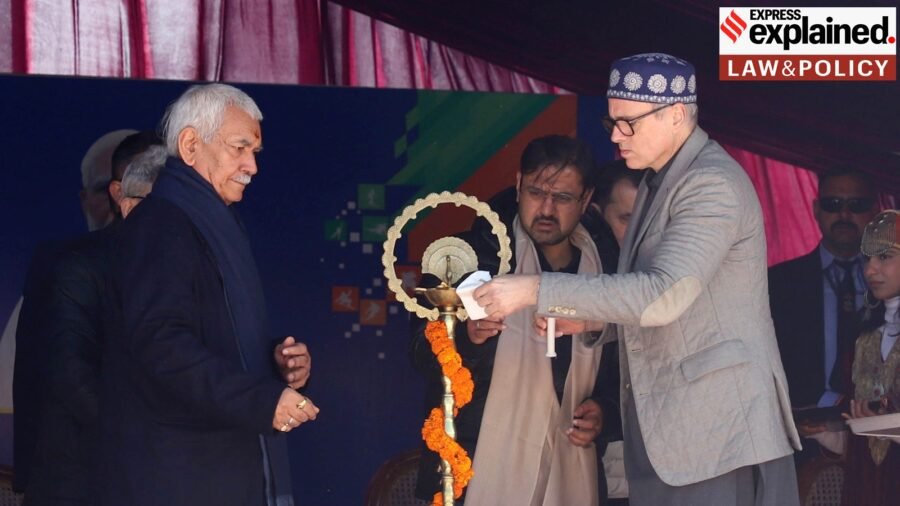
Jammu and Kashmir Chief Minister Omar Abdullah on August 14 warned of Gen Z-like protests if his Cabinet’s proposal to tweak the reservation system in the Union Territory wasn’t acted upon.
The Cabinet had sent its submission on the reservation policy to the Lieutenant Governor in November last year.
“What has happened after that, let someone tell us. Has it been approved? Let’s hope that the Gen-Z trend doesn’t spill over here as well. We would not be responsible for that. We have done our job… This is not a good thing that they (the L-G and the Centre) keep the approvals of our cabinet under wraps,” Omar said.
The issue of ‘rationalising’ the reservation system has become a hot button issue in the UT.
What is the reservation policy in Jammu and Kashmir?
Before the abrogation of Jammu and Kashmir’s special status on August 5, 2019, 43% seats in government jobs were reserved for different categories, such as Scheduled Castes (SCs), Scheduled Tribes (STs), Other Backward Classes (OBCs), residents of areas along the Actual Line of Control (ALC) and the International Border (IB), residents of backward areas, those physically challenged, and former service personnel.
But in 2024, L-G Manoj Sinha announced an amendment to the J&K Reservation Act 2004, barely a month before the 2024 Parliamentary elections. Reservation was enhanced from 43% to 70% in government jobs. The jump was because Special Tribe (ST) status was given to the Pahari community. ST categorisation for the Paharis had always been opposed by the Gujjars and Bakerwas, who hold the status. To not annoy the Gujjars, the administration announced increasing the ST quota from 10% to 20%.
This led to sharp criticism from those not covered under any reservation, as they were left with only 30% of the jobs to compete for.
Story continues below this ad
In their 2024 Assembly election manifesto, the two principal political parties of the UT, Omar Abdullah’s National Conference and the Peoples Democratic Party (PDP), promised to revisit the issue. Wary of the potential electoral fallout, both framed their stance as “rationalisation of reservation”.
The BJP, meanwhile, promised additional reservation in government jobs for Agniveers and reservation in promotions for the employees from different reserved groups.
Why is the Omar government under pressure?
For the Omar Abdullah government, pushback is coming from within as well as the public. In February, in response to a motion by People’s Conference leader Sajad Lone, the government presented numbers in the Assembly that showed significantly more reserved category certificates going to people in Jammu than in Kashmir.
Before that, in October 2025, an MP from Omar’s own party, Aga Ruhullah Mehdi, sat on protest with people from unreserved categories outside the CM’s residence.
Story continues below this ad
The government then set up a cabinet sub-committee, which filed its report in October 2025, recommending capping reservations at 50%. The Cabinet accepted it and in the next month, sent the file to Lok Bhawan (L-G’s residence) for clearance.
Omar has now said that the Lok Bhawan had raised queries on the report, which his government responded to, but there has been no movement since.
Rishi Sunak, Ro Khanna, Dinesh D’Souza: united by colour; divided among white nationalists
By Sohail Khan · 28 Sep
From Nepal to India, how AI is improving disaster management
By Sohail Khan · 28 Sep
40 years ago September 28, 1986: Relief for Haryana farmers
By Sohail Khan · 28 Sep