‘You need partners for strategic autonomy, you can’t do everything by yourself’: Finland envoy to India
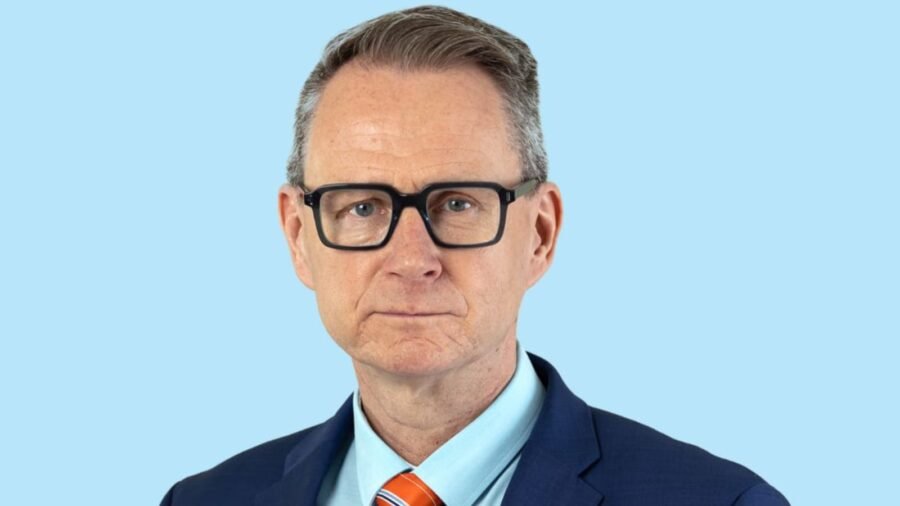
With protectionism rising from big powers like the US, what would be Finland’s priorities in terms of the India-EU FTA, set to be operationalised in the coming months?
The Free Trade Agreement (FTA) sends a clear and strong message that when it comes to international trade, rules-based trade is still beneficial for all of us. This applies to all the FTAs that both India and the European Union (EU) are signing with other partners as well. So, there is a strong signal that there are several countries that want to have rules in international trade.
Story continues below.
Subscribe to see fewer ads.
The US has imposed steep reciprocal tariffs on Indian goods and even on several EU goods. So, how does Finland assess the impact of all of this on global supply chains and on small, open economies?
We are living in quite a turbulent time, when it comes to geopolitics and geoeconomics. Everybody is looking at partners and diversifying things — to make sure you have the freedom of manoeuvre, and also certain (amount of) predictability. We are all doing that — be it India, the EU or Finland. That is one of the lessons learned.
India has been seeking from the EU to ease the CBAM, visa norms for professionals and even data protection. What is Finland’s position on this?
We are part of the EU, so we have been part of the decision making on the Carbon Border Adjustment Mechanism (CBAM), and the same applies to the EU data protection laws. But we believe it is about level playing field, and sustainability in the long run. Many Indian companies are already adapting; something I personally noticed is that sustainability issues are more on the agenda in India.
Story continues below this ad
Should India and Finland collaborate more on critical minerals and batteries? Because Finland has large reserves, India has demand.
That is also part of the EU-Finland-India partnership. Again, it all comes down to the supply chain and strategic autonomy. And in that context, the EU and India see each other as trusted partners. And you need partners when it comes to strategic autonomy. You cannot do everything by yourself.
With navigation disrupted due to war, especially in the Red Sea and the Black Sea, is there a scope for cooperation on alternative routes, maybe IMEC, mooted by India in 2023?
Definitely, one of the consequences of the recent geopolitical, geoeconomical changes in the world is that, again, it all comes down to the supply chains and strategic autonomy. All the countries are looking for new logistic routes. They want to cut down dependencies.
Story continues below this ad
When it comes to this particular corridor, we all understand that there are several geopolitical issues at the moment. We have been supporting it from the beginning, but one has to be realistic. And when it comes to logistic routes, it must be feasible. For the time being, there are certain geopolitical issues in West Asia that are hindering it at the moment.
You have been talking about resilient supply chains and strategic autonomy. Do you think globalisation, as we know, will change forever?
I hope not. For a small country like us, we would like to see sort of rules and institutions when it comes to the international order. We would also like to see that world trade would be free. So, we are partnering with countries that have similar views. Finland, India and the EU have similar views when it comes to international order, as well as on multilateralism.
India and Finland are definitely natural partners when it comes to multilateralism, the UN charter and the UN-based multilateralism. We would like to see India as a permanent member of the UN Security Council, and we believe that the Council needs to be reformed.
Story continues below this ad
India said that it is in touch with Russia and Ukraine to find a solution to the ongoing war, and the Ukrainian Foreign Minister has said they support India’s proposal. Have there been discussions between Kyiv and other EU partners on the proposal?
Yeah, sort of two remarks on that. Firstly, all the attempts to bring the war to an end are highly appreciated and needed. As we all know, it has been underway, and it is already the 5th year. The global consequences are clear. Your External Minister has talked about the consequences multiple times, so that is clear. We are in a situation where everybody else is ready to negotiate — to stop the war — except the Russians.
So basically, what we need is that the global community incentivises Russia to come to the negotiation table, and then to have the war ended.
Incentivise, as in how would that work? To incentivise in terms of sanctions, or trade?
Story continues below this ad
Incentivise — that they would understand it is also for their best to stop the war because it is clear that the consequences for the Russian economy and the society are huge. At the end of the day, too many human beings are being lost in the war.
You have arrived in New Delhi at a time when the India-EU relations are getting stronger, and the India-EU FTA is in the last leg before being signed. What do you think about the collaboration between New Delhi and Helsinki at this point?
We have been witnessing record-high activities this year: Finland Prime Minister Petteri Orpo visited India, President Alexander Stubb made a state visit to India, as well as we also had the Nordic-India Summit in Oslo. Then a few weeks ago in Gandhinagar, there was the 10th edition of the World Circular Economy Forum — organised for the first time in South Asia, by the governments of Finland and India.
And when you add to that the FTA and the perspective of the agreement to be enforced next year, this creates a great momentum to deepen our collaboration. And therefore, our task here will be to turn this framework into concrete activities.
Stop daily drama, learn from Modi to win people’s support: BJP to Congress
By Sohail Khan · 6 Oct
Leave a Reply