Why Odisha vs Chhattisgarh over Mahanadi row is back in spotlight
Advertisement
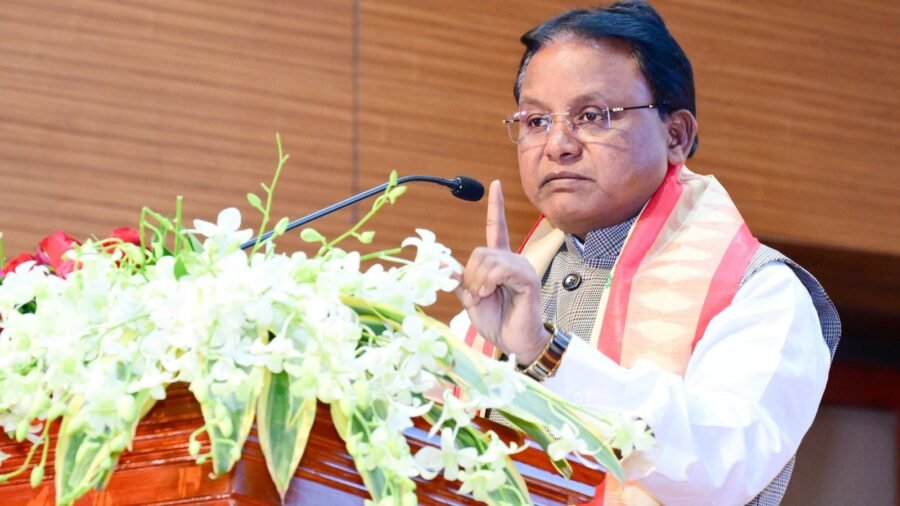
“We are gradually moving closer to a resolution. Alongside the legal process, administrative and political resolution pathways have also been expanded. A path to a resolution will be found keeping the interests of both states in mind. This resolution will serve as a model dispute resolution mechanism for other states too,” Majhi said.
The BJP, which had favoured an amicable settlement while in Opposition in Odisha, has accelerated such efforts since coming to power in the state in June 2024, even as the dispute remains pending before the Mahanadi Water Disputes Tribunal.
The latest round of talks began in July-August 2025, with several meetings between officials of the two states, including at the level of the chief secretaries and water resources secretaries, to discuss technical aspects of the dispute.
Advertisement
A meeting between the two CMs was also held in July under the chairmanship of the Union Jal Shakti Minister. At the meeting, the states agreed to share data and information on their respective water requirements with the Central Water Commission.
“It was provisionally decided in that meeting to find a path to a resolution within three months. Two months have passed in the meantime and there has been satisfactory progress,” Majhi said.
Sai also indicated that the two states were looking at a cooperative approach. “It is our life-giving river, intrinsically linked to the daily lives, agriculture, and culture of the people of both Chhattisgarh and Odisha. Our collective effort is to strengthen irrigation systems in both states through improved water management and to open the doors for new projects,” he posted on X.
‘Lifeline’ of Odisha
For Odisha, the Mahanadi is more than a water-sharing dispute. The river is central to irrigation, drinking water, flood management, hydropower and the state’s broader negotiations with Chhattisgarh and the Centre.
At Thursday’s meeting, Majhi stressed that the Mahanadi was the “lifeline” of Odisha and said the state’s demand was that it receive an adequate share of the river’s water. Issues including irrigation, flood control, hydropower generation, drinking water and environmental concerns were discussed, he added.
The Mahanadi river originates near Pharsiya village in Chhattisgarh’s Raipur district and flows for about 851 km before merging with the Bay of Bengal. Of this, around 357 km lies in Chhattisgarh and 494 km in Odisha. The river flows through several districts in Odisha, while its wider basin covers 14 districts in the state.
The prospect of an early settlement of the Mahanadi dispute has political significance for the BJP, with panchayat and urban local body elections in Odisha scheduled for early next year.
The BJP is seeking to contrast its approach with that of the Naveen Patnaik-led BJD, which governed Odisha when the dispute entered the legal process in 2016.
Bargarh BJP MP Pradeep Purohit accused the previous BJD government of deliberately keeping the dispute alive for political reasons.
“The BJD government didn’t want the dispute to be settled. They wanted to continue the dispute with Chhattisgarh and make it a political issue. That’s the reason they opted for the tribunal route even as the NDA government at the Centre initiated the process to resolve the matter amicably,” Purohit said.
Referring to the BJP’s governments in Odisha, Chhattisgarh and at the Centre, he said the
“triple engine” dispensation would help resolve the dispute and secure Odisha’s “due share”.
The BJD, however, has questioned the substance of the latest talks and demanded that the decisions taken at Thursday’s meeting be made public.
Senior BJD leader and former minister Arun Kumar Sahoo said the meeting should not be reduced to an exercise aimed at the upcoming local body elections.
“Since there is a triple-engine government, the possibility of resolving the Mahanadi water dispute had increased. However, no urgency was seen towards resolving the issue. There has been no clarity as to whether the dispute will be resolved through a tribunal or through mutual discussions,” Sahoo said.
The BJD has also sought clarity on whether Odisha would receive the water it requires during the non-monsoon period, and on the status of the barrages built by Chhattisgarh, which the party has described as “illegal”.
Odisha Congress president Bhakta Charan Das also criticised the BJP governments, saying the state was yet to receive its “due share” of Mahanadi water.
What is the dispute?
The dispute dates back to 2016, when Odisha objected to Chhattisgarh’s construction of a series of barrages and other structures on the Mahanadi and its tributaries. Odisha argued that the projects would reduce downstream flows, particularly during the non-monsoon period.
Chhattisgarh has maintained that, given the river’s catchment area in the state, it is within its rights to use Mahanadi water for its requirements.
The Centre initiated efforts at an amicable settlement in 2016, but the then Naveen Patnaik government pursued a legal route and approached the Supreme Court seeking constitution of a tribunal. Chhattisgarh favoured the creation of a joint control board.
Following the Supreme Court’s intervention, the Centre constituted the Mahanadi Water Disputes Tribunal in March 2018. Its tenure has since been extended, with the latest extension running until January 13, 2027.
The Majhi government has now initiated a parallel effort towards a negotiated settlement and has informed the Tribunal about the process.

Two captive-bred great Indian bustards released in Rajasthan national park
By Sohail Khan · 4 Oct
‘One last fight left in me’: Smit Machchhar details cockpit attack, fight to open door
By Sohail Khan · 4 Oct
Leave a Reply